Showing posts with label Henderson S. Show all posts

Feraday's Forensic Follies, Section Sixty-Seven

June 11 2010
last updates June 11/13 2011

A few days ago I posted a collected timeline of forensic finds and coclusions from RARDE's "scientists" Dr. Thomas Hayes and Mr. Allen Feraday. These were supposed to have led to the identification of a vaguely Libyan radio model holding the bomb - Toshiba BomBeat RT-SF16. The end result is bizarre, with a hundred implied complications, like those presented by a tiny bit of blasted circuit board dubbed PT/30.

This 3mm x 4mm  fragment was allegedly found on June 8 1989 by Dr. Hayes, or June 18 by Feraday, depending. Both versions match on where it was found - embedded in a piece of soft blue American Toursiter suitcase owned by victim Karen Noonan and labeled PK/2128. [Leppard p207] Its PT number is lower than the famous PT/35 found weeks earlier (on paper), as noted by the defence at trial. This would be unusual if not for all the rest being just as out of order (see PT/31, PT/56, etc...). Stranger yet, Dr. Hayes' examination notes of PT/30 read in part:
It has been partially delaminated by the blast and, hence, does not possess the expectedgreen lacquer and/or solder tracking upon its rear face as this has been ripped completely away. The upper [brown] face of the fragment bears part of the white painted characters C32 and a depiction of an electrical resistor.
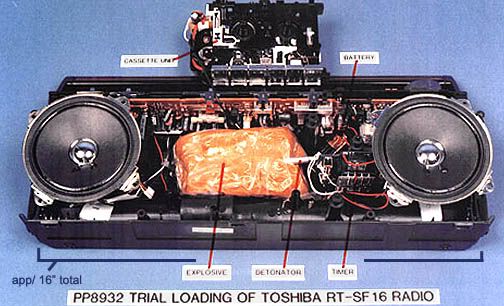
Consider the sample loading of the alleged bomb (below) in a normally-assembled RT-SF16 radio (minus its cassette assembly). The main circuit board is the one seen along the top, brown-colored component side down. This surfaces is that painted with little white markings that survived the blast of that Semtex about one inch distant. It was the inverse side, green lacquered and tracked with solder, that was blasted away. Was the board backwards?

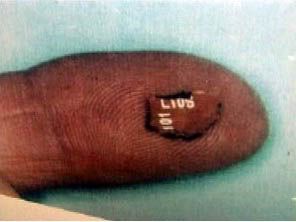
PT/30 is not alone in having its painted face survive readable and unburnt. Consider this largest portion of the earlier find AG/145 (at right). Its markings "L106" and "101" are plain as day, and only the edges are burnt a little. The smaller part of AG/145 is similarly marked, with "02." It would thus seem the terrorists allegedly scraped off all those little  components off their contacts and flipped the board backwards to fit it back in. Except that the AG/145 fragments also had nice green backsides that showed no sign of blast either, and allowed the first identification in February.

Anyway, to bring this back to Feraday, he was reportedly excited about PT/30 turning up. The radio model RT-SF16 was already identified on May 11, we hear, and this fit it just as perfectly as the AG/145 fragments did, and was noted immediately by Hayes on June 8. So Mr. Feraday reportedly waited a few months, and then in September took the thing to the evidence holding facility Dexstar to see if it could match anything there.

Later, in December, DI William Williamson sent SIO Henderson a memo describing this: "On his visit to Dexstar on 14 September 1989 Mr Feraday viewed a large number of items of circuitry which had been withdrawn for his examination; none of these items was a match for PT 30." [Leppard p 207] (note: PT 30 is just Leppard's way of writing PT/30 - space instead of slash. It's the same item)

Williamson went on to ask Henderson to look into inspecting evidence held by the Germans to see if a match could be found to Khreesat's work - particularly some alarm clocks he was known to have bought. Feraday had "on a number of occasions repeated his keen interest in any item of circuitry," Williamson explained, "or indeed in any digital clocks or other similar items which could contain a circuit board for examination and comparison at RARDE against produsction PT 30." [Leppard 207-208]

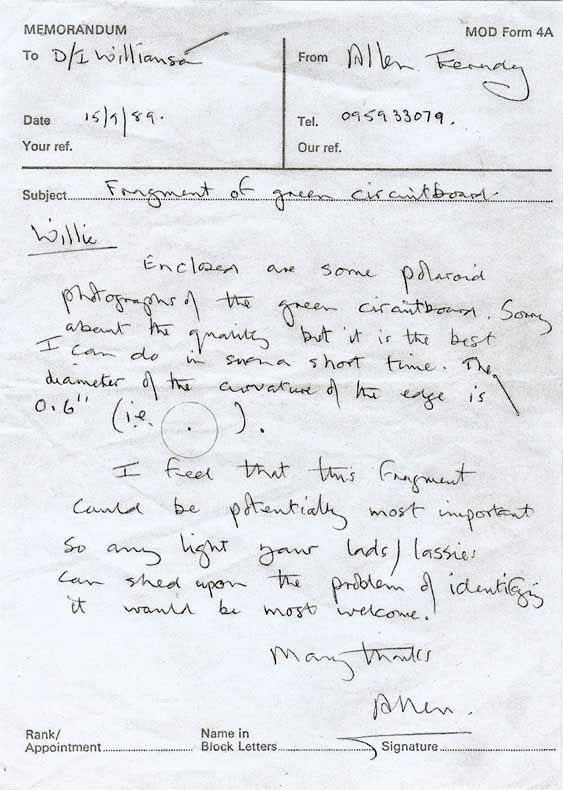
Earth to Allen, your science guy Hayes has May 11 as the date he IDd the radio, and on June 8 found that PT/30 matches it. Why the running around drama in mid-September looking for some whole other fit? The obvious answers somehow elude this blogger, but one thing I notice is the timing of this fevered search relative to a more fruitful circuitry quest: PT/35(b), the lucky corner of a Libyan MST-13 timer main board. The day after Feraday's reported inquest at Dexstar, evidencing that "keen interest" in circuit board clues, he sent a memo to the same DI Williamson cited above. This was regarding a four-month old (on paper) find by Dr. Hayes.
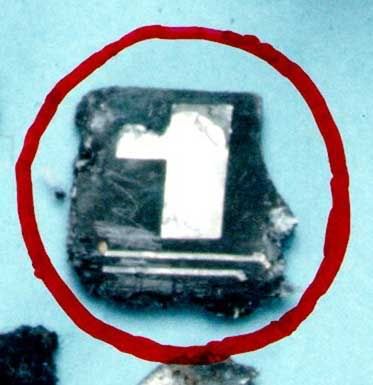
In retrospect, this memo is rather vague, not mentioning PT/35(b) by name or giving many direct clues. It could almost be about PT/30, except for the cited curve. Only the mammoth MST-13 chunk and its double-underlined #1 is large enough for that detail. By my rough measurement of a scaled MST-13 jpeg the curve at upper right has a 0.5" diameter. I'd defer to Feraday here.

So this is a letter about that amazing but yet unidentified clue PT/35(b), keenly ignored it seems until that date - four months after the paperwork shows it found. But only one day after Feraday's own foray over the already identified PT/30 (says the same Williamson months later).

Or am I just making too much out of a simple mix up? Not likely, as that memo of December 19, just ahead of the anniversary, shows Feraday behind the scenes urging yet more bogus action over the already identified circuitry. Over six months following its match-up with the known bomb radio, he was pestering Williamson to pester Henderson about trying to find a match for PT/30 over in Germany if possible.

If all these things are the true exploits of professional and even-handed investigators ... my God, what kind of MKULTRA experiments were they doing with the ventilation at RARDE? No, these "facts" must have appeared as they were convenient, with little regard for those which came before or after. It's the only sane explanation.
---
Update June 11/13, 2011
Some amazing screen grabs from Al Jazeera English's new video.

AG/145 fragments, separated and partly cleaned, hugely magnified and looking less burnt to ash than ever:
Here's the second largest fragment, placed against its spot of origin on the brown/orange, lettered, blast-ward side of the board.
And here is the backside of the larger one against the green, shielded, solder-tracked side.
It's this precise match-up, Allen Feraday said, that helped him at least narrow down the radio model by mid-February 1989. In both images, note the material - flimsy, paper-fiber-and-resin, not fiberglass.

As we can see comparing the first and third of these images, neither side of that largest bit shows any sign of blast damage (extreme heat, for example). But where on the board are these fragments from? The middle, just one inch from the Semtex supernova? Or at one of the ends, a couple of inches away? There's an image that clears that up, and they showed it as well in the video, bless them. I compared it to the assembled IED mock-up, rotated so features matched. I then indicated the rough areas for both AG/145 and PT/30.
That gives at most about 1.5 inches for the blast wave to chill-out, and nothing but the flimsy little capacitors (or ??) attached to those spots to shield the face. The left-hand one is in as good a spot as it gets to survive, but still, I can't cite the measure of the force of this blast except that it ruptured an airliner's hull at two feet distant, after being slowed by the luggage container, the suitcase, the clothing, and the radio's case. Before all of these, at 1.5 inches, tops, fresh and full-force ... No way.

Beyond that, do recall, as explained above, that Hayes found PT/30 had the wrong side - the green one - blasted away, while all of AG/145 shows damage to neither side. Another oddity is that both AG/145 at PT/30 would go about the same direction in the blast wave - out from the center in all directions. If PT/30 were blasted straight down, AG/145 should go down and to the left pretty much.

Officially PT/30 wound up wedged into the outer frame segment (IIRC) of the blue softshell on the container floor, just beneath the bomb bag - if so, why would AG/145 wind up, as Mr. Thomas Claiden testified, blasted into a fold of the data plate, on the outside of the container, halfway up its side, two feet or more above the bomb bag?
---

Harry Bell's Eight Reasons

December 27 2010

(Props to "Pete" for bringing this to my attention)

DCI Harry Bell, head Scots police investigator on Malta, made an important entry in his police diary on February 15 1991, the day of Tony Gauci's selection of Abdelbaset al-Megrahi's photo. In it, he says that his boss, Senior Investigating Officer (SIO) Staurt Henderson, "agrees we have a partial identification on the person named Abdelbaset considering all of the circumstances," which he then lists. These eight reasons, in support of Gauci's point, suggested to him that Megrahi was in fact the buyer of the clothes that wound up in the bomb suitcase. [Source: Grounds of Appeal PDF, p 42/43 - unearthed by the Scottish Criminal Cases Review Commission (SCCRC) and supplied to Megrahi's defense]
(1) He arrived in Malta on 7th December '88. This was the date of the purchase of the clothing.
This is a whopper of a point to begin with, considering the date of sale is almost certainly November 23, based on Gauci's best evidence. Tony described a Wednesday a few weeks before the bombing, before the Christmas lights went up, at about 6:50 pm during a light shower, with his brother watching a football game at home. All that fits only one day - November 23, and Megrahi wasn't even on Malta that day.

Even an official Scottish legal review by the SCCRC agreed in 2007 that "there is no reasonable basis in the trial court’s judgment for its conclusion that the purchase [...] took place on 7 December." The judges had accepted it, but that decision has been criticized by serious professionals.

Consider also that in 2006 Bell himself admitted to the SCCRC just how the other date was selected despite the evidence. He ignored the lights and rainfall, focused on the less-conclusive football schedules, and got "confused."
DI Bell SCCRC interview (25-26/7/06)
"...The evidence of the football matches was confusing and in the end we did not manage to bottom it out..."
"...I am asked whether at the time I felt that the evidence of the football matches was strongly indicative of 7th December 1988 as the purchase date. No, I did not. Both dates 23rd Nov & 7th Dec 1988 looked likely."
"It really has to be acknowledged how confusing this all was. No date was signficant for me at the time. Ultimately it was [Megrahi’s] presence on the island on 7th December 1988 that persuaded me that the purchase took place on that date."
[same link as above, p 229]
It wasn't the evidence (no rain all day, different game time, lights glowing across town) but Megrahi's presence that made it the day. If that's not dishonest, it is evidently wrong to then make the circular claim, as Bell did in his diary, that the established date is a separate support for Megrahi's guilt.

(2) He resided at the Holiday Inn Hotel, Sliema, which is within several hundred yards of the shop premises.
Extension of point one. He stayed there on December 7, not the day the clothes were bought.

(3) He travelled to Switzerland on 9th December 1988. He is known to Bollier, the person who supplied the IED timer.
This isn't immediately relevant to the bombing; the trial court dismissed any direct link between Megrahi and the timers. However, Mebo founder Edwin Bollier's acquaintance might be material, in that he was the first person to suggest the CIA should blame Libya, and helped them greatly in brining false charges against al-Megrahi into 1991 (see below). His information then and since is often bizarre and usually unreliable.

While the Lockerbie timer fragment is itself questionable, whether or not DCI Bell should have suspected that at the time is another story. But even if he believed these other clues, it's no excuse for mangling the date of purchase evidence like that.
(4) He was involved in the company known as ABH on behalf of the Libyans. This company was set up to deal with contact with the MEBO company, Mr Bollier's firm.
Same as above. This is an irrelevant extension of a tagential connection that doesn't prove anything about how the bombing was done.
(5) He has a resemblance to the original photo fit and artist's impression.
In the sense they both have faces with two eyes and so on, this is a good point. Otherwise, the resemblance is uncanny in its inability to match up. Five inches too short, 14 years too young, too light, too slight, with a different face and hair, and far away from there when the clothes were bought. Point five is way off mark. If the other clues support the guy, a bad sketch is no problem to ignore - they're well-known to be unreliable. But to actively cite it as a support when nothing else really sticks is deceptive.
(6) ...
We don't know what this point was or why it was apparently redacted.
(7) The SIO advises that Bollier has now been shown the photofit and he states that if the hair was shorter then it would indeed look like Abdelbaset, also if it was 10 to 15 years older.
Strangely, this is exactly the description Gauci gave of the "Czech photo" of Megrahi: 10-15 years older, with shorter hair, and he'd look like the buyer. But this is about the Photofit image, which Tony felt looked like his 50-year-old buyer (see last link). Bollier says "if it was 10 to 15 years older" it would look like the 36-year-old Megrahi. Or perhaps Bell is mixed up here.
(8) The SIO also advises that the photograph we have of Abdelbaset is in fact 12 years old. ...
Confirmation that the photo's dating served in a bait-and-switch operation on the age discrepancy. A 12-year old photo, of a man who'd have to look older by just about that, would make it a fit. But Tony still insisted the man was around 50 at the time of sale, while Megrahi was 36 at that time, so something was twisted out of form here. (That's explained a little better at the "Czech photo" link). Point 8 continues:
He is a smart dresser, plenty of jewellery and there is no recollection of the watch according to Bollier and he is taller than Bollier at 5 foot 9 inches. Gauci thinks 6 foot tall.
These fashion points are obviously weak as evidence, but the part on height is interesting. Gauci is famously short (5'3"), so Bollier is cited as a man also shorter than this tall-ish Arab, at a decent 5,8". Here that's fudged up a modest one inch and stated as taller than someone else, and it perhaps seems reasonable for stubby Tony to recall "Baset" as towering 6 feet up there, or maybe ten feet.

The wording is ambiguous enough, on review, that one who didn't know the subject's true height might conclude that a 5'9" man had reported "Baset" as taller than himself, and another had said Megrahi was six feet tall. That's important when that same man said the buyer, who the police knew could not be Megrahi, was six feet or more in height. That's one of the reasons it can't likely be Megrahi.

And that's all of the reasons he wrote down, except the missing one, and the fact of the "identification" earlier that day. Not encouraging stuff to be finding in police records, is it?

Sent Out to Lie

Review: The Loockerbie Bomber: Sent Home to Die
finished 3 October 2010
last edit 4/10

Production company: STV, Scotland.
Air date: August 2010
ex prod: Gordon MacMillan
prod: Donald John MacDonald, David Cowan
STV Youtube posting (embedding disabled)
---
I’m a little late to watch and review this video, which might just be the most strategically deceptive thing I’ve yet seen or on the subject of Megrahi’s guilt. Most of its lies are of the omission type, like ignoring the hundreds of credible critics of the official story on Pan Am 103. The lone voice they present for the other view, Dr. Jim Swire, told the crew he felt “the circumstances of my daughter’s murder have become wrapped up tissue of lies. Something terrible is being covered up.” (32:17) The video that abuses and dismisses his position at every turn is clearly a continuation of that same fabric, hoping to wrap up all his - and many others’ - outstanding questions and chuck them forever in the dust bin.

The 46 minute video is tightly–paced and split into four parts. The first covers the horror, the scale, and the loss of the bombing over and in Lockerbie. Part two relates the popular mythology of how Libya’s guilt, via Megrahi, was discovered. The investigation, indictments, sanctions (nearly a decade glossed over in two sentences), and everything up to the trial at Camp Zeist are packed in there. Part three briefly mentions the 9-month trial and then tries way too hard to clear up the continuing doubts about Megrahi’s conviction there. This is supposed to wipe the slate for the pivotal part 4, which explains how the “Lockerbie bomber” was sent home to die, but then didn’t.

The intro starts by noting the disastrous "compassionate release" all the way to Tripoli was "against the wishes of the most powerful country in the world," as if the power of those who disagree should matter. I didn't know China much cared, but the producers will have you know the SNP has made powerful enemies for the British with its stupid (or...???) decision.

The actual video opens with a long stretch on the horror of the crash, which, again, the best (discarded) evidence suggest was done by the PFLP-GC, for Iran, using a Khreesat-style altimeter bomb loaded in London. The amount of pain or fire doesn't in itself add anything to who's guilty, just to how mad you should be, at how horrible this mass murderer’s act was. Then for a change, it goes to how tragic loss of so many wonderful people was, so you can get sad before getting mad again. It’s a well done and touching segment, to be honest. Mentally, however, it’s counterproductive to thinking straight, and only primes the audience for the coming barrage of deception.

About 12 minutes in the PFLP-GC and Iran Air 655 as possible motive are mentioned, and FBI chief investigator Richard Marquise admits that sounds like a logical assumption. But the notion is here first framed as something the CIA had tried to say once, with "no evidence" of an Iran-PFLP-GC link ever found. It could be fairly said there was no proof, but much evidence exists, a bit of it presented in the preceding minute of this very video. There was not one but four radio bombs found, and a fifth that never turned up - unless it did. These were set by altimeter and a crude "timer" set to blow 35-45 min. after takeoff (that's the simple version - deeper here). PA103 blew up 38 minutes after leaving Heathrow, officially a coincidence of poor Libyan timing.

On forensic findings
Finally at 14:24, after discussing the "fortunate"bomb placement that actually best supports a London introduction, the video gets to the specific evidence that would matter for convicting Megrahi. In thirty seconds it says a lot that leaves out a lot:
Forensic scientists decided the Lockerbie bomb had been hidden inside a different radio cassette player from the one used by the Palestinians. Packed into the Samsonite suitcase, it exploded in the plane’s forward hold, close to the skin of the fuselage. Charred fragments of clothes from the suitcase took the inquiry in a completely new direction. This label from a babygro [“made in Malta”] was the first connection to the island of Malta. Then a distinctive logo [“Yorkie”] led to the firzsst major breakthrough.
This is the one of the parts where they tell you that science has spoken, but as I’ve noted elsewhere, what it said doesn’t make any sense. The PFLP-GC link was weakened by the identification, from scattered fragments, of a different radio than the “one” the PFLP-GC used (actually 3 different models and a computer monitor). First, I invite anyone to closely examine how this other radio – Toshiba BomBeat RT-SF16 - was identified. Consider the chronic inconsistencies in this detailed timeline, reconstructed from trial transcripts. Secondly, Dr. John Wyatt's tests suggest an explosion of the scale needed wouldn't leave any such readable debris, meaning investigators would really have no clue what radio - if any - was used.

And thirdly, even if Wyatt is far off, the clearest "proof" of the radio model is this, PK/689, the paper manual cover. You know it was inside the box 2" from the blast center not because it was reduced to ash, but because it's lightly singed, torn, and says, plain as day, "BomBeat." The lady that turned in PK/689 said the paper she saw was fully intact when she found it, and that hasn't been challenged. Officially then, it was made "a bit tatty around the edges" by the semtex blast, and ripped nearly to shreds by forensics tests.

The radio model thus established not only pointed away from the Iran line, but also suggested Libyan authorship. Convenient.

The scorched clothing - blue babygro, Yorkie trousers, black umbrella, slalom shirt, and others - is also challenged by Dr. Wyatt’s findings. Being at least outside the radio's cardboard box, it's to a lesser degree than the radio and timer, and I for one am agnostic on whether they’re authentic. But they were convenient also, pointing to Malta and, by extension, to Libya.

To Malta and Gauci
The story of the clothes’ identification and tracing to Malta seems to be conveyed fairly, although the details, relying on the recall of detective John Crawford, are a bit fuzzy. The trousers in particular led them to the Yorkie clothing factory on the tiny island nation, who had the papers to show the very few pairs of that batch were sold to one shop only – Mary’s House in Silema, run by the Gauci family. One fateful pair was apparently bought there brand new by someone linked to the bombing and f*****g stupid. The clarity of the lead was the "stuff of detective novels," says George Esson, Chief Constable of Dumfries and Galloway Police in 1991. It was all "fantastic," "almost unbelievable." Why "almost," George?

Starting at 15:45 they discuss the pivotal witness Tony Gauci, the shopkeeper on duty at Mary's House when those clothes were sold, and his supposed identification of Megrahi as the bird-brained buyer. As the video later notes, Gauci's reliability remains hotly contested, and he “has never said with absolute certainty that al Megrahi was the man" who bought the trousers and babygro.

In fact he’s never said he was the man at all, who he says was at least 4 inches taller and 14 years older than our villain. Just going on faces, he pointed at a photo of Megrahi in 1991 and said it was "similar to the man ... He would perhaps have to look about ten years older,” which he didn’t. Later in 1999 at Camp Zeist in the Netherlands, he pointed to the by-then famous “Lockerbie bomber” in person and said "“not exactly the man I saw in the shop.” Clearly Detective Crawford’s take “when he got to number 8, he said “that’s the man,” is misleading. (18:10)

At 17:29, Richard Marquise says again that Megrahi "had been in Malta the day the clothing purchase was made, December 7." This is a big lie and he’s had that pointed out to him prior to this interview. Note he emphasizes “actual immigration records,” as if that's the issue. In fact, the top Scot on Malta, Harry Bell, essentially admitted in 2007 that Megrahi's presence on December 7 was the reason the date of purchase was changed. Gauci clearly describes November 23, when Megrahi has an alibi, but there was a very slim case for it being December 7, and that’s what it became. Gauci can be observed at trial being more vague on all the points that conflict between the two days. But the judges seem to have missed that (see link for details).

And the money situation ... we'll return to that one.

A bomb from Malta
Having "established" Megrahi’s link to the clothing, at 22:07 crown prosecutor John Logue cogently relates the official story of the unaccompanied bag from Malta. The tight and coherent evidence from Air Malta's end says clearly there was no such suitcase on KM180, and opposing it we have wishful thinking plus one unusual record from Frankfurt, with all supports and comparison records somehow  vanished with no clear explanation. If it weren’t for the fluke of the computer printout for PA103A, salvaged from an airport employee's locker, investigators would have no record at all of what happened at Frankfurt that day. Air Malta had everything and it was in order, but it differed from what the locker-paper said, so was pushed aside by investigators, by Scottish judges, and certainly by crown prosecutors in between them.

After ignoring these troubles with the notion of a bomb from Malta getting onto 103, the video turns to the evidence that Megrahi was at the airport on Malta December 21 - under a false name. This seems to be solid, and at 22:25 he is caught in a lie to a journalist, denying his presence there. This secrecy probably was related to the false passport and the secret mission he was likely on for Tripoli, and it was unwise to continue denying at the time of that interview in 1992.

But as far as we can tell, Megrahi's unrelated secret mission on that day is precisely why he was chosen as the route to frame Libya, and why evidence pointing to Malta was concocted. It could also explain why Mohammed Abu Talb was chased for a while, but that's too esoteric for most. At any rate, the missing context is the lack of any good evidence his mission was to blow up a plane, and the presence of any bomb on Malta that morning is what’s solidly in question here.

The locker-paper from Frankfurt had suggested (but far from proved) an unaccompanied item from Malta getting onto the doomed 747, but not what kind it would be. This was previously filled in by a witness who said he saw Megrahi with a brown hard-shell Samsonite - like the bomb was packed in - the day before the bombing, on his arrival from Tripoli. Unfortunately, the witness, Abdul Majid Giaka, made this story up for the FBI only in 1991, after learning what type of case he needed to "remember." (And after being given no choice but to come up with something just like that.) The judges dismissed this point of evidence, as well as the rest of what Giaka had to say (and it was a lot) at trial in 2000. As far as I can tell, Giaka and his claims are entirely absent from this video, as if he never existed - another lie of omission, and a rather glaring one.

On the timer fragment 
(18:40) The video's approach is standard and brief. A piece of circuit board dubbed PT/35(b) was discovered, and later matched to a timer called MST-13, made by Mebo, a company with links to Libya. This information was obtained from the CIA, who held a comparison model. Identifying FBI agent, "Tom" Thurman, related again his 1990 epiphany comparing a photo to something under a microscope (there are many versions he's told). He explained "I could not believe it under any circumstances, and it was there," so he believed it and so did everyone else.

Myriad logical problems and questions plague this alleged timer (see PT/35(b) link). Why was it set so early, when a couple more hours would safely bury the evidence at sea? Why is the corner they found the only one so distinctly recognizable? The narrator starts by describing the prominent 1/2"square fragment as "tiny," and Marquise later implies that contrary to what critics say, it was not too small to have been found - because it was found, duh!

In fact the key problem for this item is that it's far too large to have been inside the bomb, maybe 2 inches from at least 450 grams of semtex. Dr. Wyatt's tests cited above in relation to the radio itself, were publicized in January 2010 in connection with this crucial evidence more than with the radio. As his work strongly suggests, this thing was put into the wreckage by something (or someone) other than the bomb. Therefore, its ability to implicate Libya might be better evidence for a frame-up than for a bombing.

On the conspiracy theorist
Part three starts with the trial’s end (around 24:15). Megrahi was now ruled guilty, and his accomplice Fhimah was somehow found not guilty. To mention why would require bringing in Giaka, and raise troubling questions. The video does not mention why he was found not guilty, probably some technicality.

"But not everyone was convinced," the narrator ominously intones, turning to Dr. Jim Swire. He's not only a critic of the official story, but feels Libya and Megrahi were consciously framed by the US and UK governments. This blogger agrees that, politically correct or not, tha' the most logical explanation for what happened. The editors selected a video of Swire solitarily approaching a podium on the court's expansive plaza, and then mentioned no one else who holds views like his. With both of these choices, the video creates the impression that Swire is the only one who needs convincing and what the hell's wrong with him?

Just before introducing the loner, US family member Bob Monetti said “if you follow it every day and have an open mind, it became overwhelmingly obvious that Megrahi was guilty.” But Swire insists it was close attention to the trial that solidified his doubts about Libya’s guilt. Having read much of it myself by now, I agree with him, and I suspect Mr. Monetti did not follow as open-mindedly as he claims.

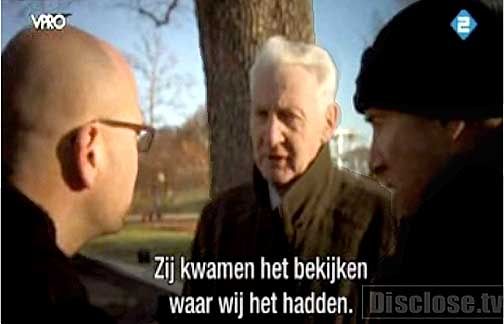
Further, Dr. Swire’s lone claims "infuriate" the leaders of the investigation that led to Megrahi being blamed. Top Scot, SIO Stuart Henderson, says at 26:21:
"I’m sick and tired of saying this. What - is - in - it - for me to try and fit somebody up to go behind bars for forty years. You must be joking. Anybody that makes suggestions like that has got to be rather twisted. Because we were being watched on a daily basis. The whole world was watching us."
I can't say what's in it for anyone in particular, nor do I have reason to suspect Henderson himself took part in the most important bits of dishonesty. But the whole world was not watching them. I don't recall seeing the live footage at RARDE’s laboratories showing all comings and goings, or transcripts of the first police interactions with Mr. Gauci. There’s no audio tape of agent Tom Thurman’s meeting with Orkin, or secret video of the session where PT/35(b) was cut, scratched up, and burnt to look realistic enough to plant. But Henderson would have us believe all these things would be known if they happened, so they must not have happened. It's a poor argument to say the least.

Lawyers are then called on – even those who support Megrahi’s innocence – to strengthen the stance that there was no conspiracy here. As expected, they won’t admit, for reasons of being lawyerly, that fakery and framing are bleeding obvious. Megrahi’s counsel Tony Kelly argues that his client is innocent and wrongly charged, but apparently on accident. He didn't see “any major conspiracy, or attempt to frame a particular person.” (26:42) "Megrahi's own lawyer rejects the conspiracy theories," the narrator can triumphantly say, and even his more banal protests could just be invented to justify his paycheck. Swire's looking pretty lonely now.

Kelly further emphasizes that “it’s the legal process that matters,” not theorizing about what might have really happened. I take his point that legal truth does decide things here on Earth, even if it's unjust in its mechanics, like at Camp Zeist, and on Megrahi's first appeal. Call me old fashioned, but I say truth matters more than this fickle legal process – at least in some abstract way that should matter more.

On the Official Review
One bright point where the legal process and revealing truth partially merge is Scottish Criminal Case Review Commission (SCCRC), covered in the video at 25:40. They looked at the case for almost four years and, like Kelly, said they found no sign of evidence being planted (rather I suspect they didn’t look for any). But they did find in mid-2007 reason to conclude Megrahi might have suffered a miscarriage of justice, again presumably by accident.

They referred it, on a conservative six grounds, to the appeal court. A spokesman, Gerard Sinclair, told the film that research suggests “there's about a 64% chance of that being successful" once they’ve sent it back to the courts. This statistic is presented as ominous, spliced with secret video of a jubilant Megrahi, alerted of the commission’s finding.

To its credit, Sent home to Die does acknowledge the finding that the Maltese clothes were bought "when Megrahi wasn't on the island." It's obvious to anyone who reads the evidence with clear eyes, and kind of proves that Marquise lied to the camera at 17:29, but the video already accepted that untruth as a basis for presenting the conviction as sound.

The SCCRC’s findings of American payouts to Tony Gauci of at least $2 million is mentioned (but the further $1 million or more to his brother Paul is neglected). No one will flat deny that such money was dished out to the brothers following the verdict, but on the question of what they knew before that remains hotly debated, for obvious reasons. The promise of money for a conviction against the man in photo #8 has the manifest potential, at least, to alter Gauci’s evidence. And as noted above, he altered his evidence in ways that seem not so much random as strategized to help convict Megrahi.

Marquise fudges, in a way that's effectively a lie (30:00). "Not one witness was ever promised money or did they ask for money in exchange for saying anything." The contrary evidence can be read right from Scottish police records here. Money concerns are there from day one, first seeded by the Americans in 1989 (“endless money” offered, $10,000 upfront) and couched in indirect language elsewhere. Tony himself usually kept mum, but his brother Paul was noted as a money-grubber. Behind the scenes, the ongoing quest for cash was clearly an open secret, gutting Stuart Henderson's ridiculous rebuttal. He told the crew that Tony was not only unaware of the coming reward, he was in fact "well aware that there was no such thing as a reward being handed to him ... Didn't enter his head."

Sent Home to Die gives the commission a semblance of respect in its filming and mention of the more important findings. But ultimately, it brushes their work aside as niggling questions surrounding a rock-solid conviction that had been assembled by solid men like Henderson and Marquise, and accepted by eight judges. However, between the Zeist verdict and the SCCRC’s review, only one has been legally ruled a “possible miscarriage of justice,” and the other is clean as a whistle.

On the appeal/Conclusion
The respect shown to the SCCRC is carried over into the results of its process, Megrahi’s second appeal. It’s a solemn process the prisoner is entitled to, to be looked at by five more judges. It’s acknowledged that this moved rather slow, and then somehow it was buried under the noise of imminent release.

The prisoner transfer agreement is raised first, emerging as it did in 2007 and part of a lucky streak along with the SCCRC review. But as a less-lucky terminal case of cancer entered the picture in 2008, so did compassionate release, and a second way home. Both routes are mentioned, with few details, and it fell to justice secretary MacAskill to chose, and he met the prisoner at the jail.

Then, the narrator says, “just days before MacAskill announced his decision, Megrahi gave up his appeal.” Margart Scott, QC, is shown passing along his officially inexplicable “belief that these instructions to abandon his appeal will assist in the early determination of those [release] applications.” The move is not explained or dwelled over any. Maybe he thought he or his successor would lose the appeal. Again, the Crown prosecutor John Logue is called on (32:00)
We were ready, willing, and able to defend Mr. Megrahi's conviction in the appeal court, and would have done so had that appeal continued. We were confident in the conviction, and confident that we were able to defend it during the appeal.
Logue is just parroting the bluff of departing Lord Advocate Elish Angiolini. The Crown was not ready or able to defend the case, at least not by normal evidentiary means. Consider this recent assessment of a renowned defense layer:
Michael Mansfield QC, one of the country's best-known defence lawyers, said a full judicial inquiry was required to settle the doubts over the case. Mansfield said he had no doubt that the evidence given to secure Megrahi's conviction was "entirely unsustainable". [source]
But part three ends with “20 years after Pan Am 103 fell from the sky, Megrahi’s legal battle was over. Only one question remained – where would the Lockerbie bomber be allowed to die?” The following part four is interesting in its own right, but I’ll leave it be as based on a false premise, as there are far more, and more relevant, questions than that one, as another prominent lawyer recently noted. Citing the SCCRC’s doubts about the case, the head of the Scottish human rights commission professor Alan Miller said [per the Guardian]:
The row over Megrahi's medical status was an "undignified and unhelpful distraction" from the more important issue of addressing unresolved questions about his guilt.
The situation that needs resolved in 2010 is the continued denial of truth and thus justice while nearly everyone turns a blind eye and maintains the charade. In pushing the groundless presumption that Megrahi actually is the bomber, Sent Home to Die cannot be of any use in that resolution. It might just do for someone’s political agenda, but that’s no surprise – Lockerbie has always been taken for all its worth to advance unstated aims.

Gauci and the Czech Photo

24 November 2010
last edits 26 December

Just What was Identified
From the revived JREF discussion thread Tony Gauci and the Mystery Shopper comes a very interesting nexus of questions surrounding critical images of "Lockerbie bomber" Abdelbaset al-Megrahi. In later pages there, Rolfe, Buncrana, Pete2, and myself are re-considering the image by which shopkeeper Tony Gauci linked al-Megrahi to the wreckage of PA 103 with his "identification" of the Libyan as the buyer of a certain set of clothes.

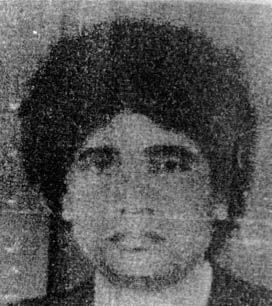
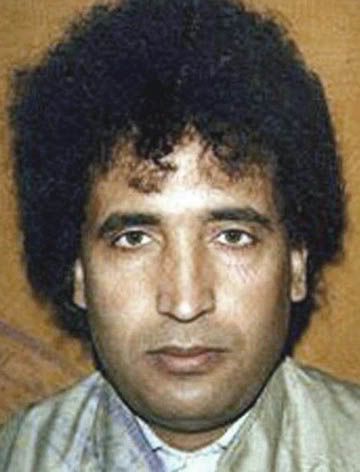
Although Tony had been talking to the police since September 1989, this historic fingering only happened on 15 February 1991, when Mr. Gauci was shown another spread of 12 faces. According to his statement, he at first felt all were too young to be the buyer, and selected none of them. The police refused to take no for an answer, and asked him to again "look at all the photographs carefully and to try and allow for any age difference." [Gauci 15/2/91] On the second pass he pointed to picture number 8 from the left. This was an image of al-Megrahi obtained by investigators from Czechoslovakia. For those unfamiliar, the undated big-hair image used for the slot in question is shown below.


Now, what Tony said pointing at this notably low-quality image and its obscuring noise, is less than amazing. His police statement following the session records it as:
“...similar to the man who bought the clothing. The hair is perhaps a bit long. The eyebrows are the same. The nose is the same, and his chin and shape of face are the same. The man in the photograph is in my opinion, in his thirty years. He would perhaps have to look about ten years older, and he would look like the man who bought the clothes. It's been a long time now and I can only say that this photograph resembles the man who bought the clothing, but it is younger.”
Back in 1989 he had given the buyer as a burly six-foot-plus Libyan, aged approximately 50 years. Our 5'8" villain al-Megrahi was but 36 at the time of purchase. And instinctively, this photo looks to me quite young, taken perhaps a decade before the 1988 purchase. He looks almost too young, with the apparence of baby fat on those long al Megrahi cheeks... and with the cheeks and nose actually seeming shorter... the lips and nose look different...

In fact, the image used is highly unusual, bearing such little resemblance to Megrahi one could be excused for wondering, as I have, if this really is him. The Lockerbie case is so special, I can't see ruling out such a simple thing as a misattributed photograph. However, there's a certain logic to presuming the image is genuine - it would be a massive risk that the picture could be proven to be of some other person, or even altered.

I remain convinced by an earlier experiment I did with photo comparison that I don't think I documented. Even with the apparent facial differences, this could well be Megrahi, taken a bit "chin-up," showing nostrils, more upper lip, shortening the face and nose as seen. Nothing in the overall proportions ruled out the same face. The hair obviously is unlike anything else we've seen him wearing, which when long is more like in the photo shown below.

The image at left was taken for the false passport in the name "Abdusamad" issued by Libyan authorities in mid-1987, age 35. It was used on a few occasions, including a now-famous trip to Malta on 20-21 December 1988. As I've explained elsewhere, this is a legitimate clue - if not for Megrahi's guilt, then for why he was selected for framing.

The image itself is the most widely seen photo of the accused from the 1990s onward. It's not unlike the others taken since then as the man gained new fame as the accused - and then convicted - "Lockerbie bomber." This verifiable likeness is very unlike the photo Tony pointed to, and to which we now return.

The Hair
What Megrahi looked like before and after the Abdusamad photograph is unclear. Whether the raging afro seen in the Czech photo was chopped down before the above or grew in after it can't yet be established (but most clues point to some time before). However, one thing we know it does, among all images of al-Megrahi, is bring him close to matching the plumage style of Gauci's buyer. 

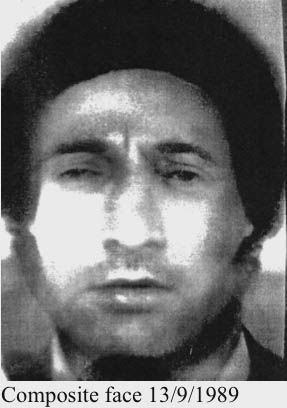
At left is the police artist's sketch based on Tony's description of the mystery shopper, 13 September 1989. The likeness is uncanny in its near-exclusion of Megrahi. It just doesn't look a lick like him, especially with this intense, angular, face, compared to Megrahi's soft features he later pointed to. And all this on a "large head" atop a 6-foot-plus frame to Meegrahi's 5'8" and Tony Gauci's 5'3".

One main feature to note is the dense afro-style haircut atop a clear expanse of forehead. The tightness of the curl is different by a long shot from any photo of Megrahi I've seen. His dangling ramen-wiggle expanses seem incapable of the tightly spherical sculpted look of the artist's sketch.


And here is the "Photofit" or "composite face" image compiled from Gauci's descriptions, given the same day as the above. They share the same basic hair, here a bit longer and fuzzier at the top. Otherwise, the two look drastically different from each other in the lips, chin, eyes, eyebrows, nose, and cheeks.

Tony did specify the sketch was a better likeness than the photo-thing, but agreed both resembled the buyer quite a bit. This almost seems to say "if you can find a photo of anyone with this kind of mid-sized 'fro that I think you guys want to prosecute, I will say it looks like the man." 

Prior to al-Megrahi, Tony had selected others as a match for the buyer, like Mohammed Abu Talb, famously in December 1989. Abu Talb didn't really fit by hair; his appeal was more from the word "bomber" across the corner of his face.  And Tony once pointed out  Mohamed Salam - a pretty good likeness of the sketch in both hair and face - on a less famous occasion. Like al-Megrahi, both of these men were at least a decade  too young. 

Perhaps Megrahi's undated fro was an earlier thing, from his 20s. But other than the Czech photo, we've only seen Megrahi with less hair and apparently more hair product. Buncrana found a photo of Megrahi at about age 19 - a student visa is from when he was studying in Wales, around 1971 (first revealed by the Sun back in August). We can here recognize al-Megrahi's longish features as a stylish young man. A little quiet-looking, but with a wild frontal swoop, almost a bouffant, coming halfway to his eyebrows. Quite unlike Tony's buyer, the Megrahi images show nary a clear forehead, especially in the questionable Czech photo.  And unlike that photo, this one actually looks like the guy it's supposed to be. 

Czech Photo Origin, Age, and Effects 
What was shown was not that Megrahi was or even actually resembled the buyer. All we learned on 15 February was that, among a selection of 12 pictures, Megrahi's could be made to be reported as the one most resembling the buyer, so long as you pick one that doesn't really look like him, while giving him something like the right hair.

This highly useful image was supplied to the investigation by intelligence from Czechoslovakia, says lead FBI investigator Richard Marquise. [see Sent Home to Die, Youtube posting 17:48] In his 2006 book he gave no explanation I could find about when the investigation got this picture, why it's of such poor quality, and what info came with it.  He acknowledge that "no one could positively date the photograph shown to Gauci." [SCOTBOM p. 127 - Google Books link] This may be of key importance below.

Marquise and his faux-witness Abdul Majid Giaka agree the photo Tony pointed to showed a young man, who was Meagrahi. "Giaka had looked at the Czech passport picture identified by Gauci. He said it was Megrahi when he was much younger." [p 142 ] Gauci's own feeling was of a man "in his thirty years," (30s) which Megrahi then was. But this could be chalked up to the lack of clarity and the fact that nearly all men Tony had been shown were in their 30s. DI Scicluna, Maltese police, gave his own account of the 15 February ID with slightly different details.
“.. Gauci started examining the photographs and the first thing he said was that they are all too young. It was explained to him to allow for age discrepancy as the man he saw could be 10-15 years older. [...] Gauci then looked through them and again stopped at Baset’s photo and indicating it he said ‘This is similar, but it is maybe 10-15 years younger.” [Grounds of Appeal doc]
Somewhere in his 30s, plus fifteen years is close enough to a match with the 50-year old man he described. But Marquise, Bell, and Scicluna and crew didn't know how old the photo was. All they had to do, and perhaps did,  was presume the picture itself was 10 years old, and add 10 years per what Gauci said, and you've got Megrahi's age, even though it's still 14 years below what Gauci first estimated.

Further, the quality of the Czech photo is worth wondering about. If the other 11 pictures he was shown that day were all normally clear and this one only looked strange, might that itself be leading? Might Gauci think it was included for some special reason? Might he think this is some super-elusive Mullah Omar character the cops can only get a crappy picture of? Might that make him feel it's more fruitful to point at then the others?

In fact, it seems the other images were altered to lessen the difference, but a professional who reviewed the effects in 2008 felt it was insufficient and the Czech photo still stands out as the gritty, mysterious one. [see Valentine report, page 40]

And There They Stopped
However exactly he was tricked into it, this was the final identification. Tony Gauci had been picking men out of photo lineups sporadically since September 1989, at different times having picked out at least three other men as similar to the buyer, but younger. But after 15 February the exercises abruptly stopped, and investigators were somehow sure they had their man. An identified buyer of the clothes, a Libyan agent comporting with the by-then identified timer, and there as Abdusamad on the day of the bombing. Never mind that he was about five inches too short, too slight of stature and light of skin, 14 years too young, and nowhere near the island of Malta on the day the clothes were purchased.

Marquise related how, at a mid-1991 conference, Senior Investigating Officer Stuart Henderson "discussed the photo spread leading to the Gauci identification of Megrahi. Although no one could positively date the photograph shown to Gauci, he was reluctant to show any more photos without fear of tainting what he had already provided." [127-8]

Something tells me it wasn't so much "tainting" as "spoiling the moment" Henderson was worried about.  As we've seen there was a special and delicate magic about how this supposed selection of al-Megrahi was materialized. It's also clear that the other photos available, with al-Megrahi's usual hair styles and better clarity, would show Tony how unlike the buyer this Libyan was. It could conceivably screw up the ID they had and wanted to keep.

So the big-hair Czech photo remained the only one of the chosen suspect that Tony saw until the better likenesses started appearing in the news a few months later as the "Lockerbie bomber." By then the whole world knew just what the guy looked like, removing all the cahallenge from arranging the later touted pointings-out in 1999 and 2000, just before Tony helped land a conviction and his $2 million prize.
---
Updates 12/26: In fact, Harry Bell noted in his police diary the day of this charade that this was the only photo the Scottish police had of "Abdelbaset" and they had to use it for fear they could never find another.
"meeting with Special Agent Reid. He tried to imply that we were rushing showing the photograph spread. ....they were the ones that wanted it done before Bollier left the USA.  Also if Baset was identified, Bollier would be the last person to be told as we know he is still in contact with the Libyans. Reid has been worried in case there is no identification made by the witness because [the photo]of Baset we have is too young. I explained that as we have no other and no indication that we will ever get one, then we can only proceed with what we have. If no identification is made and we later get a better photograph showing his true age and appearance in December '88, then the Lord Advocate may
accept an argument for showing this to the witness.

The differences in any photos can be noted while accepting that to some degree it will weaken the identification at any trial."

Then, among the eight points why Megrahi was the buyer, he wrote:
(7) The SIO [Stuart Henderson] advises that Bollier has now been shown the photofit and he states that if the hair was shorter then it would indeed look like Abdelbaset, also if it was 10 to 15 years older.
They got the same response from Bollier, but apparently in reference to the Photofit, not the Czech photo, if it was older (??). Bollier claims in comments below that he was never shown the Czech photo, and had still never seen it for 20 years of highly public study, until this blog post.

(8) The SIO also advises that the photograph we have of Abdelbaset is in fact 12 years old.
This confirms the suspicion. A twelve year old photo of Megrahi would be of a man aged 26, circa 1979. Gauci thought it was of a man in his 30s, and never actually retracted his belief the man was "around 50." This looks a hell of a lot like a shell-game or three-card-trick, designed to fit Megrahi in. [See: Grounds of Appeal doc, page 42/43]
---
Information continues in the excellent comments below.

PT/35(b) MOVE CLAIMS, pt. one

"IT WAS NEVER IN THE UNITED STATES?"
23 October 2009
re-posted here March 23 2010
last edits 31 October 2010


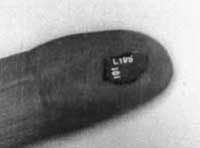
The recent hubbub regarding overly-mobile Lockerbie evidence started with Dutch journalist Gideon Levy’s early 2009 video Tegenlicht: Lockerbie Revisited. It’s a well-made video, with good music, some informative bits, and an unusual format of having interviewees watch and respond to recordings of others. Its prime focus was the crucial evidence PT/35(b), the Mebo timer fragment “tying” the bombing back to Libya. It’s therefore a little embarrassing that Levy announces another famous fragment, of general Toshiba circuit board displayed on a fingertip – as the article in question. This confusion surfaces elsewhere in the film, but manages to not become a big deal.

The main attraction that has generated some buzz was a curious discrepancy revealed and captured regarding the whereabouts of this historic find during the course of the investigation. As evidence from Scottish soil it was, should have been, in control of the Scottish police investigation, headed by the Senior Investigating Officer (SIO), a spot first held by Detective Chief Superintendent (DCS) John Orr (Strathclyde police, now Sir John Orr), and then by Orr's deputy, DCS Stuart Henderson (Lothian and Borders police, whom we meet below). The Scots would work in tandem with – but not give their evidence to – the American FBI's task force for the "SCOTBOM" investigation.

Officially the fragment was definitely taken outside Scotland - in the proper hands - to a RARDE lab at Kent, England and, as we’ve more recently had confirmed, to a private lab in Germany, both times for forensics testing. The understanding of then-Lord Advocate Lord Fraser of Carmyllie, which should have been quite good: “As far as I’m aware it’s always been in the UK,” he told Levy’s camera in 2008. He obviously didn’t know everything.

Besides the trips to England and Germany, which neither Lord Fraser nor Gideon Levy seemed aware of, there’s an alleged journey by this little blue key across the big blue sea to the United States. In the first of two interviews with Levy, FBI SCOTBOM chief Dick Marquise casually states that this one crucial piece of evidence, and nothing else, physically was brought to the FBI’s main lab in Washington.
“I’ll just tell you, not one piece - no I shouldn’t say that – the evidence – no, I’m not choosing my words carefully, I just want to make sure I say the right thing – all the evidence that was found in Lockerbie never made its way to be examined by the FBI laboratory. PT/35, as far as I remember, was the only piece of evidence that made its way to the laboratory, in the possession of a RARDE examiner. He brought it, he did the comparison, and he’s a scientist, and he took it back.”

Well that's an interestingly worded twist to the story. FBI Special Agent James “Tom” Thurman, the man publicly credited with making the identification of the fragment as from a Libyan-supplied MST-13 timer, on June 15 1990, also made an appearance. Levy caught up with him, wearing his years well in retirement, at a December 2008 ceremony to marking the 20th anniversary of the Lockerbie disaster. Levy came across a bit wormy, in my opinion, using the solemn ceremony mostly to make Thurman squirm and deny he was dismissed from the FBI for altering evidence. More to the point, he challenged Thurman if comparing with a photo – as he has previously stated – was really scientific. Thus provoked, he responded:
Thurman: I did the real thing ... I had the real piece of evidence.
Levy: That pointed to Libya.
Thurman: Absolutely. Absolutely. The photograph was the first thing, then the real piece of evidence was brought over. And at that point –
Levy: It was – it was on your finger, the chip was on.
Thurman: At that point - then there was a one-to-one identification made. The real piece of evidence, to the timer, the MST-13 timer, was made in the FBI laboratory. It wasn’t just a photograph. The photograph started it, and then the authorities from England brought over the real piece of evidence. That piece of evidence was examined in the FBI laboratory, along with the MST-13. That examination was verified in the forensic science laboratory, in England. So, it wasn’t only my examination, it was verified by other peoples’ examination as well.
Suspicions condensing around the Thurman link here is natural; PT/35(b) was apparently taken outside normal channels to his lab, and put under the grip of a known manipulator of evidence. Problem is, the charges against him were not over physically altering physical evidence, but for his explosives unit allowing conclusions to be overstated in the prosecution’s favor, in multiple instances unrelated to this one. Agent Fred Whitehurst told Levy how Thurman altered his reports when he deemed that his own political science training trumped Whitehurst’s chemistry smarts.

This will and certainly should cast doubt on Thurman's general investigative even-handedness and his certainties over his own lab work (“I knew we had it,” it "absolutely, absolutely" implicates Libya, etc.). In fact why Thurman was selected is beyond me – any idiot with the two photos could affirm they’re the same, and this selectee has become a real liability. All the rage at the 1991 indictment, he was discredited and never called as a witness by the time of the big trial at camp Zeist in 2000.

But presenting this side-by-side with concerns over the “tampering with” of this evidence once taken somewhere dangerous is quite leading. The fact is, I can see no sign of tampering with the evidence, nor much of a reasons to suspect it. The problem is the thing itself, not where it was taken and who touched it in these dark corners.

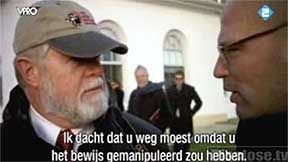
At that same chilly cemetery, as the people were leaving to more private venues, Levy caught up again with Mr. Marquise, as it so happened accompanied by his Scottish counterpart DCS Henderson. When standing side-by-side with the prime guardian of that fragment Marquise was of a different recollection altogether from his first interview. Levy was granted an answer to one question, and that's about what he asked, for almost four minutes.
Levy: When I asked Lord Fraser about the circuit board, he said something that contradicted what you said. He said it had never been to the United States. And if it was in the United States, then he would have known.
Marquise: No, I don’t know that I told you the circuit board was in the United States.
Henderson: The circuit board was never in the United States.
Marquise: Let’s back up, we’re talking two different things. There was a circuit board of MST-13 timer in the United States, but the fragment PT/35 was never in the United States. Photographs of it were in the United States.”
Levy: It was never in the United States? (murmured agreement) Oh, I thought it was…
Marquise: No the fragment never came to the United States, but the circuit board was in the United States, because we had the MST-13 timer, which we turned over to the police in Scotland.
Levy: Ah, but but… Tom Thurman, who was here today, also said it was in the United States.
Marquise: No, he never said that.
Levy: No?
Marquise: The fragment PT/35 was not in the United States.
Levy: But it was in England, but it came…
Marquise: It never came to the United States
Levy: It never came to the United States.
Marquise: I don’t believe so – I’m 100% sure it was not here.
Levy: Oh, it has never been here.
Henderson: Never released out of evidence control of ourselves. Couldn’t afford to let something like that …
Levy: I thought it was brought in the possession of Alan Feraday.
Marquise: Feraday’s over in RARDE. He’s in England. It’s in his possession.
Levy: Yes, yes, but I thought he came – I thought you told me that it came in his possession to the United States.
Marquise: I don’t know that…
Henderson: His possession and my possession. But it was never released for any reason (inaudible).
Levy: And who are you?
Henderson: Detective Chief Superintendent Henderson, I conducted the investigation.
Levy: Okay. My name’s Gideon Levy, and I’m from Holland - from the Dutch television. So it has never been in the United States.
Henderson: Confirmed

From the video: Levy, Henderson, Marquise (l-r) discuss whether or not it was ever in the United States. But it wasn't? No, wasn't it?
Levy: At all.
Henderson: Couldn’t be, ‘cause it was such an important point of evidence it wasn’t possible to release it. It had to be contained to be produced to the Court, therefore you couldn’t afford to have it waved around for everybody to see because it could have got interfered with.
Levy: Aha
Henderson: So it was far too valuable to be other than made available – couldn’t be.
Levy: Okay
Henderson: Very valuable piece of evidence.
Levy: (shouting over) But you said it was in the possession of Alan Feraday and brought to the United States.
Marquise: You know, its – you’ll have to talk to Alan Feraday about what he brought to the United States. I don’t remember…
Henderson: Alan Feraday had it in his possession with me, but he did not release it to anyone
Marquise: No, no, no, he said bring it with him. Did he bring it to the, I don’t remember.
Henderson: No, they came to us to see it.
Marquise: Yes. I saw it – I saw it in London.
Levy: Oh, you saw it in London?
Henderson: They came to where we had it, see. Because it wasn’t possible to remove any evidence out of the jurisdiction of the – Scottish control.
Levy: So you were the same – you were the FBI investigator and you were the Scotish investigator. Ultimate inestigators.
Both: affirmations
Levy: Okay.
Henderson: That’s why I’m here, to go and see the relatives.
Marquise: We need to go.
Henderson: We’ll have to go. Pleasure to meet you, gentlemen.
Levy: Thank you very much.
Henderson: And by the way, there is no hidden holes to find because the culprit is in custody. (with a smile and wink) Take my word for it. Okay?

So I would come away from this with an impression that it may well have not been in the United States, whatever Marquise and Thurman said to same guy ten minutes earlier. But I’m weird hat way, denying Henderson’s bait that I imagine was dangling there. A more normal reaction would be to get a little confused, and for many to solve that by taking their own default position. Some would just dismiss this all as faulty memory two decades on, while others will surely latch onto it as more proof of a cover-up, or at least something to make some more noise over.

My main concern with PT/35(b) is that this much-fretted over fragment may have been planted outright to begin with, or at least has been overstated as direct evidence pointing only to Libya. This hullabaloo about where the possible fraud was carted to adds little to an understanding of either level of worthwhile inquiry.

Update, 10/28: Something I saw later that fits best here: Marquise's unacknowledged about face here was short-lived. In September 2009, months later with Henderson not present, he again affirmed an American trip. This was in a response to Gareth Peirce, and sent into Robert Black's blog. I haven't been able to verify it, so do please take a grain of salt:
Once he identified the fragment, he asked Alan Feraday to come to Washington. Feraday brought the original fragment of the timer with him and they both examined it under a microscope. They independently agreed it was identical to the MEBO timer. The fragment was never out of the control of Mr. Feraday and returned with him to the lab at RARDE.


Second update, Nov 24 2009: Mr. Marquise responds to the confusion that indeed the fragment did come to the US, and he and Henderson were both confused by the tone of Levy's Arlington ambush. Again from Black's Lockerbie Blog:
With regard to the "travel" of PT-35-- once again-- it was the sharing of information which led to the solution of this case. If the fragment had remained behind in Scotland, never shared, it would possibly be unidentified today. No one would ever have discovered it was a piece of one of 20 timers given to Libyan intelligence. It is clear no one ever attempted to "cover" that up-- I freely admitted it in my book, Mr. Henderson stated such in his precognition and I again said so to Mr. Levy. My "confusion" at Arlington last December over whether it had come to the US or not, was due more to the tone of the question, the setting and the allegation I may have lied to him when he first interviewed me. Unlike Mr. Megrahi, I do not tell lies when it comes to the evidence in this case. I said it right when Mr. Levy first interviewed me. We had nothing to hide because we did the right thing and there has never, never, never been one scintilla of proof that PT-35 was altered or changed in any way.

In his 2006 book, Marquise relates how it was at an investigator’s conference in Virginia on June 11 1990 that the Scottish authorities finally made their puzzlement over the fragment known to all. 55 companies had been checked to no avail. At this point, four days before his identification, that Thurman “approached Henderson and asked if he could take photographs of PT-35 and attempt to identify it. Henderson, who believed the Scots had done all they could do, agreed.” [2, p 60]

This passage is crucial to move claims, and rather ambiguous. It seems to read that Thurman, in Arlington, was allowed to take a picture of evidence Henderson had there with him. It could also mean a request to retain one of the photo-prints there, or to take a picture of the single photo they brought, or fly to Scotland to photograph PT/35(b). The last option seems out, given the mechanics of identification that followed. I remain agnostic on the reading here, and on its value as one of Mr. Marquise’s sometimes confused recollections. (and there is a hell of a lot of confusion and amnesia surrounding this investigation)