18 October 2010
edits 20 October
Special Agent Richard Marqise was the FBI's chief investigator on the Pan Am 103 (SCOTBOM) case during its formative turn (following the evidence, of course) to focus on Libya. He's also the author of
SCOTBOM: Evidence and the Lockerbie investigation (2006), frequent giver of video interviews, and infrequent internet commentator.
He emerged recently for
a short post at Professor Black's blog (
The Lockerbie Case) refering to an article about "star witness" Abdul Majid Giaka. Giaka is of course the Libyan defector who fed a whole lot of specific information against Megrahi and his "accomplice" Fhimah. His stories were central to the 1991 indictments, but were famously dismissed, and rightly so, by the judges at Camp Zeist for being unrealiable in a number of ways.
I wouldn't have been so surprised to see Mr. Marquise comment on the article, if I'd realized his book from six years after Zeist dedicates at least five chapters to the subject ("Lockerbie and Giaka," "TNT and a Brown Suitcase" "Mrs. Giaka," "the CIA cables," ""Star" witness"). Much of this in unreadable in the limited Google books preview, and for a couple reasons would rather not buy a copy. So do note I didn't know that yesterday while commenting (as Caustic Logic) in response to Mr. Marquise, who appears in comments 2 and 19. The many responses were brilliant and informative and all 30 so far, spanning a couple days with me only catching it at the end, are reproduced below (slightest edits only).
I take his point that constantly saying "star witness" and saying it in quotes is not the best practice. I will take that to heart, but otherwise, his performance is depressing. There really is no spark of sanity left in the bankrupt and unseaworthy position he's
chained himself and so many others to.
---
1 - Rolfe said...
This article raises an interesting question. Giaka was the star witness, on which the entire case was founded. Without his evidence, they would never even have got the indictment. The rest of the evidence was way too circumstantial to support anything - Tony Gauci's "identification" of Megrahi as the purchaser was fraught with uncertainty, and the evidence that the bomb travelled on KM180 thin to the point of insubstantiality. So, once Giaka's evidence was dismissed, why did the judges convict?
I liken this to model-building. The investigtors laid out the pieces of actual evidence (Gauci's evidence, the Erac printout, Megrahi's presence at Luqa as "Abdusamad", plus more circumstantial matters such as the timer fragment and the radio model) in a particular pattern that implicated Megrahi in the bombing. However, these pieces of evidence wouldn't hold together to form a substantial construct.
So they brought in Giaka, as we all know, and threatened/bribed him to "remember" stuff that would provide a solid framework for that construct of the evidence. If Megrahi and Fhimah were seen on Malta that morning (or the previous day, whatever) with the bomb suitcase, then everything held together. That strengthened Gauci's tentative "looks a bit like but too young" identification into "probably him, really", and turned B8849 into yes, that will be the bomb on its way from KM180. If Giaka's evidence had been true, these inferences would have been legitimate.
The problem was that everybody had got so used to loking at the evdence laid out in that pattern, that when the framework that supported it was taken away, they allowed the pattern to remain - even though by all logic it should have collapsed in a heap. The defence's alternative pattern, that of Megrahi and Fhimah getting on with whatever they were doing at Malta that day quite independently, the clothes buyer being someone else unidentified, and B8849 being a simple coding anomaly - while 1,000 miles away at Heathrow airport a completely different terrorist was sneaking an extra suitcase or two into AVE4041, was too unfamiliar to gain acceptance.
It's a bit like the cricket story of the batsman being clean-bowled with the ball taking out the centre stump - but the bails don't fall because the hot sun has melted the varnish and stuck them together.
2 - Richard Marquise said...
Once again, The Firm has played loose with the facts using Mr. MacKechnie as the source. I would like to know who--that is normally a person--"not intelligence agencies" informed the Crown that Giaka was a "star witness." That term was unfortunately coined by some less that brilliant UK reporter during the course of the trial. No intelligence agencies were involved in the "debrief/interview" of Giaka and no one of those who did ever said he was a witness to the loading of the bomb suitcase. The facts were the facts--not speculation--- and Mr. Mackechnie knew this because I was with him when he was able to interview Mr. Giaka in America--long before the trial. This would not be the first time Mr. Mackechnie distorted the facts. His description of his ride to see and then interview Giaka which was reported in the UK media before trial was at odds in a big way with the facts of what really happened.
Those who believe that somehow American intelligence agencies were somehow involved with the outcome of the trial have no clue either.
I realize it is a losing battle to try and convince those of you who blog on this site of the truth, but at least be sure you report information which is correct and factual.
3 - Matt Berkley said...
Is this correct and factual?
"The charges are based on evidence that directly and conclusively links Abd al-Basit al-Maqrahi...and Lamin Fhimah...and other unidentified co-conspirators to the suitcase containing the bomb and to its insertion into the baggage system leading to Pan Am flight 103."
Source: State Department Deputy Spokesman Richard Boucher
1:05 PM, Washington, DC
Nov 14, 1991
Secondly, was the description "filing details" given by the CIA to censored passages relating to Mr Giaka, purely for the eyes of the defence and the judges, accurate?
Thirdly, was that not contempt of court?
4 - Jo G said...
Mr Marquise, for you to dare utter the sentence "played loose with the facts" would be hilarious if this case was anything remotely close to a laughing matter. The facts already in the public domain establish, BEYOND ALL REASONABLE DOUBT, that the conviction of Megrahi was deeply unsafe. Furthermore the part the US government played in bribing witnesses all over this case screams how unsafe it was and what a complete set up it was. I recently saw you on a UK TV programme trying to avoid admitting that yes indeed Gauci was paid! Incidentally it was TWO MILLION DOLLARS the US paid him.
And finally, if you are so sure of your case you surely can have no objection whatsoever when the time comes and that appeal can be resurrected and heard - as it should have been three years ago long before your country threw a massive wobbler because a Scottish Government dared to release the man the US framed.
5 - Jo G said...
Oh and Mr Marquise, I doubt you would recognise the truth if it walked up to you and introduced itself.
6 - Matt Berkley said...
If Mr Marquise thinks the judges said things which were beyond reason, why did he trust their verdict?
http://archive.maltatoday.com.mt/2009/08/26/t9.html
Marquise: "a senior Libyan official asked a Libyan Arab Airline (LAA) employee about the feasibility of getting a “bag” onto an American or British flight leaving Malta."
Judges: "we are quite unable to accept this story"....
Marquise: "Evidence was elicited that the Station manager of LAA in Malta kept explosives in his desk..."
Judges: "we are unable to place any reliance on this account"
Marquise: "This board was traced to timers, only 20 of which were ever made. All had been given to Libyan officials."
Judges: "the two prototypes were delivered by Mr Bollier to the Stasi..."...
Marquise: "He was described as carrying a “brown suitcase” similar to that which blew up Pan Am Flight 103..."
Judges: "We are ... quite unable to accept the veracity of this belated account"
7 - Jo G said...
Sorry. That line posted itself before the rest followed.
My point about the truth is that a person can read the trial transcripts and see, repeatedly, decisions being made by judges which fly in the face of the evidence presented.
Gauci did not ever positively identify Megrahi.
Gaika's evidence was rejected utterly by the judges. (Gaika who had implicated Megrahi and his co-accused)
Air Malta proved an unaccompanied suitcase did NOT travel from Luqa.
Even those working for the Lord Advocate seemed desperate to get a conviction when they went so far to keep from the defence - and from the judges - the contents of those cables exchanged between the prosecution and the US authorities where Gaika's contribution was basically trashed.
And since the verdict....
We had a report issued by the Scottish Criminal Case Review Commission raising SIX grounds to suspect a miscarriage of justice could have taken place.
We had the UK government falling over itself to ensure certain info was withheld from Megrahi's appeal. One lot of evidence involved the break-in at Heathrow. We had other evidence, to do with the timer, withheld using Data Protection law. And of course we had the bribing of Gauci with two million US dollars, something that would not have been permitted in any Scottish court of law ever! We had the date Megrahi is alleged to have visited the shop and the fact that the weather doesn't fit in with the story.
In short we have a complete shambles of a case Mr Marquise. And can I remind you that on the basis of that evidence the US would have executed Megrahi had it been given half a chance! And you talk about truth?
8 - bensix said...
Mr Marquise chides readers of this blog for using information which is less than factual. Might we return the favour? As Matt Berkley points out
he's used "evidence" which had long been dismissed by the Court. In another piece, for the Times, he relied on the statements of Tony Gauci, long after the SSCRC dispatched them. He also asserted that Libya
"accept[s] "responsibility"", despite appearing months before on a programme where Saif Gaddafi claimed that it had been "just wordplay". Ex-FBI Special Agent, investigate thyself?
9 - Rolfe said...
I made a post last night that has vanished this morning, but by the greatest of good luck it was still on my clipboard from my "insurance" copy. I'll re-post it in two parts, because length seems to be what's causing the disappearing acts.
_________________________
I realise this is just another of Mr. Marquise's hit-and-run posts filled with inaccuracies and sidestepping the real issues, which will lie there undefended. But still.
Once again, The Firm has played loose with the facts using Mr. MacKechnie as the source. I would like to know who--that is normally a person--"not intelligence agencies" informed the Crown that Giaka was a "star witness." That term was unfortunately coined by some less that brilliant UK reporter during the course of the trial.
"Star witness" seems an appropriate enough term for Giaka, irrespective of who coined it. I've heard "supergrass" as well. Objecting to perfectly reasonable terminology on spurious grounds is always a useful smokescreen though.
No intelligence agencies were involved in the "debrief/interview" of Giaka
Do you take us for complete idiots?
and no one of those who did ever said he was a witness to the loading of the bomb suitcase.
And The Firm didn't say he was. Nor did I, in my first post on this thread. He placed Megrahi and Fhimah at the centre of events by placing them on Malta with a suitcase of the correct description, at the appropriate time. That is the point being made. Evasion and lies about claims that "he was a witness to the loading of the bomb suitcase" noted.
10 - Rolfe said...
The facts were the facts--not speculation--- and Mr. Mackechnie knew this because I was with him when he was able to interview Mr. Giaka in America--long before the trial. This would not be the first time Mr. Mackechnie distorted the facts. His description of his ride to see and then interview Giaka which was reported in the UK media before trial was at odds in a big way with the facts of what really happened.
When it comes to distorting the facts, I have to go with what I see in front of my eyes. And what I see is Richard Marquise both in person on TV and in blog comments like this, distorting in a manner that would put the Hall of Magic Mirrors to shame.
The FACTS about Giaka's evidence and how it was obtained and why it was dismissed by the judges are available to anyone who can read the Zeist transcripts. It's a shameful catalogue of bribery and threats to elicit evidence implicating Megrahi and Fhimah, to order.
Those who believe that somehow American intelligence agencies were somehow involved with the outcome of the trial have no clue either.
You're probably right, at that. No clue as to just how deep these claws of deception and control really dig. Come on, we can read Hans Kochler's report too. Was he hallucinating the US DoJ officials constantly directing the prosecution team?
I realize it is a losing battle to try and convince those of you who blog on this site of the truth, but at least be sure you report information which is correct and factual.
You mean, don't take your example? Have you any response to what Matt posted above, showing all the incorrect, non-factual pronouncements you've been making recently?
If you want to convince us of anything, you could start by telling us what evidence you rely on to support your belief that Megrahi was involved in the bombing. Giaka was lying, we know that. Tony Gauci didn't sell these clothes to Megrahi, by any reading of his evidence. Tray B8849 at Frankfurt could easily have been a coding anomaly, and the strength of the evidence from Malta (which you couldn't dent) proves it to be such.
There's no evidence at all that the bomb travelled on KM180 (bloody stupid plot if ever there was one), and no evidence that Megrahi had anything to do with it.
And that is the correct, factual information.
12 - tomcyrus said...
With what is known about how the FBI works and conducts itself, especially regarding international issues, should it be added to the UK's list of terorrist groups?.
13 - ebol said...
MISSION LOCKERBIE:
FBI Special Agent Richard A. Maquise led the U.S. Task Force which included the FBI, Department of Justice and the Central Intelligence Agency CIA, managed all aspects of the investigation on the PanAm 103 attack.
With the untruthful claims in his "Log Book" (Lies Book) Scotbom: Evidence and the Lockerbie Investigation, it wants to cover up the true facts and the fatal investigations errors of FBI, Scottish- and Swiss police...
Giaka, Abdul Majid Giaka, was the fundamental crucial witness, number 684, together with rouge CIA agents, in the "Lockerbie case" against Libya's Leader Moammar Gaddafi. Its criminal work started with a story claimed that there had been a complaint of sexual harassment with a Egyptian woman against Lamen Fhimah...
+++
Excerpt of court in Kamp van Zeist:
Q And that was in case you got into trouble because of the incident involving the Egyptian lady at the airport, wasn't it, Mr. Giaka?
A When I asked her to get in touch with the embassy, I didn't know what the incident was, and I didn't know why -- what was in the telegram. I hadn't seen the telegram. All I knew was that Fhimah and myself were being called back to Tripoli. We were supposed to go back on the same day. And this was scary...
Q The lady at the airport who acted as interpreter agreed to help you?
A Yes.
Q And I take it that you were grateful to her for the help that she was prepared to give you in these circumstances? A Yes.
Q And you explained to her the high-minded principles that were driving you to go to the Central Intelligence Agency, didn't you, Mr. Giaka?
A I don't remember exactly. I can't say.
Q You see, I was wondering, Mr. Giaka, why did you go to so much trouble to hide from her the fact that you were taking money from the Central Intelligence Agency? Can you explain that?
A Try to avoid what?
Q You tried to hide from her the fact that you were taking money from the Central Intelligence Agency, didn't you, Mr. Giaka?
A I didn't hide anything from her. We didn't talk about this subject.
Q You are a liar, Mr. Giaka.
A I do not lie. I AM NOT LYING ABOUT THIS !!!
+++
continuation down >>>
14 - ebol said...
continuation MISSION LOCKERBIE >>>
Giaka went to see the CIA for the first time on 10th August 1988. The dirty business between Giaka and CIA against Libya was started...
Abdul Majid Giaka was interviewed by officers of the CIA, which is the Criminal Intelligence Agency of the United States of America over a period of months from the 10th of August of 1988 to the 31st of August of 1989. And productions numbers 104 -- 804 to 828 are a total of 25 cables which were sent by operatives of that intelligence organisation from Malta to their masters in the United States informing the U.S. Intelligence community of information handed over by the man Giaka.
A undisclosed cables to CIA which is cable number 32, is dated the 21st of December 1990, and relating to a meeting with Giaka on the 20th of December at 1990 in Malta. On paragraph 6. are the notes:
At the end of an hour-long meeting, Giaka asked if he was still receiving his salary. The case officer responded negative, but because of his willingness to recontact during this trip to Malta, he gave him 200 Maltese money, which is estimated as $700 U.S.
Giaka wondered aloud if it would be possible for him to obtain $2,000 U.S. to purchase bananas in Malta for his return to Libya where they sell at three or four times the Maltese price. The case officer again replied negative, since Washington is unsure of Giaka's sincerity in assisting against terrorism. They would not approve such money without more detailed information.
The case officer added, though, that he would raise the issue with the proper authorities, who might recompense him if he would be willing to be completely debriefed.
Giaka was becoming desperate as he searches for his role in life in his post-ESO world. And he is certainly milking all of his contacts and was construct lie-storys during this transition period with CIA.
The full Story: Why CIA have needed Giaka's lie information, publishes soon.
by Edwin and Mahnaz Bollier, MEBO Ltd. Switzerland
our webpage: www.lockerbie.ch
15 - Jo G said...
Only dropped in to see if he'd been back yet. I see he hasn't. Hmmm.
16 - Rolfe said...
He replied to me once. I considered myself privileged.
The question I asked then was the same as the question I asked this time. Please give us a short outline of the evidence on which you base your assertion that the right man was convicted.
Unfortunately all he said was that the judges brought in a guilty verdict and that was enough for him.
That was one of my major "no, they really don't have anything, do they" moments.
17 - bensix said...
Unfortunately all he said was that the judges brought in a guilty verdict and that was enough for him.
Pretty low considering he ignores them elsewhere!
18 - FullInquiry said...
Vincent Cannistraro, former CIA Head of Counter Terrorism, said the following long before the Trial:
"Oh! I think the evidence available to the Department of Justice in their case, which they’re keeping under wraps, is overwhelming, it’s conclusive. I think it is mid boggling in the amount of detail that they have. They have also….they have a live witness for one thing, who would be presented in a court of law. I think there is a tremendous amount of evidence that will allow the prosecutors to present the chronology of the operation from its very inception, and that chronology would start even before Malta and then… you know…describe and in almost excruciating detail exactly how they made the bomb, how they secreted it, how they got it on board the aircraft, and I think that’s a fairly strong case".
I can only assume, based on Richard Marquise's comments above, that Vinny had no clue either - certainly no witness at the Trial ever explained in any detail how the accused made the bomb and got it on board the Air Malta flight let alone doing so in "excruciating detail" or in a "mindboggling" manner.
The only thing that boggles the mind in this case is how anyone could conclude the accused is guilty based on such flimsy evidence.
But such statments by Vinny and others like him definitely had an affect on public opinion, and therefore on the Trial, its outcome, and public acceptance of the verdict against Megrahi.
As such, CIA actions did in fact have an effect on the outcome of the trial, which clearly shows Marquise is himself, clueless or simply and conveniently ignoring the facts.
When a head investigator gives the appearance of ignoring facts (which also include payoffs to witnesses) his credibility automatically goes down the tube.
As a result,
Mr. Marquise has little more credibility than his Star Witness Giaka.
I wonder if and when he got to see the redacted portions of the Giaka cables? Surely Vinny had access to all the cables in their unredacted form but still held Giaka out to be a key witness.
What about Edwin Bollier's claim that Marquise offered him money for his testimony that MST-13's were sold only to Libya? Will Marquese address that? Who is one to believe? Marquise or Bollier? What a choice!
Please do enlighten us Mr. Marquise and back up your claims in a credible manner.
19 - Richard Marquise said...
Quite a few more misstatements here. Cannistraro was never head of the CIA CT Center--he was deputy and retired before the EVIDENCE led to Libya. As a result he was not involved in any aspect of Giaka or his statements. Anything he ever said was based on his opinion alone-- not on information he may have had access to from the investigation.
I have --many times addressed the issue of payments to witnesses--none--none--including Bollier--ever requested, or were offered or paid any money in exchange for them to tell investigators what we wanted to hear.
It is my belief that all the witnesses told what they believed to be the truth at trial (except for one--not Giaka) and what they said was consistent with what they had always said. I realize I am a loner on this site with regard to Giaka but unlike all here--I am the only one who had the opportunity to speak with him and examine all his statements (I did not do original interview of him).
With regard to Giaka and the CIA file mess, I covered this quite explicitly in my book in Chapter 34. I had not seen them prior to the trial nor did I know they existed--I spoke about second guessing myself in this regard.
I would also imagine most on this site spent little (any) time at the trial and probably have read neither the trial transcripts nor my book so it is easy to criticize what you think rather than what you know. I know what the intelligence agencies contributed --early and late---I also know the role they played at trial--it was only to assist with accessing all the info contained in the cables--not influencing the outcome of the trial.
We know what we did-- the facts were obtained in a righteous manner and in accodance with the laws of the US and Scotland. They were presented to an impartial panel of judges and the facts were weighed by them and they reached their decison.
I remain amazed that so many seemingly intelligent people would continue to support someone who claimed to not be a member of Libyan intelligence, "believe me, I was here in Tripoli with my family (12/20-21)," and I never heard of MEBO or Abdusamad.... As we now know the facts are somewhat different. Mind boggling.
20 - Rolfe said...
Oh dear. Anyone who lies to a jourmalist must be guilty of mass murder, is that it?
Frankly, under the circumstances, I'm not at all surprised Megrahi went into "deny everything" mode when confronted by Salinger. Even if he wasn't under instructions from on high to do exactly that, which he might well have been.
And yes, I've read the trial transcripts (want a pdf of the whole thing, single-spaced? - ask me nicely), and as much of your book as Google Books will let me read for free since I'm certainly not paying out any money that might go into your pocket, that's for sure.
If you can seriously maintain that Giaka was telling the truth, I'm not quite sure what you're smoking, but can I have some?
21 - Rolfe said...
And another thing.
I have --many times addressed the issue of payments to witnesses--none--none--including Bollier--ever requested, or were offered or paid any money in exchange for them to tell investigators what we wanted to hear.
You've many times addressed the matter of payments to witnesses. You use different wording every time. It used to be that nobody was paid any money. Then nobody was paid any money before the trial. Then nobody was promised any money before the trial. Then nobody asked for any money.
The more information emerged, the more these various versions fell over like dominoes. Now, we've got a new one. Nobody was paid "to tell investigators what we wanted to hear."
That's neat. Because it's completely unverifiable. How can anyone know whether or how any witness altered their testimony with an eye to the main chance, once they realised there was money on offer?
A reward for a good lead to a perpetrator whose guilt can be proven by independent means is one thing - usually offered to criminals to grass on their mates of course. But paying out millions to witnesses who were independently identified by police investigation, simply to relate the details of a particular incident as well as they could remember it? This is some idea of due process you have in America, I must say. Round here, you might get your bus fare to the court, if you fill in the right forms in triplicate.
Did you make Bogomira Erac a rich woman? She at least came forward independently with her evidence.
22 - Jo G said...
Mr Marquise. Simple question. HOW MUCH DID THE US PAY TO GAUCI? ANSWER PLEASE.
You did not answer the question in the STV documentary about Lockerbie. Please answer now. I've helped you. Scroll back. I gave you the amount your government paid him!
23 - Jo G said...
TWO MILLION DOLLARS!
24 - Rolfe said...
Cannistraro was never head of the CIA CT Center--he was deputy and retired before the EVIDENCE led to Libya.
Yes, some of us know that. Vinnie was high up in the investigation at the start. For example, a week into it, when Reagan went off on one against Libya on absolutely no evidence at all, no? A month into it, when our mutual friend Edwin was writing strange letters on Spanish typewriters accusing Libyans?
Perhaps not. Quite irrelevant, no doubt.
But he was right in there during the summer of 1989, when the bits of "evidence" that eventually seemed to point to Libya were mysteriously appearing in the chain of custody, with some very peculiar provenance. Wasn't he?
He was just out of it by the time these things went live a year later, and the general public saw the shift to Libya. Which was based on "evidence" that had appeared in mid-1989.
Some people might find that awfully interesting, you know. I couldn't possibly comment of course.
25 - Rolfe said...
TWO MILLION DOLLARS!
Be fair, Jo. The notes said they couldn't be sure exactly how much either of the brothers had been paid. They said it might actually have been more than the $3 million between them that was the estimated (or promised?) figure.
Nice work if you can get it.
I still think it would have been awfully unfair if they didn't give Bogomira anything at all, after making the Gaucis rich like that. She even volunteered her evidence, and it was just as important (and just as completely non-incriminating, though that's another story) as Tony Gauci's.
26 - bensix said...
...what they said was consistent with what they had always said...
Richard, if that were the case the Christmas lights were both off and on; Megrahi was both too young and a lot like the customer.
Still, an intelligence agent was a bit dishonest? Well, that clinches it. A startling anomaly like that is hard to justi --- kidding.
27 - Caustic Logic said...
Richard Marquise:
... at least be sure you report information which is correct and factual.
LOL. Isn't the whole dodged point here
the FBI's acceptance and promotion of an obvious fabricator of convenient evidence?
Nitpick about quoting "star witness," we never said that. Not in so many words, perhaps not. But you have even til recently cited Giaka's bogus evidence as supporting Megrahi's guilt. He was clearly the centerpiece of the grand jury hearings, was cited by Cannistraro in whatever capacity as
- scratch it, full inquiry beat me to it.
That's equivalent of star witness to me, semantics aside. And
he was a major liar, telling you guys what you wanted to hear, wasn't he, sir? You needn't admit to knowing that at the time, but isn't it evident by now?
28 - Caustic Logic said...
It is my belief that all the witnesses told what they believed to be the truth at trial (except for one--not Giaka)
That's it. So you do feel, to this very day, that
Abdul Majid Giaka was telling the truth, and nothing but, as he saw it? Do you realize how stupid that sounds? You're going against the Zeist judges for what reason other than a vested one?
On the rewards:
none--none--including Bollier--ever requested, or were offered or paid any money in exchange for them to tell investigators what we wanted to hear.
By the doubling of none, I'll take that as the strong and unassailable part of your statement. What seems in disppute is your understanding of the words "requested," "offered," "paid," and especially "in exchange for them to tell investigators what we wanted to hear."
All: Can we agree that everything but "not" are the potential fudge words in this semantics-based denial?
Extract from DCI Bell Diary (HOLMES version) (28/9/1989) [SCCRC Appendix: chapter 23/3] which indicates that on 28th September 1989 the FBI discussed with the Scottish Police an offer of unlimited money to Tony Gauci, with $10,000 being available immediately. Thereafter there is a comment about challenging Murray as to what he thought Gauci could give in return that he was not already giving.
Where does that fit in to such a denial?
Memo from DCI Bell to DSIO Gilchrist (21/2/91) [SCCRC Appendix: chapter 23/1] which states that Tony Gauci had expressed an interest in receiving money in recent meetings and that "if a monetary offer was made to Gauci this may well change his view and allow him to consider a witness protection programme as a serious avenue"
We can see here the attempt to backpedal and convince the brothers they won't be paid, except maybe, if Tony talks right and there's a conviction. It did seem an unlikely prospect until it happened, didn't it?
Strathclyde Police Witness Protection Report of June 10, 1999:
(a) the frustration of Tony Gauci that he will not be compensated
(b) that in respect of Paul Gauci "It is apparent from speaking to him for any length of time that he has a clear desire to gain financial benefit from the position he and his brother are in relative to the case. As a consequence he exaggerates his own importance as a witness and clearly inflates the fears he and his brother have. He is anxious to establish what advantage he can gain from the Scottish police. Although demanding, Paul Gauci remains an asset to the case but will continue to explore any means he can to identify where financial advantage can be gained.
(c) that the Gauci family had financial problems
Where is the clarity in that? Where is Stuart Henderson's "he was well aware that there was no such thing as a reward being handed to him ... Didn't enter his head."
No response needed or expected.
29 - FullInquiry said...
I appreciate Mr. Marquise commenting on my post. Perhaps he will address the following?
Michael Scharf, who is said to have been legal counsel the the US counter-terrorism bureau at the time of 0the idictment was quoted in
an article by Liam McDougal published in the Sunday Herald, November 12, 2006. Some excerts of the article are:
Michael Scharf, who was the counsel to the US counter-terrorism bureau when the two Libyans were indicted for the bombing, described the case as “so full of holes it was like Swiss cheese” and said it should never have gone to trial".
He claimed the CIA and FBI had assured State Department officials there was an “iron-clad” case against Abdelbaset al-Megrahi and al-Amin Khalifa Fimah, but that in reality the intelligence agencies had no confidence in their star witness and knew well in advance of the trial that he was “a liar.”
Scharf branded the case a “whitewash” and added: “It was a trial where everybody agreed ahead of time that they were just going to focus on these two guys, and they were the fall guys.”
It was largely based on this inside guy [Libyan defector Abdul Majid Giaka]. It wasn’t until the trial that I learned this guy was a nut-job and that the CIA had absolutely no confidence in him and that they knew he was a liar.
Mr. Marquise posted above he did not know about the existence of the Giaka CIA cables until the Trial. Apparently Michael Scharf was similarly unaware.
So one can reasonably conclude that the CIA withheld the Giaka cables from virtually everyone involved in the investigation until the Trial (and hoped the redacted sections never had to be revealed).
Questions for Mr.Marquise:
1. Who exactly is the person you feel lied in their testimony at the trial?
2. Do you believe that the investigation was misled by the CIA, either diliberately or by way of them withholding the contents of the Giaka cables?
3. How important is the credibility of Giaka?
My personal opinion is that if an "intellegence" agency like the CIA is involved in a criminal investigation, any outcome of such investigation becomes highly suspect by way of the very nature of what intellegence agencies do. This is particularly true if the FBI or any of the prosecuting authorities actually felt the CIA was a trustworthy source.
In any event Michael Scharf and the Trial Judges clearly have a different take on Giaka than Mr. Marquise does. I can only conclude that Mr. Marquise was rather gullible if he believed anything Giaka had to say.
Believing Giaka is a long way from following the "EVIDENCE" in my book.
Like Rolfe, I will try to find Chapter 34 if I can do so without paying Mr. Marquise for it.
Beyond having a basic belief in the need for justice and the belief that the full and real truth has yet to emerge in this matter, I have a huge personal problem with the fact that Giaka was a key factor in the UN Sanctions being imposed on Libya. Such sanctions were imposed largely on the basis of what a known liar told a Grand Jury in private. One can only conclude the CIA wanted such sanctions imposed and was willing to withhold key facts to accomplish that end and that the Grand Jury did not have access to the Giaka cables either. The UN Security Council certainly was never informed of all the evidence.
30 - FullInquiry said...
Oh and in addition Mr. Marquise:
I did follow this matter long before the trial, followed the trial, read all the transcripts from the trial daily that I could obtain, and most importanty I READ THE TRIAL JUDGEMENT, WHICH DID NOT MAKE SENSE AND BASED ON WHICH NO REASONABLE PERSON COULD CONVICT MEGRAHI, at least in my reasonably-informed opinion.
And I lived the effects of the Sanctions and still do. I'm no armchair second-guesser. People like you that were involved in the investigation and played a part are accountable in my book. You had and still have a duty to at least acknowledge where the investigation was misled or could have made mistakes.
My concerns are that you were (and still are) more concerned with obtaining a conviction than with seeking the truth or justice and are a patriot. But I guess that is what your job was and what you were paid to do. That doesn't make the outcome the proper one even if you did follow the laws of the US, Scotland, or Timbuktu.

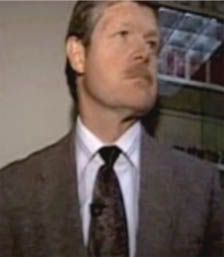 Special Agent James T. “Tom” Thurman hails from Richmond, Kentucky, born on an unpublicized date to Margaret and James "Spider" Thurman [1] Tom spent most fof the 1970s serving in the U.S. Army, according to the 1998 book Tainting Evidence, starting to gravitate to explosives work "as an officer commanding an ammunitions company in Korea." His calling led him to join the FBI in 1977, and by 1981 he'd worked up to the small and elite Explosives Unit. [2]

