Showing posts with label Hinshiri E. Show all posts

Why Bollier Suspected the Libyans

The MEBO Files, part 2
July 4 2010
last updates/edits July 10


In the early 1990s, long before he came out of the closet as a Libya-Megrahi supporter with reams of accusations against Scots-American investigators, Swiss merchant Edwin Bollier sneakily told these same authorities that he actually believed the Libyans were behind the bombing. Now, he had said just that in early 1989 with his semi-famous “catch-letter,” but that was only because a shadowy CIA man had told him to do it.

But his continuing charade, as he explains his helpful phase, went beyond the terms behind that note and raises questions. For example, was it the same agent’s nefarious demands each time he spoke up, or was there a whole team steering the poor man towards implicating Libya? Or was he, as the rest of this article presumes, more self-motivated than all that?

In a January 14 1991 interview with the FBI and Swiss authorities, Bollier said he had written that letter two years earlier to get the investigators “away from the wrong track and to bring them onto the Libyan track." It goes beyond giving the mystery man what he demanded; Bollier says (up to 2000 anyway) that on Jan 5 he himself felt that Libya was the right track to investigate.

Something Was Going On
It was a gut-feeling Swiss suspicion, or “Swisspicion” as it will now be called, that prompted a phone call to his acquaintance Abdelbaset al Megrahi, somewhere around Christmas (see below). He was driven partly by an odd “impression that something was going on,” he recalled at trial a decade later, and cited two powerful clues while apparently meaning to cite only one. “[W]hen this mystery man came along -- or when I found that the timer had been programmed, we ourselves,” meaning he and Mebo co-founder Erwin Meister, “believed that the Libyans were involved.”

The reason he started giving was the mystery man and his alleged visit on the morning of December 30, which was of course after the call in question. The man, who perhaps didn’t exist, had started by telling Edwin that he’d been selling timers to Tripoli for years, and had just been there to sell more right as Lockerbie happened. Chilled to the bone to realize the CIA was monitoring arms sales to Libya, Bollier was then told, as he recalled at trial, “and I can tell you that the Libyans are connected with this attack." All he needed Edwin to do was write a fabricated letter to the CIA telling them what they were already sure of. And this he finds convincing?

No, he had cut himself off, remembering it was the timer re-set, not the CIA man’s statement, that had sparked up his swisspicion. This requires some explaining.

The Olympic Clue
Around December 1, Bollier says (unconfirmed as far as I know) the Libyans told Mebo they wanted 40 more MST-13 units like the ones thay had bought 20 of in 1985. He didn’t have any handy and couldn’t make any more soon enough, so he bought 40 Olympus timers (sometimes translated as “watches” during the trial) on the open market. As he was getting this story on record with the FBI in January ’91, Bollier said “prior to my departure, I did a final check on all timers and reset them to zero."

As he flew out December 18, Bollier brought these fully blank timers in his carry-on luggage (his checked luggage being its own story). He tried to sell them to the Libyans, marked up too much. They wanted MST-13s, these were too expensive, they would keep them anyway, and Abdelbaset al Megrahi would hand over the money, he was told (this allegation will also be addressed separately). He left the timers with alleged Libyan bigwig Ezzadin Hinshiri the 19th, but then had Megrahi flake out on the money meeting. Not having been paid, Bollier says he collected the timer/watches back from Hinshiri in the morning, and wound up bringing back home in failure on December 20, the day before Lockerbie.

Within a few days after this trip, Bollier told investigators, he had looked at one of these fully blank units handled by Hinshiri and found its screen showed a peculiar setting: “Wednesday,” being December 21, and a time - 7:30 pm - exactly 27 minutes after the detonation on board PA103. This could only come from Hinshiri’s hands, connected to his brain, and his brain to the bombing plot, Bollier apparently deduced.

At trial in June 2000 (Day 26) Edwin still swore by this find; “That is true. Yes. That the timer was programmed; that is true.” He says he removed the battery and told his partner, Mr. Meister about the unusual setting but did not show it to him. Meister, however, had already recalled at trial (Day 22) Bollier actually showing him the timer with its setting, which he agreed said Wednesday and 7:30. As the Zeist judges summarized in their Opinion of the Court, paragraph [46]:
We do not accept the evidence of either of these two witnesses about this alleged discovery. It was established, and Mr Meister was forced to accept, that the Olympus timer was incapable of showing a date. Moreover, the evidence of both witnesses about what they claimed to have seen and the circumstances in which they claimed to have made the discovery was so inconsistent that we are wholly unable to accept any of it.
---
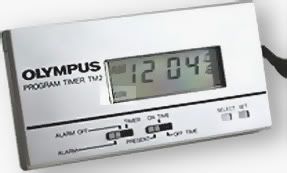
Update July 7: Bollier alerts me the Zeist judges were wrong to dismiss this clue. He sent me a low resolution picture (inset, cleaned up a bit) of the model in question, TM2. There is no date display as in 21/12, but that not what He and Meister said. It was the day name Wednesday. Bollier cites: "LC Display Window ; Display selector switsch; Mode selector; Select button; Set button; Hours>>Minutes (: Seconds); ON Time, Off Time; AM > PM; At the bottom left hand corner > Day of the week = ( SUN > MON > TUE >WED >THU >FRI > SAT" Indeed. The one shown seems to say "SUN" (highlighted). So, Bollier stands by his claim of what he saw, that someone other than him entered this day/time - and not necessarily a Libyan (see comments below)
---
This was therefore not accepted as evidence against the Libyan Hinshiri, but it wasn’t for a lack of trying on Mebo’s part. Now if they had accepted it as consistent, it might seem a fair reason for Bollier to suspect Libyan involvement, ring them up suspiciously, and then compliantly write a letter on his imaginary friend’s advice. (The judges do also dismiss the “mystery man” as fiction of the “spy thriller” sort). Just what that clue would mean, if accepted, is a little less promising. All I can see in it is one of four possibilities:

A) It was coincidence based on the visit’s timing; Hinshiri wanted to see if it could be set for, say, two days from now – which just happened to be the day that PA103 blew up. (the time mismatch would support this)

B) Hinshiri, a PA103 plotter, was practicing to see if this Olympus timer/watch would work for the bombing two days away, but then let it go as too expensive for the destruction of an American airliner. And just forgot to re-set it to zero.

C) Less directly, he was just typing the bombing time into unrelated electronics at random to make sure he has it memorized (he didn't - 27 minutes off), or something to that effect. And again, he just forgets to re-set it to zero before he hands it back, knowing the bombing will shock the world two days later.

D) As Bollier now says (see comments below) "someone else" aside from a Libyan, might have put that data there for him to see.

I’m unsure if he was trying to imply option B) or C) above, but Bollier would apparently have the Judges believe that Hinshiri had just handed him a major clue to sell to the Americans. I rather prefer the version where he counterfeited this bill of exchange from thin air.

Something Had Happened
Set ablaze by his timer discovery, Bollier says, he placed unusual phone calls (unverified) to both Ezzadin Hinshiri and the man he knew as Abdelbaset, perhaps one week after the Lockerbie bombing. He emphasizes at trial that he was calling to complain about not being paid – for the timers he had brought back with him. But he had complex reasons for these calls, he told Swiss authorities, including:
“I had a feeling that there was a connection between Libya and the crash of Pan Am 103. I wanted to hear them. Experience has shown me that people can no longer be reached when something has happened. This was certainly the case after the American air strike on Libya.”
Or, conversely, after a hypothetical Libyan air strike against America. He couldn’t recall the exact date, but it was “between the 21st -- or between Christmas and New Year,” but prior to the mystery man, so December 29 at the latest. On the call to Megrahi, he said “I telephoned, and he wasn't there. Somebody took the telephone off the hook. But I cannot confirm 100 percent whether it was Mr. Abdelbaset's voice. Anyway, I was told that he was not there.” Well, if people can’t be reached after something has happened, it would seem that something had happened - some unknown event involving timers and December 21 and, apparently, both Hinshiri and Megrahi.
---

A Suitcase for Hinshiri

The MEBO Files, Part 3 
July 6 2010

Note: This post is longer than the others, more rambling and with more loose ends. Apologies, it's just a lot to figure out and organize.
Cited throughout: Camp Zeist trial transcripts, days 25 and 26, June 21/22 2000.

A Letter to Hinshiri
Mebo co-founder and Libya-implicator Edwin Bollier started giving – or trying to give - bogus intelligence about the Lockerbie bombing to American investigators at the beginning of 1989. He didn’t become important, however, until the discovery in June 1990 that a Mebo timer (MST-13) was amongst the wreckage from Lockerbie. Before the year was out and well into 1991 Edwin went “on the record” with a string of stories about the timers and his dealing with Tripoli. One Bollier-FBI meeting occurred in Zurich on January 14 1991 and, among other things, helped set in motion the “fact” (a fact Bollier later renounced) that his MST-13 timers were sold only to Libya. But at the time, this important distinction helped tighten the noose. That fragment really does 99% prove Libyan authorship, as Bollier had told them from the beginning.

Shortly after this, on Feb. 6 1991 the Swiss jabberjaw wrote a letter to his friend Ezzadin Hinshiri of the Libayn JSO intelligence agency. At the Zeist trial in 2000 he explained this was “to make it clear to these people what was going on, what was happening, because our timer was in question.” Mr. Turnbull for the Crown questioned Bollier about this letter:

Q Was this in any sense designed to be a threat to Mr. Hinshiri?
A No. No. We simply wanted to inform him that something big was coming towards us, and that also the Libyan military security might be involved. We just wanted to inform him.

Q But, you see, the first thing that you explained to him in the letter is that you'd been spoken to by the police. And then you go on to tell him that you told the police that [the 20 MST-13s] had been sold to a gentleman in Beirut. Is that correct? Is that what you said in the letter?
A That is correct. Yes.

Q Was that true, what you said in the letter?
A No. We haven't sold any to Beirut. I remember now. This letter also was about telling people and that they wouldn't think that we were testifying against them, because at the time the matter was being covered in the media. We just wanted to explain to them that something was in the offing that might be of interest to them, and simply they were our business friends, after all.

Q Was it designed to be a warning to Mr. Hinshiri?
A No. I just wanted to orient him.

Q You see, because after telling him the lie about saying to the police you'd sold timers to Mr. Khouri in Beirut, you went on in the letter to give Mr. Hinshiri some more information […] about the suitcase that you had taken to Libya for Badri Hassan.”
A That is correct. Yes. […] We informed him briefly what was happening. And this is precisely what we wrote.
It was neither warning nor threat, just a friendly tip-off that they were in the process of being framed by someone. The additional about a certain suitcase read, in part: "I remembered myself that this suitcase was brought by Mr. Badri to our office, and he asked me to take it to Tripoli. He mentioned the suitcase contains clothes for a friend."

Under Crown questioning in 2000, Bollier explained “I wrote to him that the police had asked about that suitcase. […] I just wanted to explain to him, and tell him what the police had asked about.” Mysteriously, he managed to squeeze this in before being cut off again:
"The police told me that if I were to go to Libya, I was not actually going on orders of the police to Libya. And this is why I mentioned it in the letter, so that they wouldn't think that we had made up the story in order to accuse the Libyans. That was the reason for the letter.”

The Case, its Contents, and Journey
Having cleared that up, we turn to the suitcase itself. Bollier says he first saw it on December 17, 1988, in the hands of “Mr. Badri,” or Badri Hassan - a business associate of his and of al Megrahi’s. Bollier was leaving in the morning to take a batch of Olympus timers to Tripoli, and Hassan, who shuttled back and forth himself routinely, wanted the Mebo boss to take this case with him. “He brought it to the MEBO firm premises,” Bollier explained at Camp Zeist. “It stayed there over the night, and in the morning I took it with me on my trip.”

Just as he was careful to re-set all his brand-new timers to zero before leaving, he says he took stock of this suitcase. As he said at trial, “one should always inspect luggage one is taking for somebody else into a plane […] because something dangerous may be contained in the luggage.” Nothing dangerous was inside – nothing but an odd assortment of men’s women’s and children’s clothing like Hassan said. “Badri told me they were new children's clothes which he wanted to send to a friend who owned a boutique in Libya.” Elsewhere he says it was for a friend with a family, or “was to be for a wedding.” After the Libyan had left into the Zurich evening, Bollier “opened the case and checked what was in it. It was not locked,” he explained. “It was a brown leather suitcase with an additional leather security strap.”

Knowing Bollier’s style and seeing lines like “I didn't know what was finally going to happen to the suitcase” suggest he was going to call it a brown hardshell Samsonite. But he says it was a leather case instead, which is a relief – unless he were to recall it only had a brown leathery surface but was made of hard plastic. That in fact sounds like the kind of thing Herr Bollier might suddenly remember somewhere. But he did manage to faintly tie its content to the bombing (see below).

In his December 17 1990 interview, records relating to his travels were referred to:
Q … it can be seen that you checked in a piece of luggage weighing 19 kilos. What was this?"
A I took my personal luggage into the cabin with me as hand luggage in a large briefcase, including the timers. The case in question which I checked in was a suitcase with new children's clothes, which I was taking to Tripoli […] Badri Hassan […] asked me to deliver the suitcase and its contents to Ezzadin [Hinshiri]'s office in Tripoli.
At the airport, he was handed an additional note before leaving Zurich. It was from Mr. Hassan to Mr. Hinshiri, “and at the front of the letter there was an address, to which the suitcase was to be brought.” Unsealed, of course, it was written mostly in Arabic, but with a section in English he could read, more or less, to say “that it was for a friend – that these garments were for a friend, something like that.”

As instructed, Bollier left the case and the note with “the driver, Mr. Ali,” he explained at trial. It was understood tat Mr. Ali would deliver it to Hinshiri. Elsewhere, “I had to take the suitcase along, and that the suitcase was then deposited in [Hinshiri’s] office. And later on the driver took it again. This is the only link.” The last two lines are ambiguous, but this does suggest a link he was allowed to see in detail – the clothes for the bomb bag, and perhaps the bomb bag itself, sent via a talkative Swissman.
Q I see. Now, over the years since you've been explaining your involvement in this incident to people, has there grown some confusion about one of the items that was in the suitcase?
A No. Later on, it was quite clear that there was no umbrella in that suitcase. We compared that, because there's another suitcase involved in the Lockerbie case, and the question arose as to whether the garments have anything to do with this. And that is why one dealt with that suitcase as well.
Q Well, was there a child's suit in the suitcase, Mr. Bollier?
A There was no child's suit in the suitcase…

The Blue Baby Suit
The “blue babygro” is a relatively famous piece of evidence in the Lockerbie case. It was originally a blue full-body pajama-type suit, perhaps of stretch material (hence “gro”), with foot covers built in, and a lamb design on the front. Bits and fibers of it were found everywhere in the blast-damaged luggage, suggesting it was in the bomb bag. It stands out as a morbid reminder that the plotters knew children might be killed.

Enough of the tiny body suit’s tag remained to show it was made in Malta, and it was one of the more memorable items (along with the umbrella) that shopkeeper Tony Gauci recalled selling to the “mystery shopper” some weeks prior to the bombing. Bollier claims he was the source of this item, or at least of one remarkably similar.

A ... What I did was to add a blue baby's overall for the driver, Mr. Ali.
Q So was that a present from you?
A That was a present for Mr. Ali and, in fact, for his son. He asked me for it.
Q He asked you for it?
A That is correct. Because a year before, I already gave him such a little suit, which was apparently too small. So he asked me to bring another one, and cigarettes.
[...]
Q All right. Now, over the years that you've been discussing your involvement in this incident, have you become a bit confused sometimes about how the child's suit got to Tripoli?
A Yes. I would say yes. This is the second mysterious story, and I need to explain it to you.

Seems like a good cut point to explain in his interview of Jan 14 1991 he said "the suitcase contained new ladies' and men's clothes from the Jemoli store. […] Specifically, I can only remember a blue children's suit and Jemoli labels."” (Jemoli is a department store in Zurich) He’s saying here it was among the items he saw inside the case after opening it. It was the one that stood out, among the items he did not buy.

At Zeist he stammered “perhaps I put the baby overall in Badri's suitcase when I went to Tripoli.” That really doesn’t explain his statement. He says investigators sent him a “film” to explain how the blue baby suit was supposed to be bought on Malta, not at Jemoli. And the “second mysterious story:”
“[T]his testimony that most likely I had put the suit into the suitcase all the way to Tripoli wasn't left and corrected, but instead it was deleted on the computer. Sometimes I would make a mistake when a record was being taken, and each and every time the sentence was left standing and was typed again. But that time they didn't even want to know it. They deleted that sentence. And this was the third mysterious story in this whole Lockerbie incident.”
Oops, sorry, missed a mystery. But one allegedly missing sentence out of hundreds - of complete bulls*** - is not a compelling clue of cover-up. Bollier was then confronted with the earlier statement that he first saw it clearly standing out amongst the clothing Hassan had sent – he agreed he had said it, and signed it, but disagreed that it was true.
A No. That is not true. We corrected that later on. This is what is so mysterious. I was then being asked whether I didn't just see that on the film, and I was being sent by the federal police a film about Lockerbie so that I could see that there was no blue children's overall -- or that a blue overall was being bought in Malta. And I was convinced of something else then.

Q We understand that you think there is a mystery, but what I am asking you is simply – the question I asked.

Ever So Helpful
In a previous post, I mentioned Bollier’s “helpful phase” regarding the Lockerbie investigation. He responded “My helpful phase of support for Libya in the Lockerbie Case, from February 1991 till now and is to prove that Libya and Abdelbaset Al Megrahi do not have anything to do with the Lockerbie-Tragedy.” Why Febrruary? “After the visit of the Swiss federal police (BUPO) with MEBO, I informed Libya of the investigation against Libya in the case of Lockerbie (MST-13 timer). See Kamp van Zeist, Prod. 291, this letter is written in February 1991, and the date is February the 6th.”

Authorities had been speaking with him about the case for at least three months by then, and his first tip-off to Tripoli is the letter this article opened with. In this case his help consisted of alerting Mr. Hinshiri that police were asking about the timers and also about “that suitcase,” presumably because he had told the police about it in the first place.

I would presume there was never any response, and like his earlier phone calls to Hinshiri and Megrahi, Herr Bollier probably took the silence as alarming. He probably hoped the investigation – to which he sent a copy of the letter - would find it just as suspicious. Perhaps they did, but being a Bollier lead, it was apparently too kooky to follow up on.
---
Postscript: From the archives, referring to Meister's, not Bollier's, testimony.
http://plane-truth.com/Aoude/geocities/week8.html


The defence also accused Mr Meister and Mr Bollier of trying to blackmail one of their Libyan business contacts, Ezzadin Hinshiri, in February 1991 after they had received a visit from the Swiss police about the Lockerbie affair. Mr Meister acknowledged they wrote a letter informing Hinshiri of the police inquiries and offering to tell the authorities the timers were sold to someone in Beirut, not Libya. They ended the letter asking if any more business was possible with Libya.

"Wasn't this a blatant attempt to extract business, lucrative business, in exchange for telling lies?" Mr Burns asked. Mr Meister denied this, saying they had only written the letter to placate Mr Hinshiri since they feared for their safety.

Meister did admit that MEBO was in the process of arranging loans from Libya during the time of the early investigations into the crash. Challenged by the defence that he and MEBO had offered to cover for Libya by stating that they had sold timers to an extremist group in Beirut, Meister denied this.