Showing posts with label Marquise R. Show all posts

Michael Isikoff's Foray(s) into a Culture of Counterfeiting

March 10 2011
last edits March 11

The article's context
Michael Isikoff is Newsweek’s renowned U.S. national security journalist, and the NBC and MSNBC networks’ “national investigative correspondent.” From this lofty perch, he recently decided to write up a new article about the Lockerbie bombing, which wound up being titled 'No question' Gadhafi ordered Pan Am bombing, ex-CIA official says. The current protest-turned civil war in Libya has hopes rising that colonel Muammar Gaddafi will soon be overthrown after more than four decades in power. Riding this giddy onrush of opening possibilities, it's clearly time to revisit the issue from a different angle.

Mr. Isikoff drew on two recent statements from foreigners – a Gaddafi regime defector and an Abu Nidal terrorist - that the bombing of Flight 103 was a Libyan plot, that the convicted “Lockerbie bomber” Abdelbaset al-Megrahi was involved but only in a small way (not the central one he was convicted for), and that the reviled and (perhaps) tottering Gaddafi ordered the whole thing.

The terrorist, named Abu Bakr, has told this same convoluted story years ago, and it’s been widely panned and dismissed already. The defector, Mustafa Abdel-Jalil, was until a month ago Gaddafi’s justice minister. He seems to be both distancing himself from the regime and appointing himself head of the new order, and his un-explained “revelation” plays to both ambitions. But it’s being taken as both self-serving and likely true in Washington; as Mr. Isikoff noted, “in light of” this bargaining chip, Secretary of State Clinton has said she would push for the bombing case to be re-opened after nearly 20 years.

The US Justice Department seems favorable, given recent statements, to building a renewed and widened investigation. It should here be noted that the Scottish police also threatened the same thing  following Megrahi’s release from Scotland in 2009, also with the idea of pushing the scope further upwards towards Col. Gaddafi. This hasn’t yet materialized, but their case, like the FBI's remains open – with exactly one officer staffing it, last anyone checked.

What some investigation would reveal
If NBC’s “national investigative correspondent” had done his job, and looked into the Lockerbie case prior to these developments, he’d have noticed where the last investigation has gone. Megrahi and a co-conspirator, Lamin Fhimah, were indicted in 1991, with the former convicted in 2001, as the article notes. Unnoted however is the serious challenge to that conviction from an official legal review board. The Scottish Criminal Cases Review Commission (SCCRC), established to root out bad cases that judges didn’t catch the first two times around, announced in 2007 that in at least six ways the conviction of al-Megrahi might have been a miscarriage of justice. They approved another appeal to be heard in court again, but it never was.

If Mr. Isikoff combed a bit wider, he’d see that a small handful of UK family of the victims, a large number of legal experts in Scotland and beyond, intelligence and airline security professionals, political and religious leaders, investigative journalists (the kind that investigate), and many others of general credibility agree with the SCCRC that the trial might’ve been – or was - grossly wrong in its conclusions. (a decent listing of about 100 can be seen here.) For example, one of Scotland’s most respected lawyers, Ian Hamilton QC, who has now joined the swelling Justice for Megrahi (JFM) campaign has said "I don't think there's a lawyer in Scotland who now believes Mr Megrahi was justly convicted.” What happened instead, he and others feel, was that the Americans “hoodwinked our courts."

Anyone who investigates a bit will find that these people cite serious questions looming precariously over the whole situation. For example, a key witness, Abdul Majid Giaka, whose tales brought together the 1991 indictments, was utterly dismissed at trial. He’d find that following from that, Megrahi’s “alleged co-conspirator” Fhimah was found specifically not guilty and sent home. An accomplice was necessary for the plot alleged, placing the bomb case onto Air Malta flight 180, and none is accepted.

He might even learn that there is no direct evidence of that unaccompanied suitcase from Malta transferring onto Flight 103. There is only an inference drawn from an unverifiable computer printout that’s flatly contradicted by other, and much better, evidence.

And the centerpiece of Megrahi’s own proven connection to the bombing, purchasing the clothes inside the bomb suitcase, cannot be factually supported. The Maltese shopkeeper Tony Gauci supposedly identified Megrahi (among others), but his own evidence, investigated fairly, rules out the Libyan in several specific and incontrovertible ways.

One way or another, investigators seem to have gotten it entirely wrong.

Or, you could ...
Stepping into this complex milieu, Mr. Isikoff chose the investigative tack of citing the new Libyan defector and the talkative terrorist, and by talking to the men who may well have gotten it wrong in the first place. Not surprisingly, along this guided tour, not a single question over Megrahi’s conviction or the case it affirmed is to be seen.

One of the two men he spoke with was Frank Anderson, CIA Near East affairs chief between 1991-1995, and now president of the Middle East Policy Council think tank, "your source for unbiased assessments of who’s too evil to be left in charge of Libya." The other interviewee is Richard Marquise, the man who headed up the FBI’s investigation in its crucial second half, and who still disputes the findings of the last court, at the very least over their dismissal of Giaka. The entirety of the SCOTBOM probe Marquise oversaw, in conjunction with the Scottish police, is summed up thusly by Isikoff:
… U.S. and British officials were able to wrap up an investigation that uncovered forensic and other evidence linking the planting of the bomb to Abdelbasset al-Megrahi, a Libyan intelligence officer.
“Uncovered” might not be the right word there, but such clues did come to be in the evidence chain and some did point right to Libya and/or Megrahi.

For example, there were three whole important witnesses against Megrahi. One, Giaka, was dismissed at trial, and another, Edwin Bollier, is a known fabricator and spinner of bizarre tales mostly dismissed at trial. The third, Tony Gauci, was an idiot coached by his brother, who never really identified Megrahi but did rule him out, and who changed his story to fit Megrahi a little better, which version was somehow accepted at trial. At least two of these three seem to have been paid in excess of $2 million for their bogus testimony, according to Scotish police and other documents uncovered by the SCCRC. That’s not how one “uncovers” any kind of valid “evidence,” and as we can see, none was so obtained.

There also exist serious anomalies around every crucial piece of physical evidence, leading tactics, circular and suspect reasoning, and really just a shocking string of egregious malpractice down the line. (Consider the supposed reasoning that brought Scots detective Harry Bell to first decide on Megrahi, for another telling example).

If anyone had direct access to the full scope of this systematic abuse of truth, it would be Isikoff's other source, Richard Marquise, who just firmly loads the weight of world affairs on his sure and square shoulders. "We always hoped that had we gotten (access to Megrahi and Fhimah) they would start to roll,” he told Isikoff. That is, they might reveal who told them to carry out this bizarre and evidence-free plot. "There was always an expectation that we would get further up the chain."

Don't bounce this check, folks
Unlike Mr. Marquise, the other official interviewed, Frank Anderson, likely had no role in or direct knowledge of the investigation. For whatever reason, however, his statement was the headline, distilled from his summation:
"There are two things that you can take to the bank. The first one is, Pan Am 103 was perpetrated by agents of the Libyan government. And the second thing is, that could not have happened without Moammar Gadhafi's knowledge and consent. There is no question in my mind that Moammar Gadhafi authorized the bombing of Pan Am 103."
Telling people they can take those to the bank is counterfeiting. But it’s the same culture – secrecy and appeal to authority slathered on to lubricate the insertion of politically useful fiction into the real-world evidence slot - that has underpinned this whole case so far.

Mr. Anderson has perhaps just been duped, and isn’t aware how deceptive his affirmation is. His relevant expertise is on Libya and its troublesome regime, not the investigation and trial. And his conclusion that Gaddafi had to have ordered the attack is not even rocket surgery to guess in the affirmative. The whole motive is supposed to have been the early 1986 U.S. air raids on both Tripoli and Benghazi (ah, how times are changing), which killed the colonel’s baby daughter. It took almost three years to exact the overblown revenge so eerily similar to what the Iranians were suspected of plotting just then. But clearly, if it happened as Marquise et al. found (it didn't, not that it matters), it would probably run up to Gaddafi himself.

But people are playing dumb all of a sudden and pretending to need proof of an order from on high, when Libya was sanctioned to the tune of tens of billions lost and thousands dead, in order to punish or destabilize the whole regime, just on the presumption. This punishment only ended with Gaddafi surrendering his indicted agents for trial, losing one to prison, paying a hefty $2.7 billion settlement, foreswearing all terrorist (“revolutionary”) activities, foregoing a nuclear deterrent, sealing trade deals too sweet to refuse, and so on.

And again, by the best evidence read fairly, he may well have done this all without once ordering the bombing of Pan Am 103.

This patient re-building from the epic abuses of the past was tolerated until about now, and it’s to be all yanked away by this bizarre US-supported protest/war. Ideally for some, the proceeds of Gaddafi's work will be handed to Mr. Abdel-Jalil, who will in trade find some “proof” to hang his old boss with and close the old chapter for good. Gaddafi delenda est. He must be dust. It has been demanded.

Along the way we’ll accept in stasis the original case with Megrahi, until the guilty verdict for his boss re-convinces us that was correct all along, as if there were some reason to doubt it.

How in a supposedly free media articles like this happen, over and over, with no widely-seen counter-balance,  I cannot say. Noam Chomsky (another Justice for Megrahi signatory) has some theories, but all I know is however it’s happening, our investigative correspondents like Isikoff aren’t investigating, just corresponding with the approved investigators to write the news for them. Please turn sideways and watch your head squeezing into this ever-smaller echo chamber, folks.

And hopefully, this model of news-writing will be exported to Libya soon, along with a hell of a lot of other things.

Sent Out to Lie

Review: The Loockerbie Bomber: Sent Home to Die
finished 3 October 2010
last edit 4/10

Production company: STV, Scotland.
Air date: August 2010
ex prod: Gordon MacMillan
prod: Donald John MacDonald, David Cowan
STV Youtube posting (embedding disabled)
---
I’m a little late to watch and review this video, which might just be the most strategically deceptive thing I’ve yet seen or on the subject of Megrahi’s guilt. Most of its lies are of the omission type, like ignoring the hundreds of credible critics of the official story on Pan Am 103. The lone voice they present for the other view, Dr. Jim Swire, told the crew he felt “the circumstances of my daughter’s murder have become wrapped up tissue of lies. Something terrible is being covered up.” (32:17) The video that abuses and dismisses his position at every turn is clearly a continuation of that same fabric, hoping to wrap up all his - and many others’ - outstanding questions and chuck them forever in the dust bin.

The 46 minute video is tightly–paced and split into four parts. The first covers the horror, the scale, and the loss of the bombing over and in Lockerbie. Part two relates the popular mythology of how Libya’s guilt, via Megrahi, was discovered. The investigation, indictments, sanctions (nearly a decade glossed over in two sentences), and everything up to the trial at Camp Zeist are packed in there. Part three briefly mentions the 9-month trial and then tries way too hard to clear up the continuing doubts about Megrahi’s conviction there. This is supposed to wipe the slate for the pivotal part 4, which explains how the “Lockerbie bomber” was sent home to die, but then didn’t.

The intro starts by noting the disastrous "compassionate release" all the way to Tripoli was "against the wishes of the most powerful country in the world," as if the power of those who disagree should matter. I didn't know China much cared, but the producers will have you know the SNP has made powerful enemies for the British with its stupid (or...???) decision.

The actual video opens with a long stretch on the horror of the crash, which, again, the best (discarded) evidence suggest was done by the PFLP-GC, for Iran, using a Khreesat-style altimeter bomb loaded in London. The amount of pain or fire doesn't in itself add anything to who's guilty, just to how mad you should be, at how horrible this mass murderer’s act was. Then for a change, it goes to how tragic loss of so many wonderful people was, so you can get sad before getting mad again. It’s a well done and touching segment, to be honest. Mentally, however, it’s counterproductive to thinking straight, and only primes the audience for the coming barrage of deception.

About 12 minutes in the PFLP-GC and Iran Air 655 as possible motive are mentioned, and FBI chief investigator Richard Marquise admits that sounds like a logical assumption. But the notion is here first framed as something the CIA had tried to say once, with "no evidence" of an Iran-PFLP-GC link ever found. It could be fairly said there was no proof, but much evidence exists, a bit of it presented in the preceding minute of this very video. There was not one but four radio bombs found, and a fifth that never turned up - unless it did. These were set by altimeter and a crude "timer" set to blow 35-45 min. after takeoff (that's the simple version - deeper here). PA103 blew up 38 minutes after leaving Heathrow, officially a coincidence of poor Libyan timing.

On forensic findings
Finally at 14:24, after discussing the "fortunate"bomb placement that actually best supports a London introduction, the video gets to the specific evidence that would matter for convicting Megrahi. In thirty seconds it says a lot that leaves out a lot:
Forensic scientists decided the Lockerbie bomb had been hidden inside a different radio cassette player from the one used by the Palestinians. Packed into the Samsonite suitcase, it exploded in the plane’s forward hold, close to the skin of the fuselage. Charred fragments of clothes from the suitcase took the inquiry in a completely new direction. This label from a babygro [“made in Malta”] was the first connection to the island of Malta. Then a distinctive logo [“Yorkie”] led to the firzsst major breakthrough.
This is the one of the parts where they tell you that science has spoken, but as I’ve noted elsewhere, what it said doesn’t make any sense. The PFLP-GC link was weakened by the identification, from scattered fragments, of a different radio than the “one” the PFLP-GC used (actually 3 different models and a computer monitor). First, I invite anyone to closely examine how this other radio – Toshiba BomBeat RT-SF16 - was identified. Consider the chronic inconsistencies in this detailed timeline, reconstructed from trial transcripts. Secondly, Dr. John Wyatt's tests suggest an explosion of the scale needed wouldn't leave any such readable debris, meaning investigators would really have no clue what radio - if any - was used.

And thirdly, even if Wyatt is far off, the clearest "proof" of the radio model is this, PK/689, the paper manual cover. You know it was inside the box 2" from the blast center not because it was reduced to ash, but because it's lightly singed, torn, and says, plain as day, "BomBeat." The lady that turned in PK/689 said the paper she saw was fully intact when she found it, and that hasn't been challenged. Officially then, it was made "a bit tatty around the edges" by the semtex blast, and ripped nearly to shreds by forensics tests.

The radio model thus established not only pointed away from the Iran line, but also suggested Libyan authorship. Convenient.

The scorched clothing - blue babygro, Yorkie trousers, black umbrella, slalom shirt, and others - is also challenged by Dr. Wyatt’s findings. Being at least outside the radio's cardboard box, it's to a lesser degree than the radio and timer, and I for one am agnostic on whether they’re authentic. But they were convenient also, pointing to Malta and, by extension, to Libya.

To Malta and Gauci
The story of the clothes’ identification and tracing to Malta seems to be conveyed fairly, although the details, relying on the recall of detective John Crawford, are a bit fuzzy. The trousers in particular led them to the Yorkie clothing factory on the tiny island nation, who had the papers to show the very few pairs of that batch were sold to one shop only – Mary’s House in Silema, run by the Gauci family. One fateful pair was apparently bought there brand new by someone linked to the bombing and f*****g stupid. The clarity of the lead was the "stuff of detective novels," says George Esson, Chief Constable of Dumfries and Galloway Police in 1991. It was all "fantastic," "almost unbelievable." Why "almost," George?

Starting at 15:45 they discuss the pivotal witness Tony Gauci, the shopkeeper on duty at Mary's House when those clothes were sold, and his supposed identification of Megrahi as the bird-brained buyer. As the video later notes, Gauci's reliability remains hotly contested, and he “has never said with absolute certainty that al Megrahi was the man" who bought the trousers and babygro.

In fact he’s never said he was the man at all, who he says was at least 4 inches taller and 14 years older than our villain. Just going on faces, he pointed at a photo of Megrahi in 1991 and said it was "similar to the man ... He would perhaps have to look about ten years older,” which he didn’t. Later in 1999 at Camp Zeist in the Netherlands, he pointed to the by-then famous “Lockerbie bomber” in person and said "“not exactly the man I saw in the shop.” Clearly Detective Crawford’s take “when he got to number 8, he said “that’s the man,” is misleading. (18:10)

At 17:29, Richard Marquise says again that Megrahi "had been in Malta the day the clothing purchase was made, December 7." This is a big lie and he’s had that pointed out to him prior to this interview. Note he emphasizes “actual immigration records,” as if that's the issue. In fact, the top Scot on Malta, Harry Bell, essentially admitted in 2007 that Megrahi's presence on December 7 was the reason the date of purchase was changed. Gauci clearly describes November 23, when Megrahi has an alibi, but there was a very slim case for it being December 7, and that’s what it became. Gauci can be observed at trial being more vague on all the points that conflict between the two days. But the judges seem to have missed that (see link for details).

And the money situation ... we'll return to that one.

A bomb from Malta
Having "established" Megrahi’s link to the clothing, at 22:07 crown prosecutor John Logue cogently relates the official story of the unaccompanied bag from Malta. The tight and coherent evidence from Air Malta's end says clearly there was no such suitcase on KM180, and opposing it we have wishful thinking plus one unusual record from Frankfurt, with all supports and comparison records somehow  vanished with no clear explanation. If it weren’t for the fluke of the computer printout for PA103A, salvaged from an airport employee's locker, investigators would have no record at all of what happened at Frankfurt that day. Air Malta had everything and it was in order, but it differed from what the locker-paper said, so was pushed aside by investigators, by Scottish judges, and certainly by crown prosecutors in between them.

After ignoring these troubles with the notion of a bomb from Malta getting onto 103, the video turns to the evidence that Megrahi was at the airport on Malta December 21 - under a false name. This seems to be solid, and at 22:25 he is caught in a lie to a journalist, denying his presence there. This secrecy probably was related to the false passport and the secret mission he was likely on for Tripoli, and it was unwise to continue denying at the time of that interview in 1992.

But as far as we can tell, Megrahi's unrelated secret mission on that day is precisely why he was chosen as the route to frame Libya, and why evidence pointing to Malta was concocted. It could also explain why Mohammed Abu Talb was chased for a while, but that's too esoteric for most. At any rate, the missing context is the lack of any good evidence his mission was to blow up a plane, and the presence of any bomb on Malta that morning is what’s solidly in question here.

The locker-paper from Frankfurt had suggested (but far from proved) an unaccompanied item from Malta getting onto the doomed 747, but not what kind it would be. This was previously filled in by a witness who said he saw Megrahi with a brown hard-shell Samsonite - like the bomb was packed in - the day before the bombing, on his arrival from Tripoli. Unfortunately, the witness, Abdul Majid Giaka, made this story up for the FBI only in 1991, after learning what type of case he needed to "remember." (And after being given no choice but to come up with something just like that.) The judges dismissed this point of evidence, as well as the rest of what Giaka had to say (and it was a lot) at trial in 2000. As far as I can tell, Giaka and his claims are entirely absent from this video, as if he never existed - another lie of omission, and a rather glaring one.

On the timer fragment 
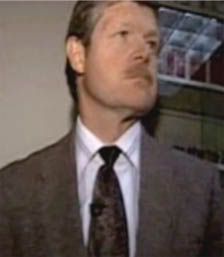
(18:40) The video's approach is standard and brief. A piece of circuit board dubbed PT/35(b) was discovered, and later matched to a timer called MST-13, made by Mebo, a company with links to Libya. This information was obtained from the CIA, who held a comparison model. Identifying FBI agent, "Tom" Thurman, related again his 1990 epiphany comparing a photo to something under a microscope (there are many versions he's told). He explained "I could not believe it under any circumstances, and it was there," so he believed it and so did everyone else.

Myriad logical problems and questions plague this alleged timer (see PT/35(b) link). Why was it set so early, when a couple more hours would safely bury the evidence at sea? Why is the corner they found the only one so distinctly recognizable? The narrator starts by describing the prominent 1/2"square fragment as "tiny," and Marquise later implies that contrary to what critics say, it was not too small to have been found - because it was found, duh!

In fact the key problem for this item is that it's far too large to have been inside the bomb, maybe 2 inches from at least 450 grams of semtex. Dr. Wyatt's tests cited above in relation to the radio itself, were publicized in January 2010 in connection with this crucial evidence more than with the radio. As his work strongly suggests, this thing was put into the wreckage by something (or someone) other than the bomb. Therefore, its ability to implicate Libya might be better evidence for a frame-up than for a bombing.

On the conspiracy theorist
Part three starts with the trial’s end (around 24:15). Megrahi was now ruled guilty, and his accomplice Fhimah was somehow found not guilty. To mention why would require bringing in Giaka, and raise troubling questions. The video does not mention why he was found not guilty, probably some technicality.

"But not everyone was convinced," the narrator ominously intones, turning to Dr. Jim Swire. He's not only a critic of the official story, but feels Libya and Megrahi were consciously framed by the US and UK governments. This blogger agrees that, politically correct or not, tha' the most logical explanation for what happened. The editors selected a video of Swire solitarily approaching a podium on the court's expansive plaza, and then mentioned no one else who holds views like his. With both of these choices, the video creates the impression that Swire is the only one who needs convincing and what the hell's wrong with him?

Just before introducing the loner, US family member Bob Monetti said “if you follow it every day and have an open mind, it became overwhelmingly obvious that Megrahi was guilty.” But Swire insists it was close attention to the trial that solidified his doubts about Libya’s guilt. Having read much of it myself by now, I agree with him, and I suspect Mr. Monetti did not follow as open-mindedly as he claims.

Further, Dr. Swire’s lone claims "infuriate" the leaders of the investigation that led to Megrahi being blamed. Top Scot, SIO Stuart Henderson, says at 26:21:
"I’m sick and tired of saying this. What - is - in - it - for me to try and fit somebody up to go behind bars for forty years. You must be joking. Anybody that makes suggestions like that has got to be rather twisted. Because we were being watched on a daily basis. The whole world was watching us."
I can't say what's in it for anyone in particular, nor do I have reason to suspect Henderson himself took part in the most important bits of dishonesty. But the whole world was not watching them. I don't recall seeing the live footage at RARDE’s laboratories showing all comings and goings, or transcripts of the first police interactions with Mr. Gauci. There’s no audio tape of agent Tom Thurman’s meeting with Orkin, or secret video of the session where PT/35(b) was cut, scratched up, and burnt to look realistic enough to plant. But Henderson would have us believe all these things would be known if they happened, so they must not have happened. It's a poor argument to say the least.

Lawyers are then called on – even those who support Megrahi’s innocence – to strengthen the stance that there was no conspiracy here. As expected, they won’t admit, for reasons of being lawyerly, that fakery and framing are bleeding obvious. Megrahi’s counsel Tony Kelly argues that his client is innocent and wrongly charged, but apparently on accident. He didn't see “any major conspiracy, or attempt to frame a particular person.” (26:42) "Megrahi's own lawyer rejects the conspiracy theories," the narrator can triumphantly say, and even his more banal protests could just be invented to justify his paycheck. Swire's looking pretty lonely now.

Kelly further emphasizes that “it’s the legal process that matters,” not theorizing about what might have really happened. I take his point that legal truth does decide things here on Earth, even if it's unjust in its mechanics, like at Camp Zeist, and on Megrahi's first appeal. Call me old fashioned, but I say truth matters more than this fickle legal process – at least in some abstract way that should matter more.

On the Official Review
One bright point where the legal process and revealing truth partially merge is Scottish Criminal Case Review Commission (SCCRC), covered in the video at 25:40. They looked at the case for almost four years and, like Kelly, said they found no sign of evidence being planted (rather I suspect they didn’t look for any). But they did find in mid-2007 reason to conclude Megrahi might have suffered a miscarriage of justice, again presumably by accident.

They referred it, on a conservative six grounds, to the appeal court. A spokesman, Gerard Sinclair, told the film that research suggests “there's about a 64% chance of that being successful" once they’ve sent it back to the courts. This statistic is presented as ominous, spliced with secret video of a jubilant Megrahi, alerted of the commission’s finding.

To its credit, Sent home to Die does acknowledge the finding that the Maltese clothes were bought "when Megrahi wasn't on the island." It's obvious to anyone who reads the evidence with clear eyes, and kind of proves that Marquise lied to the camera at 17:29, but the video already accepted that untruth as a basis for presenting the conviction as sound.

The SCCRC’s findings of American payouts to Tony Gauci of at least $2 million is mentioned (but the further $1 million or more to his brother Paul is neglected). No one will flat deny that such money was dished out to the brothers following the verdict, but on the question of what they knew before that remains hotly debated, for obvious reasons. The promise of money for a conviction against the man in photo #8 has the manifest potential, at least, to alter Gauci’s evidence. And as noted above, he altered his evidence in ways that seem not so much random as strategized to help convict Megrahi.

Marquise fudges, in a way that's effectively a lie (30:00). "Not one witness was ever promised money or did they ask for money in exchange for saying anything." The contrary evidence can be read right from Scottish police records here. Money concerns are there from day one, first seeded by the Americans in 1989 (“endless money” offered, $10,000 upfront) and couched in indirect language elsewhere. Tony himself usually kept mum, but his brother Paul was noted as a money-grubber. Behind the scenes, the ongoing quest for cash was clearly an open secret, gutting Stuart Henderson's ridiculous rebuttal. He told the crew that Tony was not only unaware of the coming reward, he was in fact "well aware that there was no such thing as a reward being handed to him ... Didn't enter his head."

Sent Home to Die gives the commission a semblance of respect in its filming and mention of the more important findings. But ultimately, it brushes their work aside as niggling questions surrounding a rock-solid conviction that had been assembled by solid men like Henderson and Marquise, and accepted by eight judges. However, between the Zeist verdict and the SCCRC’s review, only one has been legally ruled a “possible miscarriage of justice,” and the other is clean as a whistle.

On the appeal/Conclusion
The respect shown to the SCCRC is carried over into the results of its process, Megrahi’s second appeal. It’s a solemn process the prisoner is entitled to, to be looked at by five more judges. It’s acknowledged that this moved rather slow, and then somehow it was buried under the noise of imminent release.

The prisoner transfer agreement is raised first, emerging as it did in 2007 and part of a lucky streak along with the SCCRC review. But as a less-lucky terminal case of cancer entered the picture in 2008, so did compassionate release, and a second way home. Both routes are mentioned, with few details, and it fell to justice secretary MacAskill to chose, and he met the prisoner at the jail.

Then, the narrator says, “just days before MacAskill announced his decision, Megrahi gave up his appeal.” Margart Scott, QC, is shown passing along his officially inexplicable “belief that these instructions to abandon his appeal will assist in the early determination of those [release] applications.” The move is not explained or dwelled over any. Maybe he thought he or his successor would lose the appeal. Again, the Crown prosecutor John Logue is called on (32:00)
We were ready, willing, and able to defend Mr. Megrahi's conviction in the appeal court, and would have done so had that appeal continued. We were confident in the conviction, and confident that we were able to defend it during the appeal.
Logue is just parroting the bluff of departing Lord Advocate Elish Angiolini. The Crown was not ready or able to defend the case, at least not by normal evidentiary means. Consider this recent assessment of a renowned defense layer:
Michael Mansfield QC, one of the country's best-known defence lawyers, said a full judicial inquiry was required to settle the doubts over the case. Mansfield said he had no doubt that the evidence given to secure Megrahi's conviction was "entirely unsustainable". [source]
But part three ends with “20 years after Pan Am 103 fell from the sky, Megrahi’s legal battle was over. Only one question remained – where would the Lockerbie bomber be allowed to die?” The following part four is interesting in its own right, but I’ll leave it be as based on a false premise, as there are far more, and more relevant, questions than that one, as another prominent lawyer recently noted. Citing the SCCRC’s doubts about the case, the head of the Scottish human rights commission professor Alan Miller said [per the Guardian]:
The row over Megrahi's medical status was an "undignified and unhelpful distraction" from the more important issue of addressing unresolved questions about his guilt.
The situation that needs resolved in 2010 is the continued denial of truth and thus justice while nearly everyone turns a blind eye and maintains the charade. In pushing the groundless presumption that Megrahi actually is the bomber, Sent Home to Die cannot be of any use in that resolution. It might just do for someone’s political agenda, but that’s no surprise – Lockerbie has always been taken for all its worth to advance unstated aims.

Richard Marquise to Speak at Syracuse University

10 November 2010

Attention, students of Syracuse University! You won't want to miss the lecture tomorrow to be given by Richard Marquise, who headed the FBI's investigation into the 1988 bombing of Pan Am 103. (thanks to Ben Six for the tip). Marquise even wrote a book about his work on the case: SCOTBOM: blahblahblah [2006 - Google books, partial preview]. As you've surely been reminded lately, 35 of your historical classmates, eternal alumni, were among the 270 killed in a bombing that an increasing number worldwide consider to be unsolved. But don't let that bother you - Mr. Marquise will assure you he helped get the right man. It's easy when the whole world seems to agree. Just don't worry about it.

Nonetheless, as the years have grown, so have the doubts about his and others' work in this case. All the points of evidence led at trial and before fall apart upon scrutiny, at the latest. I'll spare the full explanation here (but feel free to look around). To put it simply, besides the much-touted verdict against this "Lockerbie bomber," there is a second legal ruling, by the Scottish Criminal Cases Review Commission, that the first one "may have been a miscarriage of justice," and should be heard again. But it wasn't. Roadblocks, as always. This has been happening consistently for nearly a decade, something protecting the verdict, and the largely FBI case behind it. And it's not the verifiable truth, this much is clear.

I don't want anyone to be too mean to Mr. Marquise, but he is, as one friend has put it, "crooked as a corkscrew." Or as I've put it, like a broken Speak-and-Spell, programmed in 1991 with no updates since, full of pre-programmed statements, and no good at answering real questions. He should be asked questions. Here's some good material to consider.

Marquise on Giaka
Richard Marquise is quite keen on the 2001 conviction of Megrahi by three Scottish judges sitting at Camp Zeist, in the Netherlands. But he's rather selective in accepting the Zeist judges' decisions. They found Megrahi's necessary accomplice, Lamin Khalifah Fhimah, flat-out not guilty (skipping a softer option of "not proven"). And the reason for that was the almost total lack of evidence against him, aside for the abundant claims of the prosecution's witness, a Libyan defector turned CIA-FBI asset, Abdul Majid Giaka.

Mr. Marquise is annoyed by the frequent description of Giaka as a "star witness," but he was presented with some fanfare at trial, was hyped heavily by Vincent Cannistraro in the 1990s when we were choking Libya over this, and contributed roughly half of the claims in the 1991 indictments. Giaka and his wife also consumed five chapters of Marquise's 2006 book.

The judges were presented with this witness, star or no, and also grudgingly allowed to see the full text of CIA cables about his debriefings in 1988-1991. What was redacted was where the CIA itself complained that he was unreliable, making things up but nothing good enough, offering little and asking for money and all sorts of help. Someone deliberately chose to conceal all these doubts from the court and, essentially, present a sham witness as a credible one.

This did not go unnoticed by the defense. William Taylor QC ripped into Giaka epically, calling him a liar many, many times, and colorfully. The prosecution didn't even bother to object. Consider these mainstream news article about the episode:
http://news.bbc.co.uk/2/hi/944606.stm
http://www.guardian.co.uk/uk/2000/sep/28/lockerbie.gerardseenan

The judges found the witness as a whole unacceptable. They did credit his basic knowledge of Megrahi's comings and goings, and of the Libyan intelligence operation at Malta's airport. But everything directly relating to the case was dismissed. Explosives in the desk, bomb studies, the suitcase, and a number of peripheral claims verging into the ridiculous. Having lost the most important witness, nearly everyone expected the charges to be dismissed. But only Fhimah was so lucky, as the judges managed to accept the flimsy case left against Megrahi.

Belated Claims
In mid-1991, after being in touch with the CIA for nearly three years, Giaka was finally taken on board by the FBI as a witness. Desperate to escape Libya's clutches, and faced with a tough choice, he enabled this by telling them amazing information he never told the CIA at the time it supposedly happened. He'd forgotten to mention seeing the two accused arrive on Malta carrying a style of suitcase just like the one that held the bomb. He only remembered in 1991 that he'd been asked by Megrahi to look into how to bomb a "British plane." And so on. The improved memory had him selected, and given a vaunted new life in America under witness protection, quite likely with a planned $2 million DoJ prize. Bare months later, the indictments came into effect and Libya started to suffer.

The judges found his sudden 1991 remembrance unacceptable, and one of the main reasons they tossed his whole celebrated roster of detailed inside clues.

But Mr. Marquise just sees it differently, and feels Giaka got a bum deal. He was telling the truth as best he could all along, he recently said, to much wicked rebuttal. Matt Berkley, who lost his brother Alistair in the bombing, took issue there with a 2009 article where Marquise put forth as fact several of Giaka's claims, contrasted with the Zeist judges' own feeling on each. (double-check these if you like here)
Marquise: "a senior Libyan official asked a Libyan Arab Airline (LAA) employee about the feasibility of getting a “bag” onto an American or British flight leaving Malta."
Judges: "we are quite unable to accept this story"....

Marquise: "Evidence was elicited that the Station manager of LAA in Malta kept explosives in his desk..."
Judges: "we are unable to place any reliance on this account"

Marquise: "He was described as carrying a “brown suitcase” similar to that which blew up Pan Am Flight 103..."
Judges: "We are ... quite unable to accept the veracity of this belated account"
The former SCOTBOM chief investigator does provide in his book some explanation for his different view. For example, on page 216 (readable on-line) he affirms that Giaka didn't make things up in 1991, he just had a better memory then and the investigators themselves had "an advantage ... a wealth of information about Lockerbie and were able to ask questions not available to the CIA handlers who spoke with him in [1988 and] 1989."

For one thing, they may have been willing to stoop lower than the CIA (???) and tell him, from their wealth, that Megrahi used a brown hard-shell Samsonite, triggering a desperate memory of seeing him with one. They might have asked him, if he'd like to come to America, did Megrahi ever show any previous interest in bombing airplanes? A memory emerges of the 1986 report.

This wishful thinking is clearly nothing but self-interest. Why on Earth should someone not be questioned about something like this?

Belated Note: See comments below for at least one other very worthy question about the evidence of Tony Gauci, Giaka's "co-star" at trial.

Abdusamad on Malta

"The Biggest Lie" They Could Find
8 November 2010
last edits 14 Nov

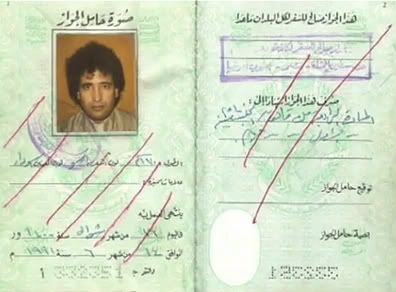
It's no longer a secret that "Lockerbie bomber" Abdelbaset Ali al Megrahi was on the island nation of Malta on 20 and 21 December, 1988. But his passing through Luqa airport there on the morning of the bombing of Pan Am 103 was a secret at the time, since he was traveling under a false identity created by the Libyan government - Ahmed Khlaifa Abdusamad. (see passport below).

We can thus presume that Megrahi was on a secret mission of some sort, on behalf of Tripoli, and likely something illegal. No one can be certain just what his mission was, and there's been to this day no satisfactory explanation from the Libyan side.

It's not sure just who first learned that Abdusamad and Megrahi were the same person, nor when this happened. But if it was found out early enough, and by the CIA, it could well have been the deciding factor to drag the Libyan into the spotlight of suspicion, his hated nation training behind.

In their 2001 Opinion of the Court accompanying Megrahi's conviction, the Zeist judges explain the false identity's origin and early use:
On 15 June 1987 the first accused was issued with a passport with an expiry date of 14 June 1991 by the Libyan passport authority at the request of the ESO who supplied the details to be included. The name on the passport was Ahmed Khalifa Abdusamad. Such a passport was known as a coded passport.  There was no evidence as to why this passport was issued to him. It was used by the first accused on a visit to Nigeria in August 1987, returning to Tripoli via Zurich and Malta, travelling at least between Zurich and Tripoli on the same flights as Nassr Ashur who was also travelling on a coded passport. It was also used during 1987 for visits to Ethiopia, Saudi Arabia and Cyprus.  [paragraph 87]
The earlier indictments of Megrahi and Fhimah, issued November 1991, gave different uses of the identity. On 22 August, 1987, "Abdusamad" flew from Zurich to Malta, stayed at the Holiday Inn there, and returned to Tripoli the next day. This trip was made "along with the said Nassr Ashur, who was then using a passport in the false name and using the false identity of Nassr Ahmed Salem." [points (e) (m)]

And then after a long break, he went out as Abdusamad only once in 1988 - on 20 December, when he flew with Fhimah from Tripoli to Malta, and again the next morning for the return trip, this time with Mohammed Abouagela Masud. [point (p)] The Zesit judges agreed that "the only use of this passport in 1988 was for an overnight visit to Malta on 20/21 December, and it was never used again." [para 87]

A supposedly key piece of evidence for Megrahi's guilt occurred only some days after the 14 November public announcement of the indictments. In a November 1991 interview with Pierre Salinger (I can't pin down the date), Megrahi denied being Abdusamad or being on Malta the day of the bombing. This was presented, for one, in the recent STV documentary Lockerbie Bomber: Sent Home To Die [23:18]
"You accuse me falsely. ... On 20 December and 21, at that time I wasn't there. Believe me, I was here in Tripoli with my family."
The editors had FBI lead investigator Richard Marquise follow the clip by saying "I realize that being a liar doesn't make you a terrorist murderer. But I think, again, it adds credibility to all the other factors that we led up to at that point." And Marquise is quick to offer up this lie, as one of his two or three points, nearly every chance he gets. This repeat play is itself a sign that he knows "all the other factors" need all the help they can get. At least once, he's called this "the biggest lie" the Libyan had told.
Megrahi denied being a member of the Libyan Intelligence Service; he did not know Abdusamad; and he did not know MEBO. All were proven at trial to be lies. However, his biggest lie was his claim that on December 20-21 he had not been in Malta: "I was here in Tripoli with my family believe me." Why should anyone believe any of his claims today after his lies in 1991? [source]
This early repudiation has been a verbal rope used by Marquise and many others, time and again over the years, to tie Megrahi to the bombing. In retrospect, he should probably have come clean as much as possible, but bare days after the shocking announcement, and revelation of his secret presence, that didn't happen. It seems cover-up won, at least for a moment. Perhaps it was reflexive on Megrahi's part, not grasping the reality of the charges against him, or a firm order from callous superiors despite Megrahi's own pleas. Either way, it was an unfortunate move on the part of the accused to say these words to a watching world, and one of the few things he actually did that contributed to his conviction.

The Zeist judges, considering in 2000 and 2001, referred to the 1991 interview in lieu of live testimony, which both accused declined to offer (they felt it was wiser to let the lawyers do the talking henceforth). Referring to the crucial visit, the judges mused:
It is possible to infer that this visit under a false name ... was a visit connected with the planting of the [explosive] device. Had there been any innocent explanation for this visit, obviously this inference could not be drawn. The only explanation that appeared in the evidence was contained in his interview with Mr Salinger, when he denied visiting Malta at that time and denied using the name Abdusamad or having had a passport in that name. Again, we do not accept his denial. [paragraph 88]
He was of course no longer denying his presence at the time, his representatives having surrendered to the Crown the passport with his photo and stamped 20 December, Malta. But Megrahi's, his counsel's, and his government's continued silence over this mission, presumably not bombing-related, allowed this inference that it was bombing-related to be possible (or does simple imagination do that? See comments below).

Besides pretending to genius status for rejecting a moot denial made to someone else a decade ago, the judges managed to bolster it with the other weak points to collectively sort-of-justify saying "guilty." An act of imagination, and otherwise it was down to the evidence that he actually was planning a bombing at the time.

And it's this class of clues, as Mr. Marquise likely knows, that needs some help. He called on the same imaginative reading of "Abdusamad" as support for the evidentiary case. But in reality there's much to suggest the oppposite - the hard evidence may have been planted and bribed into being in order to support the fabricated case against that suspicious-looking Megrahi and his false passport.

Thurman's Photo Quest

1 November 2010
last edits 9 Nov

The post PT/35(b) move claims covered the 2008 interviews revealed in Tegenlight: Lockerbie Revisited, which showed a contradiction in whether the fragment of circuit board, PT/35(b) was taken to the United States. FBI SCOTBOM chief Richard Marquise and identifying FBI special agent James “Tom” Thurman both told interviewer Gideon Levy that the fragment was brought to Washington and examined there. Conversely, British authorities and Marquise (after a short-lived change of memory) refuted the claim, insisting it stayed in the UK.

It appears now that it did indeed cross the pond, without proper documentation. While this unacknowledged movement is unusual, the ultimate relevance of it remains unclear. Some have speculated the thing might have been "tampered with" or altered while in America. But I for one suspect the worst that was done with PT/35(b) was when it was planted in the evidence chain the previous year.

What we have in Thurman's case, with or without the actual piece of evidence, was the crucial identification. And one point that's consistent throughout is that he held a photo only when he found the match. The question at hand is how long it took him to find it and to determine its meaning vis-a-vis who carried out the bombing.

Tom Gets a Green Light
On the 10th of January 1990 new Senior Investigating Officer Stuart Henderson (who replaced John Orr) presented at a meeting of investigators in the UK. He did not openly mention the circuit board fragment PT/35(b), an amazing find UK investigators had been puzzling over for four months. But off to the side, he told FBI chief investigator Richard Marquise about it, Marquise says in his 2006 book SCOTBOM. [1 p58] He expressed interest in helping find a match, but Henderson insisted on going it alone. “This decision cost us six months,” writes Marquise.

It was at a later conference in Virginia, on 11 June, when Marquise relates how the Scots finally made their puzzlement known to all, having blindly checked 55 companies to no avail. Given the opening, special Agent Thurman “approached Henderson and asked if he could take photographs of PT-35 and attempt to identify it. Henderson, who believed the Scots had done all they could do, agreed.” [1, p60] This passage is crucial to move claims, and rather ambiguous. It seems to read that Thurman, in Arlington, was allowed to snap a pic of evidence SIO Henderson had there with him. Then perhaps it means he took some of the prints they had brought.

Either way, he walked away with a picture or pictures of this crucial and curious evidence, a half-inch square, perfectly readable, mammoth of implausibility. The "forensic explosives expert" didn't balk at it, just ran with it. Or crawled, as he suggests.

"Months, Literally" or 2-4 Days?
A 1991 Miami Herald article, based on interview with Thurman (left, from a 1991 video), reported that he had “meticulously compared the picture of the fragment to hundreds of other devices,” a lengthy-sounding process. [2] Affirming this, Thurman himself told the adoring program Air Crash Investigation in 2008:
“I spent, uh, months, literally, looking through all about the files of the FBI on other examinations that we had, uh, conducted over many many many years. […] After a period I just ran out of leads. And at that point I said, okay now we need to go outside the physical FBI laboratory.” [3]
And it was there, in a CIA facility, that he found the long-sought answer.

But Marquise said “what Thurman did yielded fruit within two days. […] Henderson and his colleagues were on an airplane headed back to Scotland” when Thurman set to work. They had barely settled back in at home before his efforts “would turn Henderson around quicker than he ever imagined,” putting him back stateside, along with electronics fiend Allen Feraday, within 24 hours of the discovery. [1 p60]

Further evidence against Thurman’s "months" claim is his own well-memorized “day that I made the identification,” recalling it as one would a wedding anniversary: June 15 1990. He had four days tops to get this grueling season of cross-checking out of the way after the 11 June conference (perhaps a multi-day event) where Marquise has him first learning of the thing.

Who He Ran To
What Thurman did, Marquise sums up, is know where to look. He took the photo to a CIA explosives and timers expert code-named John Scott Orkin (real name unknown - he testified under this name at Camp Zeist). [1 p60] Thurman mentions him only as an unnamed "contact" in the 2008 ACI interview. [3] From the vast photo files on hand, "Orkin" helped locate an obvious fit with the blow-up of PT/35(b). If you were Tom Thurman and knew about John Orkin, would you waste even one afternoon scrounging in the FBI's files, or go right to him?

Nothing I've seen specifies this match-up was achieved in only one visit on a single day, but that makes the most sense, as does starting right there. That would give us no more than "hours, literally" to describe the search duration. And either way we're at the point of days at most.

The matching circuit board was found in a timer confiscated in the African nation Togo in 1986. This device, assembled in a small plastic case, was physically available for Thurman to look at. He was given permission to take it apart and examine the main board inside. Upon confirming again the obvious similarities, “within a few minutes, literally, I started getting cold chills,” he told Air Crash Investigation. [3] He's also described as declaring "I have you now!" [1 p60] and other variations. In a 2010 interview, he said "I could not believe it under any circumstances, and it was there." [4]

That he got these chills only after getting access to the CIA’s special stores is noteworthy, and the Agency is right to claim much of the credit, as they have in places. An AFIO newsletter from just after the Zeist verdict purred that “the CIA’s most important contribution in helping secure the conviction” was “when a CIA engineer was able to identify the timer […] shifting the focus of the probe from a Palestinian terrorist group to Libya.” [5] (This report's oblique reference to the CIA's less brilliant offering, Giaka, is also worth a read.)

As the overall story tells it, this was clearly a collaborative CIA-FBI effort, via Thurman and "Orkin", that neither side can claim sole credit for. And without this coming together, we're to infer, the naming of this planted piece of Libyan black magic would be delayed or impossible for both Scottish and American investigators. The power of cooperation, between intelligence and law enforcement, and across the Atlantic - a running theme of the 103 investigation - is nicely illustrated here.

The Slow Link to Mebo
Besides the Togo unit, the CIA knew about a 1988 French seizure of two MST-13s found in Senegal, in possession of Libyan operatives. (If I'm not mistaken, one of the Senegal timers held in Paris had gone missing by this time) But Thurman at the CIA facility makes it seem like this was a mystery device he had to analyze from scratch.

A smaller circuit board within the Togo timer's box featured four partially scratched-out characters. Thurman explained to ABC News in 1991, just after the indictments were issued, how he and others labored over this, contacting numerous manufacturers trying to identify “M580” for some time. [6] They finally accepted that it said MEBO, the name of a known Swiss firm supplying timers to rogue governments, including Libya. Thurman told ABC they had “some inkling that’s what it was from the beginning, but we didn’t want to say okay, it’s Mebo’s exclusive, anything else, until we were absolutely certain." [6] Then they decided it was definitely Mebo’s exclusive for Libya only and only usable by Libyans and unable to fall into anyone else’s hands. Except the CIA and their French counterparts, obviously.

And we're to believe the CIA hadn't already managed to trace these African timers to their Swiss makers? A company suspected of their own CIA links, and documented as trying to implicate the Libyans to them since January 1989? Thurman was left to puzzle over those four characters himself? Sorry, but I don't believe that. Mr. "Orkin" could surely have told him these African timers were made by Mebo and supplied by Libya. This "M580" search is quite likely a made-up story, full of needless rigor and theatrics, and again suggestions of long expanses of time.

On top of the fictional months-long search at FBI before turning to the CIA, this little final touch of reported caution belies the focus and speed beneath the whole June transaction. Nine month of dead-end searches in Scotland were trumped within four days by Thurman's knowledge of just the man to talk to. It also goes against the hint he gave in his ABC interview, commenting upon his discovery: "I knew at that point what it meant. Because, if you will, I'm an investigator as well as a forensic examiner. I knew where that would go." [6] The whole country had just learned that it went right to Tripoli.

More to the point, he's a political scientist rather than a scientific one. His main skill here is knowing people, CIA types. One can be excused for wondering if Special Agent Thurman knew where it would go even before Orkin told him, or before he got his hands on a that picture to bring over.
---
Sources:
[1] Marquise, Richard. SCOTBOM: Evidence and the Lockerbie Investigation, Algora Publishing. Sept. 1, 2006. 268 pages. Mostly page 60. Google books link.
[2] Roser, Ann. “'Nuts and Bolts’ Work Pays Off in Lockerbie Probe.” The Miami Herald. Published November 30, 1991. Link.
[3] Air Crash Investigation: Lockerbie. Season 6, ep one, aired 2008. Hosted video page. Skip to part four, halfway in.

[4] Sent Home To Die. STV documentary, aired August 2010. Youtube link.
[5] Association of Former Intelligence Officers. Weekly Intelligence Notes, February 2001. http://www.afio.com/sections/wins/2001/2001-06.html
[6] The Maltese Double Cross - Lockerbie. Film, Hemar Enterprises, 1994, 156 minutes. Written, produced, and directed by Allan Francovich. Hosted video page. (1hr, 6 min in) 

Richard Marquise Disputes the Findings of the Zeist Court

18 October 2010
edits 20 October

Special Agent Richard Marqise was the FBI's chief investigator on the Pan Am 103 (SCOTBOM) case during its formative turn (following the evidence, of course) to focus on Libya. He's also the author of SCOTBOM: Evidence and the Lockerbie investigation (2006), frequent giver of video interviews, and infrequent internet commentator.

He emerged recently for a short post at Professor Black's blog (The Lockerbie Case) refering to an article about "star witness" Abdul Majid Giaka. Giaka is of course the Libyan defector who fed a whole lot of specific information against Megrahi and his "accomplice" Fhimah. His stories were central to the 1991 indictments, but were famously dismissed, and rightly so, by the judges at Camp Zeist for being unrealiable in a number of ways.

I wouldn't have been so surprised to see Mr. Marquise comment on the article, if I'd realized his book from six years after Zeist dedicates at least five chapters to the subject ("Lockerbie and Giaka," "TNT and a Brown Suitcase" "Mrs. Giaka," "the CIA cables," ""Star" witness"). Much of this in unreadable in the limited Google books preview, and for a couple reasons would rather not buy a copy. So do note I didn't know that yesterday while commenting (as Caustic Logic) in response to Mr. Marquise, who appears in comments 2 and 19. The many responses were brilliant and informative and all 30 so far, spanning a couple days with me only catching it at the end, are reproduced below (slightest edits only).

I take his point that constantly saying "star witness" and saying it in quotes is not the best practice. I will take that to heart, but otherwise, his performance is depressing. There really is no spark of sanity left in the bankrupt and unseaworthy position he's chained himself and so many others to.
---
1 - Rolfe said...
This article raises an interesting question. Giaka was the star witness, on which the entire case was founded. Without his evidence, they would never even have got the indictment. The rest of the evidence was way too circumstantial to support anything - Tony Gauci's "identification" of Megrahi as the purchaser was fraught with uncertainty, and the evidence that the bomb travelled on KM180 thin to the point of insubstantiality. So, once Giaka's evidence was dismissed, why did the judges convict?

I liken this to model-building. The investigtors laid out the pieces of actual evidence (Gauci's evidence, the Erac printout, Megrahi's presence at Luqa as "Abdusamad", plus more circumstantial matters such as the timer fragment and the radio model) in a particular pattern that implicated Megrahi in the bombing. However, these pieces of evidence wouldn't hold together to form a substantial construct.

So they brought in Giaka, as we all know, and threatened/bribed him to "remember" stuff that would provide a solid framework for that construct of the evidence. If Megrahi and Fhimah were seen on Malta that morning (or the previous day, whatever) with the bomb suitcase, then everything held together. That strengthened Gauci's tentative "looks a bit like but too young" identification into "probably him, really", and turned B8849 into yes, that will be the bomb on its way from KM180. If Giaka's evidence had been true, these inferences would have been legitimate.

The problem was that everybody had got so used to loking at the evdence laid out in that pattern, that when the framework that supported it was taken away, they allowed the pattern to remain - even though by all logic it should have collapsed in a heap. The defence's alternative pattern, that of Megrahi and Fhimah getting on with whatever they were doing at Malta that day quite independently, the clothes buyer being someone else unidentified, and B8849 being a simple coding anomaly - while 1,000 miles away at Heathrow airport a completely different terrorist was sneaking an extra suitcase or two into AVE4041, was too unfamiliar to gain acceptance.

It's a bit like the cricket story of the batsman being clean-bowled with the ball taking out the centre stump - but the bails don't fall because the hot sun has melted the varnish and stuck them together.

2 - Richard Marquise said...
Once again, The Firm has played loose with the facts using Mr. MacKechnie as the source. I would like to know who--that is normally a person--"not intelligence agencies" informed the Crown that Giaka was a "star witness." That term was unfortunately coined by some less that brilliant UK reporter during the course of the trial. No intelligence agencies were involved in the "debrief/interview" of Giaka and no one of those who did ever said he was a witness to the loading of the bomb suitcase. The facts were the facts--not speculation--- and Mr. Mackechnie knew this because I was with him when he was able to interview Mr. Giaka in America--long before the trial. This would not be the first time Mr. Mackechnie distorted the facts. His description of his ride to see and then interview Giaka which was reported in the UK media before trial was at odds in a big way with the facts of what really happened.

Those who believe that somehow American intelligence agencies were somehow involved with the outcome of the trial have no clue either.

I realize it is a losing battle to try and convince those of you who blog on this site of the truth, but at least be sure you report information which is correct and factual.

3 - Matt Berkley said...
Is this correct and factual?

"The charges are based on evidence that directly and conclusively links Abd al-Basit al-Maqrahi...and Lamin Fhimah...and other unidentified co-conspirators to the suitcase containing the bomb and to its insertion into the baggage system leading to Pan Am flight 103."
Source: State Department Deputy Spokesman Richard Boucher
1:05 PM, Washington, DC
Nov 14, 1991

Secondly, was the description "filing details" given by the CIA to censored passages relating to Mr Giaka, purely for the eyes of the defence and the judges, accurate?

Thirdly, was that not contempt of court?

4 - Jo G said...
Mr Marquise, for you to dare utter the sentence "played loose with the facts" would be hilarious if this case was anything remotely close to a laughing matter. The facts already in the public domain establish, BEYOND ALL REASONABLE DOUBT, that the conviction of Megrahi was deeply unsafe. Furthermore the part the US government played in bribing witnesses all over this case screams how unsafe it was and what a complete set up it was. I recently saw you on a UK TV programme trying to avoid admitting that yes indeed Gauci was paid! Incidentally it was TWO MILLION DOLLARS the US paid him.

And finally, if you are so sure of your case you surely can have no objection whatsoever when the time comes and that appeal can be resurrected and heard - as it should have been three years ago long before your country threw a massive wobbler because a Scottish Government dared to release the man the US framed.

5 - Jo G said...
Oh and Mr Marquise, I doubt you would recognise the truth if it walked up to you and introduced itself.

6 - Matt Berkley said...
If Mr Marquise thinks the judges said things which were beyond reason, why did he trust their verdict?

http://archive.maltatoday.com.mt/2009/08/26/t9.html
Marquise: "a senior Libyan official asked a Libyan Arab Airline (LAA) employee about the feasibility of getting a “bag” onto an American or British flight leaving Malta."
Judges: "we are quite unable to accept this story"....

Marquise: "Evidence was elicited that the Station manager of LAA in Malta kept explosives in his desk..."
Judges: "we are unable to place any reliance on this account"

Marquise: "This board was traced to timers, only 20 of which were ever made. All had been given to Libyan officials."
Judges: "the two prototypes were delivered by Mr Bollier to the Stasi..."...

Marquise: "He was described as carrying a “brown suitcase” similar to that which blew up Pan Am Flight 103..."
Judges: "We are ... quite unable to accept the veracity of this belated account"

7 - Jo G said...
Sorry. That line posted itself before the rest followed.

My point about the truth is that a person can read the trial transcripts and see, repeatedly, decisions being made by judges which fly in the face of the evidence presented.

Gauci did not ever positively identify Megrahi.

Gaika's evidence was rejected utterly by the judges. (Gaika who had implicated Megrahi and his co-accused)

Air Malta proved an unaccompanied suitcase did NOT travel from Luqa.

Even those working for the Lord Advocate seemed desperate to get a conviction when they went so far to keep from the defence - and from the judges - the contents of those cables exchanged between the prosecution and the US authorities where Gaika's contribution was basically trashed.

And since the verdict....

We had a report issued by the Scottish Criminal Case Review Commission raising SIX grounds to suspect a miscarriage of justice could have taken place.

We had the UK government falling over itself to ensure certain info was withheld from Megrahi's appeal. One lot of evidence involved the break-in at Heathrow. We had other evidence, to do with the timer, withheld using Data Protection law. And of course we had the bribing of Gauci with two million US dollars, something that would not have been permitted in any Scottish court of law ever! We had the date Megrahi is alleged to have visited the shop and the fact that the weather doesn't fit in with the story.

In short we have a complete shambles of a case Mr Marquise. And can I remind you that on the basis of that evidence the US would have executed Megrahi had it been given half a chance! And you talk about truth?

8 - bensix said...
Mr Marquise chides readers of this blog for using information which is less than factual. Might we return the favour? As Matt Berkley points out he's used "evidence" which had long been dismissed by the Court. In another piece, for the Times, he relied on the statements of Tony Gauci, long after the SSCRC dispatched them. He also asserted that Libya "accept[s] "responsibility"", despite appearing months before on a programme where Saif Gaddafi claimed that it had been "just wordplay". Ex-FBI Special Agent, investigate thyself?

9 - Rolfe said...
I made a post last night that has vanished this morning, but by the greatest of good luck it was still on my clipboard from my "insurance" copy. I'll re-post it in two parts, because length seems to be what's causing the disappearing acts.
_________________________

I realise this is just another of Mr. Marquise's hit-and-run posts filled with inaccuracies and sidestepping the real issues, which will lie there undefended. But still.
Once again, The Firm has played loose with the facts using Mr. MacKechnie as the source. I would like to know who--that is normally a person--"not intelligence agencies" informed the Crown that Giaka was a "star witness." That term was unfortunately coined by some less that brilliant UK reporter during the course of the trial.
"Star witness" seems an appropriate enough term for Giaka, irrespective of who coined it. I've heard "supergrass" as well. Objecting to perfectly reasonable terminology on spurious grounds is always a useful smokescreen though.
No intelligence agencies were involved in the "debrief/interview" of Giaka
Do you take us for complete idiots?
and no one of those who did ever said he was a witness to the loading of the bomb suitcase.
And The Firm didn't say he was. Nor did I, in my first post on this thread. He placed Megrahi and Fhimah at the centre of events by placing them on Malta with a suitcase of the correct description, at the appropriate time. That is the point being made. Evasion and lies about claims that "he was a witness to the loading of the bomb suitcase" noted.

10 - Rolfe said...
The facts were the facts--not speculation--- and Mr. Mackechnie knew this because I was with him when he was able to interview Mr. Giaka in America--long before the trial. This would not be the first time Mr. Mackechnie distorted the facts. His description of his ride to see and then interview Giaka which was reported in the UK media before trial was at odds in a big way with the facts of what really happened.
When it comes to distorting the facts, I have to go with what I see in front of my eyes. And what I see is Richard Marquise both in person on TV and in blog comments like this, distorting in a manner that would put the Hall of Magic Mirrors to shame.

The FACTS about Giaka's evidence and how it was obtained and why it was dismissed by the judges are available to anyone who can read the Zeist transcripts. It's a shameful catalogue of bribery and threats to elicit evidence implicating Megrahi and Fhimah, to order.
Those who believe that somehow American intelligence agencies were somehow involved with the outcome of the trial have no clue either.
You're probably right, at that. No clue as to just how deep these claws of deception and control really dig. Come on, we can read Hans Kochler's report too. Was he hallucinating the US DoJ officials constantly directing the prosecution team?
I realize it is a losing battle to try and convince those of you who blog on this site of the truth, but at least be sure you report information which is correct and factual.
You mean, don't take your example? Have you any response to what Matt posted above, showing all the incorrect, non-factual pronouncements you've been making recently?

If you want to convince us of anything, you could start by telling us what evidence you rely on to support your belief that Megrahi was involved in the bombing. Giaka was lying, we know that. Tony Gauci didn't sell these clothes to Megrahi, by any reading of his evidence. Tray B8849 at Frankfurt could easily have been a coding anomaly, and the strength of the evidence from Malta (which you couldn't dent) proves it to be such.

There's no evidence at all that the bomb travelled on KM180 (bloody stupid plot if ever there was one), and no evidence that Megrahi had anything to do with it.

And that is the correct, factual information.

12 - tomcyrus said...
With what is known about how the FBI works and conducts itself, especially regarding international issues, should it be added to the UK's list of terorrist groups?.

13 - ebol said...
MISSION LOCKERBIE:

FBI Special Agent Richard A. Maquise led the U.S. Task Force which included the FBI, Department of Justice and the Central Intelligence Agency CIA, managed all aspects of the investigation on the PanAm 103 attack.
With the untruthful claims in his "Log Book" (Lies Book) Scotbom: Evidence and the Lockerbie Investigation, it wants to cover up the true facts and the fatal investigations errors of FBI, Scottish- and Swiss police...

Giaka, Abdul Majid Giaka, was the fundamental crucial witness, number 684, together with rouge CIA agents, in the "Lockerbie case" against Libya's Leader Moammar Gaddafi. Its criminal work started with a story claimed that there had been a complaint of sexual harassment with a Egyptian woman against Lamen Fhimah...

+++
Excerpt of court in Kamp van Zeist:
Q And that was in case you got into trouble because of the incident involving the Egyptian lady at the airport, wasn't it, Mr. Giaka?
A When I asked her to get in touch with the embassy, I didn't know what the incident was, and I didn't know why -- what was in the telegram. I hadn't seen the telegram. All I knew was that Fhimah and myself were being called back to Tripoli. We were supposed to go back on the same day. And this was scary...
Q The lady at the airport who acted as interpreter agreed to help you?
A Yes.
Q And I take it that you were grateful to her for the help that she was prepared to give you in these circumstances? A Yes.
Q And you explained to her the high-minded principles that were driving you to go to the Central Intelligence Agency, didn't you, Mr. Giaka?
A I don't remember exactly. I can't say.
Q You see, I was wondering, Mr. Giaka, why did you go to so much trouble to hide from her the fact that you were taking money from the Central Intelligence Agency? Can you explain that? 
A Try to avoid what?
Q You tried to hide from her the fact that you were taking money from the Central Intelligence Agency, didn't you, Mr. Giaka?
A I didn't hide anything from her. We didn't talk about this subject.
Q You are a liar, Mr. Giaka.
A I do not lie. I AM NOT LYING ABOUT THIS !!!
+++
continuation down >>>

14 - ebol said...
continuation MISSION LOCKERBIE >>>

Giaka went to see the CIA for the first time on 10th August 1988. The dirty business between Giaka and CIA against Libya was started...

Abdul Majid Giaka was interviewed by officers of the CIA, which is the Criminal Intelligence Agency of the United States of America over a period of months from the 10th of August of 1988 to the 31st of August of 1989. And productions numbers 104 -- 804 to 828 are a total of 25 cables which were sent by operatives of that intelligence organisation from Malta to their masters in the United States informing the U.S. Intelligence community of information handed over by the man Giaka.

A undisclosed cables to CIA which is cable number 32, is dated the 21st of December 1990, and relating to a meeting with Giaka on the 20th of December at 1990 in Malta. On paragraph 6. are the notes:
At the end of an hour-long meeting, Giaka asked if he was still receiving his salary. The case officer responded negative, but because of his willingness to recontact during this trip to Malta, he gave him 200 Maltese money, which is estimated as $700 U.S.
Giaka wondered aloud if it would be possible for him to obtain $2,000 U.S. to purchase bananas in Malta for his return to Libya where they sell at three or four times the Maltese price. The case officer again replied negative, since Washington is unsure of Giaka's sincerity in assisting against terrorism. They would not approve such money without more detailed information.
The case officer added, though, that he would raise the issue with the proper authorities, who might recompense him if he would be willing to be completely debriefed.
Giaka was becoming desperate as he searches for his role in life in his post-ESO world. And he is certainly milking all of his contacts and was construct lie-storys during this transition period with CIA.
The full Story: Why CIA have needed Giaka's lie information, publishes soon.

by Edwin and Mahnaz Bollier, MEBO Ltd. Switzerland
our webpage: www.lockerbie.ch

15 - Jo G said...
Only dropped in to see if he'd been back yet. I see he hasn't. Hmmm.

16 - Rolfe said...
He replied to me once. I considered myself privileged.

The question I asked then was the same as the question I asked this time. Please give us a short outline of the evidence on which you base your assertion that the right man was convicted.

Unfortunately all he said was that the judges brought in a guilty verdict and that was enough for him.

That was one of my major "no, they really don't have anything, do they" moments.

17 - bensix said...
Unfortunately all he said was that the judges brought in a guilty verdict and that was enough for him.

Pretty low considering he ignores them elsewhere!

18 - FullInquiry said...
Vincent Cannistraro, former CIA Head of Counter Terrorism, said the following long before the Trial:
"Oh! I think the evidence available to the Department of Justice in their case, which they’re keeping under wraps, is overwhelming, it’s conclusive. I think it is mid boggling in the amount of detail that they have. They have also….they have a live witness for one thing, who would be presented in a court of law. I think there is a tremendous amount of evidence that will allow the prosecutors to present the chronology of the operation from its very inception, and that chronology would start even before Malta and then… you know…describe and in almost excruciating detail exactly how they made the bomb, how they secreted it, how they got it on board the aircraft, and I think that’s a fairly strong case".
I can only assume, based on Richard Marquise's comments above, that Vinny had no clue either - certainly no witness at the Trial ever explained in any detail how the accused made the bomb and got it on board the Air Malta flight let alone doing so in "excruciating detail" or in a "mindboggling" manner.

The only thing that boggles the mind in this case is how anyone could conclude the accused is guilty based on such flimsy evidence.

But such statments by Vinny and others like him definitely had an affect on public opinion, and therefore on the Trial, its outcome, and public acceptance of the verdict against Megrahi.

As such, CIA actions did in fact have an effect on the outcome of the trial, which clearly shows Marquise is himself, clueless or simply and conveniently ignoring the facts.

When a head investigator gives the appearance of ignoring facts (which also include payoffs to witnesses) his credibility automatically goes down the tube.

As a result, Mr. Marquise has little more credibility than his Star Witness Giaka.

I wonder if and when he got to see the redacted portions of the Giaka cables? Surely Vinny had access to all the cables in their unredacted form but still held Giaka out to be a key witness.

What about Edwin Bollier's claim that Marquise offered him money for his testimony that MST-13's were sold only to Libya? Will Marquese address that? Who is one to believe? Marquise or Bollier? What a choice!

Please do enlighten us Mr. Marquise and back up your claims in a credible manner.

19 - Richard Marquise said...
Quite a few more misstatements here. Cannistraro was never head of the CIA CT Center--he was deputy and retired before the EVIDENCE led to Libya. As a result he was not involved in any aspect of Giaka or his statements. Anything he ever said was based on his opinion alone-- not on information he may have had access to from the investigation.

I have --many times addressed the issue of payments to witnesses--none--none--including Bollier--ever requested, or were offered or paid any money in exchange for them to tell investigators what we wanted to hear. It is my belief that all the witnesses told what they believed to be the truth at trial (except for one--not Giaka) and what they said was consistent with what they had always said. I realize I am a loner on this site with regard to Giaka but unlike all here--I am the only one who had the opportunity to speak with him and examine all his statements (I did not do original interview of him).

With regard to Giaka and the CIA file mess, I covered this quite explicitly in my book in Chapter 34. I had not seen them prior to the trial nor did I know they existed--I spoke about second guessing myself in this regard.

I would also imagine most on this site spent little (any) time at the trial and probably have read neither the trial transcripts nor my book so it is easy to criticize what you think rather than what you know. I know what the intelligence agencies contributed --early and late---I also know the role they played at trial--it was only to assist with accessing all the info contained in the cables--not influencing the outcome of the trial.

We know what we did-- the facts were obtained in a righteous manner and in accodance with the laws of the US and Scotland. They were presented to an impartial panel of judges and the facts were weighed by them and they reached their decison.

I remain amazed that so many seemingly intelligent people would continue to support someone who claimed to not be a member of Libyan intelligence, "believe me, I was here in Tripoli with my family (12/20-21)," and I never heard of MEBO or Abdusamad.... As we now know the facts are somewhat different. Mind boggling.

20 - Rolfe said...
Oh dear. Anyone who lies to a jourmalist must be guilty of mass murder, is that it?

Frankly, under the circumstances, I'm not at all surprised Megrahi went into "deny everything" mode when confronted by Salinger. Even if he wasn't under instructions from on high to do exactly that, which he might well have been.

And yes, I've read the trial transcripts (want a pdf of the whole thing, single-spaced? - ask me nicely), and as much of your book as Google Books will let me read for free since I'm certainly not paying out any money that might go into your pocket, that's for sure.

If you can seriously maintain that Giaka was telling the truth, I'm not quite sure what you're smoking, but can I have some?

21 - Rolfe said...
And another thing.

I have --many times addressed the issue of payments to witnesses--none--none--including Bollier--ever requested, or were offered or paid any money in exchange for them to tell investigators what we wanted to hear.
You've many times addressed the matter of payments to witnesses. You use different wording every time. It used to be that nobody was paid any money. Then nobody was paid any money before the trial. Then nobody was promised any money before the trial. Then nobody asked for any money.

The more information emerged, the more these various versions fell over like dominoes. Now, we've got a new one. Nobody was paid "to tell investigators what we wanted to hear."

That's neat. Because it's completely unverifiable. How can anyone know whether or how any witness altered their testimony with an eye to the main chance, once they realised there was money on offer?

A reward for a good lead to a perpetrator whose guilt can be proven by independent means is one thing - usually offered to criminals to grass on their mates of course. But paying out millions to witnesses who were independently identified by police investigation, simply to relate the details of a particular incident as well as they could remember it? This is some idea of due process you have in America, I must say. Round here, you might get your bus fare to the court, if you fill in the right forms in triplicate.

Did you make Bogomira Erac a rich woman? She at least came forward independently with her evidence.

22 - Jo G said...
Mr Marquise. Simple question. HOW MUCH DID THE US PAY TO GAUCI? ANSWER PLEASE.

You did not answer the question in the STV documentary about Lockerbie. Please answer now. I've helped you. Scroll back. I gave you the amount your government paid him!

23 - Jo G said...
TWO MILLION DOLLARS!

24 - Rolfe said...
Cannistraro was never head of the CIA CT Center--he was deputy and retired before the EVIDENCE led to Libya.
Yes, some of us know that. Vinnie was high up in the investigation at the start. For example, a week into it, when Reagan went off on one against Libya on absolutely no evidence at all, no? A month into it, when our mutual friend Edwin was writing strange letters on Spanish typewriters accusing Libyans?

Perhaps not. Quite irrelevant, no doubt.

But he was right in there during the summer of 1989, when the bits of "evidence" that eventually seemed to point to Libya were mysteriously appearing in the chain of custody, with some very peculiar provenance. Wasn't he?

He was just out of it by the time these things went live a year later, and the general public saw the shift to Libya. Which was based on "evidence" that had appeared in mid-1989.

Some people might find that awfully interesting, you know. I couldn't possibly comment of course.

25 - Rolfe said...
TWO MILLION DOLLARS!
Be fair, Jo. The notes said they couldn't be sure exactly how much either of the brothers had been paid. They said it might actually have been more than the $3 million between them that was the estimated (or promised?) figure.

Nice work if you can get it.

I still think it would have been awfully unfair if they didn't give Bogomira anything at all, after making the Gaucis rich like that. She even volunteered her evidence, and it was just as important (and just as completely non-incriminating, though that's another story) as Tony Gauci's.

26 - bensix said...
...what they said was consistent with what they had always said...
Richard, if that were the case the Christmas lights were both off and on; Megrahi was both too young and a lot like the customer.

Still, an intelligence agent was a bit dishonest? Well, that clinches it. A startling anomaly like that is hard to justi --- kidding.

27 - Caustic Logic said...
Richard Marquise:
... at least be sure you report information which is correct and factual.
LOL. Isn't the whole dodged point here the FBI's acceptance and promotion of an obvious fabricator of convenient evidence?

Nitpick about quoting "star witness," we never said that. Not in so many words, perhaps not. But you have even til recently cited Giaka's bogus evidence as supporting Megrahi's guilt. He was clearly the centerpiece of the grand jury hearings, was cited by Cannistraro in whatever capacity as
- scratch it, full inquiry beat me to it.

That's equivalent of star witness to me, semantics aside. And he was a major liar, telling you guys what you wanted to hear, wasn't he, sir? You needn't admit to knowing that at the time, but isn't it evident by now?

28 - Caustic Logic said...
It is my belief that all the witnesses told what they believed to be the truth at trial (except for one--not Giaka)
That's it. So you do feel, to this very day, that Abdul Majid Giaka was telling the truth, and nothing but, as he saw it? Do you realize how stupid that sounds? You're going against the Zeist judges for what reason other than a vested one?

On the rewards:
none--none--including Bollier--ever requested, or were offered or paid any money in exchange for them to tell investigators what we wanted to hear.
By the doubling of none, I'll take that as the strong and unassailable part of your statement. What seems in disppute is your understanding of the words "requested," "offered," "paid," and especially "in exchange for them to tell investigators what we wanted to hear."

All: Can we agree that everything but "not" are the potential fudge words in this semantics-based denial?
Extract from DCI Bell Diary (HOLMES version) (28/9/1989) [SCCRC Appendix: chapter 23/3] which indicates that on 28th September 1989 the FBI discussed with the Scottish Police an offer of unlimited money to Tony Gauci, with $10,000 being available immediately. Thereafter there is a comment about challenging Murray as to what he thought Gauci could give in return that he was not already giving.
Where does that fit in to such a denial?
Memo from DCI Bell to DSIO Gilchrist (21/2/91) [SCCRC Appendix: chapter 23/1] which states that Tony Gauci had expressed an interest in receiving money in recent meetings and that "if a monetary offer was made to Gauci this may well change his view and allow him to consider a witness protection programme as a serious avenue"
We can see here the attempt to backpedal and convince the brothers they won't be paid, except maybe, if Tony talks right and there's a conviction. It did seem an unlikely prospect until it happened, didn't it?

Strathclyde Police Witness Protection Report of June 10, 1999:
(a) the frustration of Tony Gauci that he will not be compensated
(b) that in respect of Paul Gauci "It is apparent from speaking to him for any length of time that he has a clear desire to gain financial benefit from the position he and his brother are in relative to the case. As a consequence he exaggerates his own importance as a witness and clearly inflates the fears he and his brother have. He is anxious to establish what advantage he can gain from the Scottish police. Although demanding, Paul Gauci remains an asset to the case but will continue to explore any means he can to identify where financial advantage can be gained.
(c) that the Gauci family had financial problems
Where is the clarity in that? Where is Stuart Henderson's "he was well aware that there was no such thing as a reward being handed to him ... Didn't enter his head."

No response needed or expected.

29 - FullInquiry said...
I appreciate Mr. Marquise commenting on my post. Perhaps he will address the following?

Michael Scharf, who is said to have been legal counsel the the US counter-terrorism bureau at the time of 0the idictment was quoted in an article by Liam McDougal published in the Sunday Herald, November 12, 2006. Some excerts of the article are:
Michael Scharf, who was the counsel to the US counter-terrorism bureau when the two Libyans were indicted for the bombing, described the case as “so full of holes it was like Swiss cheese” and said it should never have gone to trial".
He claimed the CIA and FBI had assured State Department officials there was an “iron-clad” case against Abdelbaset al-Megrahi and al-Amin Khalifa Fimah, but that in reality the intelligence agencies had no confidence in their star witness and knew well in advance of the trial that he was “a liar.”
Scharf branded the case a “whitewash” and added: “It was a trial where everybody agreed ahead of time that they were just going to focus on these two guys, and they were the fall guys.”
It was largely based on this inside guy [Libyan defector Abdul Majid Giaka]. It wasn’t until the trial that I learned this guy was a nut-job and that the CIA had absolutely no confidence in him and that they knew he was a liar.
Mr. Marquise posted above he did not know about the existence of the Giaka CIA cables until the Trial. Apparently Michael Scharf was similarly unaware.

So one can reasonably conclude that the CIA withheld the Giaka cables from virtually everyone involved in the investigation until the Trial (and hoped the redacted sections never had to be revealed).

Questions for Mr.Marquise:

1. Who exactly is the person you feel lied in their testimony at the trial?

2. Do you believe that the investigation was misled by the CIA, either diliberately or by way of them withholding the contents of the Giaka cables?

3. How important is the credibility of Giaka?

My personal opinion is that if an "intellegence" agency like the CIA is involved in a criminal investigation, any outcome of such investigation becomes highly suspect by way of the very nature of what intellegence agencies do. This is particularly true if the FBI or any of the prosecuting authorities actually felt the CIA was a trustworthy source.

In any event Michael Scharf and the Trial Judges clearly have a different take on Giaka than Mr. Marquise does. I can only conclude that Mr. Marquise was rather gullible if he believed anything Giaka had to say.

Believing Giaka is a long way from following the "EVIDENCE" in my book.

Like Rolfe, I will try to find Chapter 34 if I can do so without paying Mr. Marquise for it.

Beyond having a basic belief in the need for justice and the belief that the full and real truth has yet to emerge in this matter, I have a huge personal problem with the fact that Giaka was a key factor in the UN Sanctions being imposed on Libya. Such sanctions were imposed largely on the basis of what a known liar told a Grand Jury in private. One can only conclude the CIA wanted such sanctions imposed and was willing to withhold key facts to accomplish that end and that the Grand Jury did not have access to the Giaka cables either. The UN Security Council certainly was never informed of all the evidence.

30 - FullInquiry said...
Oh and in addition Mr. Marquise:

I did follow this matter long before the trial, followed the trial, read all the transcripts from the trial daily that I could obtain, and most importanty I READ THE TRIAL JUDGEMENT, WHICH DID NOT MAKE SENSE AND BASED ON WHICH NO REASONABLE PERSON COULD CONVICT MEGRAHI, at least in my reasonably-informed opinion.

And I lived the effects of the Sanctions and still do. I'm no armchair second-guesser. People like you that were involved in the investigation and played a part are accountable in my book. You had and still have a duty to at least acknowledge where the investigation was misled or could have made mistakes.

My concerns are that you were (and still are) more concerned with obtaining a conviction than with seeking the truth or justice and are a patriot. But I guess that is what your job was and what you were paid to do. That doesn't make the outcome the proper one even if you did follow the laws of the US, Scotland, or Timbuktu.