Rewards and Bribery

1 October 2010

This is the title over an excellent new post by "Rolfe" at the JREf forum. It covers some of the issues in my own post Rewards for Injustice, but goes beyond that with new information and thoughts in quite a sharp package.

The post, with slight edits, is as follows:
---
There's been more stuff today about the matter of the bribery of witnesses by the US Department of Justice in the Lockerbie case. [...] How comfortable are those who believe in Megrahi's guilt with the amount of bribery that was going on?

Rewards for information are a recognised part of crimefighting. They're often aimed at people in the underworld themselves, or on the fringes of it. If people with that sort of inside knowledge see more benefit to themselves from turning "grass" than from their criminal activities, they may squeal.

That sort of information has to be taken with a huge health warning of course. Petty jealousies and feuds may easily lead criminals to invent false allegations against their colleagues. So it has to check out. Give us the information, yes, but be prepared for it to be scrutinised and verified and corroborated before you'll see a penny.

Ordinary members of the public might get such a reward too, but what for? Not for simply telling the truth about what they know after the police have approached them about a matter. In that case, you'll be lucky to get your bus fare to court and a limp sandwich for lunch. These rewards are for crucial information the police hadn't found out for themselves, and which leads on to the Big Breakthrough.

And again it has to be corroborated and verified. Nobody gets millions of dollars or pounds for simply making stuff up to suit what the police want them to say.

Or do they? What really happened in the Lockerbie case?

Regarding the Gauci brothers, it's a matter of public record that they eventually received (probably more than) $3 million. This is not in respect of approaching the police with any new or valuable information, but simply for giving an account of a clothes purchase Tony recalled, after the police had identified them as the vendors of the clothes by independent means.

It has been hotly denied that this was ever promised in advance, and indeed there was probably no actual promise. However the documents now available show a lot of evidence that Paul in particular was very much interested in receiving money for giving evidence, and that heavy hints were dropped. Start at page 90 of the pdf, page no. 149 of the document. A couple of extracts.

on 28th September 1989 the FBI discussed with the Scottish Police an offer of unlimited money to Tony Gauci, with $10,000 being available immediately.

And later, in relation to a luxury holiday in Scotland that was given to Tony and his father in 1991.

He wondered how he would explain the cost of such a trip. He was told [by Godfrey Scicluna] to suggest the National Lotto as having won a prize!

How is this possibly be justifiable, if the only interest is in ensuring the witness gives as accurate an account of what he saw as possible?

And Tony wasn't the only one having hints about large sums of money dangled in front of him. At Zeist, Fhimah's business partner Vincent Vassallo gave evidence. He knew Fhimah very well, but only met Megrahi on 20th December 1988. He was pressed on a number of matters, including whether either of them had a bronze Samsonite suitcase with them that day. If he had chosen, he could have "remembered" stuff that would have been highly incriminating. Here's part of the transcript.
Q Mr. Vassallo, do you recollect that in April 1991 you were approached by a number of police officers at Luqa Airport in Malta?
A Yes.
Q And in particular, a number of Scottish police officers, including a Mr. Bell?
A Yes.
Q And do you recollect being interviewed by those police officers at Luqa Airport on 18th April 1991? [7642]
A I do not remember the exact date, but that they had met me the first time at Luqa Airport, I do remember.
Q And do you recollect them discussing Lamen Fhimah when they interviewed you?
A Yes.
Q And do you recollect them referring to Mr. Baset [Megrahi] when they interviewed you?
A I don't remember.
Q Do you recollect if the subject of a reward or money was raised with you?
A What I remember is that when they came to my office, Harry Bell asked me -- he said "Try and remember well. You know there is a large reward, and if you wish to have more money, perhaps go abroad somewhere, you can do so."
I am not saying, to be clear, that Harry Bell was offering me something. He was simply telling me what the conditions were; that for information that I might be able to give, there is a large reward. And I also read it, and I also heard it on the news.
To be clear, he didn't say "Here, this is the money," to give the wrong interpretation. He only said "There is a reward, and if you for any reason wish to be more relaxed with money, we would not find any [7643] difficulty, even if you do not wish to give us information here"; that is, in Malta.

Oh sure, this isn't a policeman offering a bribe to a witness to invent incriminating evidence against a suspect. Of course it is. If Vassallo had been greedy enough, and clever enough to take the hints he was offered about what sort of things the police would like him to "remember", he could have joined the Gaucis in Australia and never worked again.

And then there was Giaka. There's tons about that in the records. I'll post Paul Foot's version of it, which I think is accurate.
It was obviously important for Giaka to impress his CIA contacts. He depended on them for money – he got a thousand dollars a month rising to $1500. The CIA showered him with gifts of clothing and radio sets, and even arranged for sham surgery to his arm. [To avoid conscription into the Libyan army.] But in spite of this largesse the CIA handlers in Malta got increasingly fed up with Giaka’s prevarications, and started to conclude he was not worth the money. By December 1990, their cables decribed Giaka as “desperate”. Somehow he managed to keep the CIA’s confidence all through the Gulf War but by July 1991 his situation seemed to be even worse.
The CIA contacted him in Libya, and he returned to Malta to meet them. He was told that a meeting had been set up with officials from the US Department of Justice, and that his future depended on what he disclosed at that meeting. Almost at once he started to barter with his handlers, only to be met with a threat that unless he could come up with something about his former colleagues in the JSO [Megrahi and Fhimah] that might incriminate them in the Lockerbie bombing, he would be abandoned in Malta and cut off without a penny.

Not a single statement about having any information about Lockerbie until 1991, despite much questioning. Then when he's threatened with loss of his income (not even getting his fare back to Tripoli) if he doesn't come up with something, he "remembers" a bunch of fairy-tales.

Transcripts, via Paul Foot:
[William Taylor, QC for Megrahi] “You see the documents speak for themselves. They build up to a crescendo as I’ve described. It’s not me that is doing it. It’s the documents that are doing it. And lo and behold the deafening silence (about Lockerbie) ends the very next day, when you come up with a brown Samsonite suitcase and this rubbish about Customs. The very next day is the first mention by you, Giaka, of these matters. What do you have to say about that?”
Giaka could only stammer: “When I met with the representatives of the Department of Justice, they are very good investigators, and they can distinguish truth from lies. One way or another, they can obtain what they want.”

Giaka was immmediately, that very day, spirited out of Malta and en route for the USA where he was given a luxurious new life in the witness protection programme.

Giaka's evidence was actually the main basis of the indictments issued later that year. Tony's tentative "well he looks a bit like the purchaser" would never have been enough. It was entirely down to Giaka that Megrahi and Fhimah were charged at all. And we must remember what happened after that. Libya tried to adhere to the terms of the international convention whereby their own nationals were entitled to be tried in their own courts. The USA refused to hand over the evidence Libya would have needed to try them, and insisted on the accused being handed over instead. Stalemate, the result of which was a 10-year international blockade of Libya, keeping out essential goods and medical supplies, and resulting in thousands of preventable deaths.

All because of Giaka, and the evidence given under the circumstances outlined above.

And then, in court, the prosecution fought tooth and nail to conceal from the defence the evidence showing that Giaka had just made it all up for money - up to the point where the Lord Advocate blatantly lied to the court.

Is any of this something people are comfortable with? Note, it's not "I have a new lead that will lead you to the Lockerbie bombers". It's bare-faced solicitation to witnesses to invent details such as the possession of a brown Samsonite suitcase, that will implicate the suspects the police have already decided they want to charge.
[...]
I ask again, is anyone comfortable with this?

Rolfe.
---

The "One" on PT/35(b)

Number One on Top: A Sign From On High?
Caustic Logic
original posting 1/1/10 - updates 1/28


There's a plot device I must've seen once in a horror movie - a whole village, space station, whatever, was wiped out by something horrible, left desolate and stumbled on by a ragtag group of (4-7) likable misfits banded together by fate or conscription. Among the ruins they find one survivor - perhaps a young girl - who miraculously survived. The wandering Samaritans take her in of course as they moved on to whatever their new plan became. Up front I'm wondering, hey, just how did she survive? Only too late will they learn what I shouted twelve minutes in ... she IS the disguised monster that killed the (village, space station, etc) and then kills most (but not all) of the characters we had earlier bonded with through subtle cues.

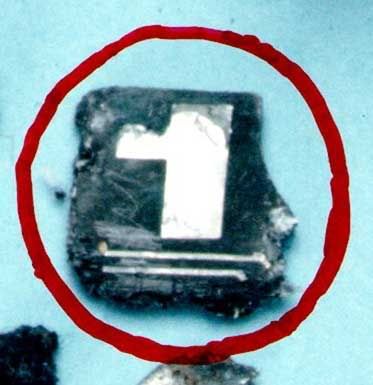
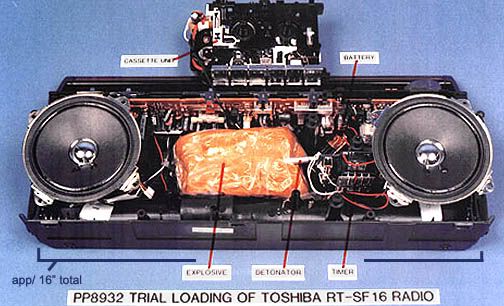
Anyway, that feeling is similar to one I get about at least two of the crucial few bits of evidence against Libya, one being that timer fragment PT/35(b). Its very existence is odd, considering the nature of the blast and the timer's proximity to it. As Dr. Wyatt's tests and common sense suggest, fiberglass circuit board set 1.5 to 2 inches from about 12 ounces of Semtex detonating is not likely to yield a 1cm chunk (see it below, they're serious!). Then it's odd for being found on land when it was fully capable of hiding itself in the deep ocean. And then its loneliness - parts of the radio itself were found (somewhat more plausibly), but nothing else from what was added. RARDE scientist Alan Feraday's final report noted "this piece of circuit board is the sole recovered fragment originating from the mechanism of the IED itself." Now if the explosion were not strong enough to vaporize everything, I would expect a few surviving pieces, with this probably the largest. Rather it's the single and only. Luckily it was a piece of the highly-identifiable and highly-Libya-linked MST-13 circuit board that timed the bomb's early detonation, says the official papers.

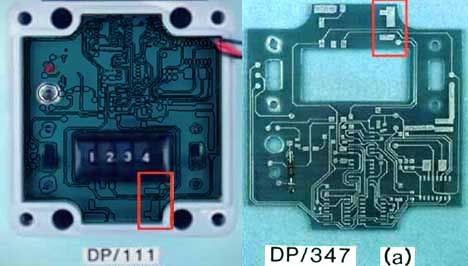
Discovered within a piece of (apparently)exploded clothing, the fragment of fiberglass circuit board, about a millimeter thick, itself looks hardly exploded. Note its fracture lines, left, bottom, and lower right edges - are all straight lines at right angles to each other. I imagine there are reasonable explosion-related causes for this, but it strikes me as unnatural, FWIW. Approximately one cm square (hugely magnified above), its printed surface is dominated by a touch pad that uncanilly resembles an upright number one, and double-underlined at that. Considering the entire board (below, right - color adjusted, touch pad area outlined), there is no other spot on the board that contains a recognizable symbol. There are plenty of spots with little lines that might be shown to match, but they don't seem to really say anything. When you're like Tom Thurman, searching with intrepid zeal for the one clue you need, that must be almost a religious experience to see... bam. THE ONE, telling its discoverers "There is but one way to conviction, and it is by me. I shall be thine number one evidence, and only savior." Subtly, it evokes the PA one-oh-three it was alleged to have brought down, and whispers in our left ear "we're number one" for solving this most awesome forensics puzzle and getting the baddies. Or less hyperbolically, when one sees this, the temptation is too much to turn it so that's visible. But in fact, the boxed MST-13 trial exhibit DP/111 (above left) shows the readout from the front (circuitry traced here for reference). We've been reading it upside down. Consider the other trial photo at right, with upside-down board, and the area of PT35(b) indicated in red, apparently on top and to the right. What a better place for an underlined number one could there be? Bottom sucks. Left, evil. Turn the whole world upside down if need be to make sure we're number one, double underlined, on the right and at the top. And can "prove" libya did it in the process. Who's writing this stuff? Random fate? Really? You aren't believing in God by now?

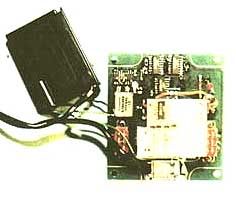
At left is a duplicate MST-13 with elements attached. The photo is from the website of a Mr. Byers, who claims the CIA was making these fake MST-13s in Florida. At any rate, I don't know what these things all do or are called I've even been told but it didn't sink in. Do note the largest block is the timer dispaly, seen here from the back, and set just south of middle. The rest is surely capacitors, flux inhibitionists, and some grommets around the outer parts. Some of these things are probably made of metal and materials stronger and thicker than fiberglass board and could possibly shield our PT/35(b) in the chaos of explosion. But if something like that happened, then where is that protector now? Did it vaporize itself? Or plunge irrecoverably into the mud at the bottom of a Scottish loch? Maybe, but then all elements of the bomb except this "number one" corner of that Mebo-traceable, indictment-enabling layout wind up disappearing into the ether?

I'm a reasonable chap but I find that harder to swallow than what so many other clues are already saying - the rest was cut or blown off elsewhere, and only THE ONE was ever near this crime scene, after being carefully selected for the job. I can't see just why fate would have any interest in making sure the evidence "says something to us." However, a false god playing with reality and feeling immune in orbit might just take the chance. At least, it would increase the odds from negligible to actually happening this way. As happened.

Tom Thurman

The Political Scientists of Lockerbie, part 3/3
posted 13 November 2010
last edits 16 Nov


From Kentucky to Lockerbie and Back: A Quick Bio
Special Agent James T. “Tom” Thurman hails from Richmond, Kentucky, born on an unpublicized date to Margaret and James "Spider" Thurman [1] Tom spent most fof the 1970s serving in the U.S. Army, according to the 1998 book Tainting Evidence, starting to gravitate to explosives work "as an officer commanding an ammunitions company in Korea." His calling led him to join the FBI in 1977, and by 1981 he'd worked up to the small and elite Explosives Unit. [2]

His work on the Lockerbie SCOTBOM case was the first big thing in his career, starting immedaiately on 21 December 1988, examining the aircraft's debris. Later, he also sat in on the FBI interview of suspected bomb-maker Marwan Khreesat in Amman, Jordan, November 1989. (Thurman and Lockerbie: Overview, forthcoming)

By the end of the year Thurman was also juggling this work with the VANPAC case - the mail-bomb killing of a federal judge, a lawyer, and other attempts. In that case, Thurman was pivotal to the identification of LeRoy Moody, by a "unique" bomb style, or "signature." This case, prosecuted by future FBI director Louis Freeh, gave Thurman some minor celebrity status. (Thurman and Moody: forthcoming).

In June 1990 Thurman made the lightning timer identification for the SCOTBOM case, cementing the turn to Libya. The telltale MST-13 was identified, thanks to Thurman's knowing people - like a mysterious CIA analyst who made the match possible. After the resulting 1991 indictments, he gained much wider media fame, most notably as ABC News'  "Person of the Week." He told the show "I love putting the bad guys away." [2]

Somewhere in there, he also helped French investigators identify another "signature," a piece of circuit board from the bombing of UTA 772 in Sept. 1989 – leading again to Libya. (Thurman and UTA 772: forthcoming) (UTA 772 at all: forthcoming)

In 1993 Louis Freeh took over the FBI, and shortly after promoted Thurman to director of the explosives unit. [2] From that perch he had a major role in the investigation of the truly epic 1995 Oklahoma City bombing. (Thurman and OKBOM: forthcoming) But for collected allegations of misbehavior in this and earlier cases, Mr. Thurman was drummed out of the crime lab only two years later, in 1997. This was triggered almost solely by the efforts of one tenacious analyst, Dr. Frederic Whitehurst, and the Inspector General’s investigation that finally followed. (Thurman and 1997: forthcoming)

Not surprisingly, Thurman was not called as a star witness, or a witness of any kind, at the Camp Zeist trial of the two accused. As of 2000, according to an EKU bio, James T. Thurman has been teaching courses at East Kentucky University, where the elder James "Spider" Thurman was once an alumni director (knows people ... spider ... web?). His son is an associate professor of Loss Prevention and Safety, teaching in the Fire, Arson, and Explosion Investigations Program. [3] He wrote a book, published in 2006 "Practical Bomb Scene Investigation." (500 pp, $89.95), and told a EKU newsletter that, besides the two year writing, “technically, I’ve been working on this book for 30 years, with the experience I gained over that time." [3]

Note: BBC Dispatches program, first aired December 1998, interviewed Thurman at EKU, where "he now teaches explosives investigation." (18:36) Do note: the the criticism of the board differences they put to him is pure hogwash. Thurman comes out looking smart by comparison to Maj. Owen Lewis (16:40).

On Thurman's Qualifications
On the face of it, all these things suggest a seriously qualified and professional expert, but sources vary widely. Some of those who've worked with Thurman pan his credentials. Dr. Ludwig de Braeckeleer interviewed two of these, including the aforementioned Whitehurst, for an excellent 2008 article. "Thurman holds an undergraduate degree in political science and I hold a PhD in chemistry," Whitehurst told de Braeckeleer. "Thurman was not recognized by the FBI or anyone else as having expertise in complex chemical analysis and I was." [4]

The other cited critic is William Tobin, a former FBI forensic analyst who played a key role in determining the cause of the crash of TWA 800 and, after retirement, discredited a decades old forensic technique used to put away many people. To de Braeckeleer he said in part:
“I put no credence into any scientific or technical conclusions rendered by anyone without a suitable scientific background for that matter, until I can make an independent evaluation. Thurman was a history or political science major to my recollection […] His habit, as with most Explosives Unit examiners with whom I interacted […] was to seek someone else’s expertise and then present it as his own in a courtroom without attribution.” [4]
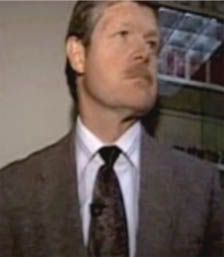
Tobin specifically mentioned attempts at "bail-outs," where Thurman asked for his advice to bolster something he wasn't able to support on his own. And he does seem a bit dense when left on his own for the numerous news cameras he’s so unafraid of. He looks like a former football player who was able to score Cs in class, but really just loves to blow things up, A beefy fellow with a slightly shy manner, cop-like mustache, and a mild, good-natured Tennessee twang. He's got a clumsy trying-to-sound-smart way of speaking: a lot of unnecessary big words, “ummms”, hyperbole, and emphasis on the “literal” “physical” reality of his war stories, which change freely on different occasions.

But those at a distance get a different perspective. Steve Emerson and Brian Duffy wrote well of Thurman in their 1990 book The Fall of Pan Am 103.
“One of the bureau’s best explosives technicians … Regarded by his colleagues as a pro. Described by friends and coworkers as serious-minded and intense … according to those knowledgeable about the dangerous arcane of explosives, he was among the very best investigators in the field.” [5] 
The book relates his qualifications so:
“Thurman had acquired a master’s degree in forensic science from George Washington University and was a graduate of the United States Naval Explosive Ordnance Disposal School. Even after all his highly specialized training, the FBI still did not consider Thurman quite ready to work in its Washington crime laboratory, one of the most advanced forensic labs in the world. At the bureau’s request, Thurman undertook more than a year of intense lab study on explosives and explosive devices. That was in 1977. Thurman had been a special agent with the bureau ever since…” [5]
From the other sources I've seen, his high-level colleagues, Whitehurst and Tobin and perhaps silent others aside, seem to lean as that book does. Tom is a fully-qualified and rigorous investigator of great brilliance. The unanimity is almost eerie. (see below)

E. Unit Culture: The Explosive Arts
Tainting Evidence explains that Explosives Unit, which Thurman marinated in and came to lead, were sometimes called “the bombers.” This was apparently from their penchant for figuring out explosions by recreating them in a “trial and error … hopefully not too much error” method. [2] They apparently start with a guess, try to rebuild an IED and blow it up, identify the differences and try again. They went on gut instincts and adrenaline, sounds like. Thurman himself told the Miami Herald in 1991 that "we're the blacksmiths of the FBI. The nuts and bolts. We get extremely dirty, actually, filthy dirty." [1] It doesn’t sound fully scientific, and in fact, Tainting Evidence continues:
“[T]he physical explosives examinations, crime scene investigations and bomb data identification that the "bombers" did were not scientific. […] The FBI's Explosives Unit handed all scientific analysis over to chemists, metallurgists, or technicians [...] However, it was the principal examiners among the "bombers" who made the decision as to what explosives evidence should go where and what the results meant in the context of the overall investigation. As such they would often interpret the results of others. It was a recipe for a culture clash — and more." [2]
"The nature of the job," the book continues, aside from the obvious fun of it, "meant that pseudomilitary, nonscientific attitudes were entrenched in the Explosives Unit. Many were suffering from what one forensic scientist termed "testosterone poisoning."" [2] This differences alone could explain some of the conflict with those like Whitehurst and Tobin (not that either seems lacking in the testo department - ed) . But more important than some science-vs-explosive arts dispute is the culture of politics over science and collective ass-covering that seems to be at work under the surface. 


E. Unit Culture: Politics
Dr. DeBraeckeleer wrote that "William Tobin told me that, in his opinion, Thurman and other Explosives Unit examiners were prone to confirmation bias, an observer bias whereby an examiner is inclined to see what he is expected to see." Thurman in particular is singled out for seeing and saying what the prosecution wants to hear, as opposed to what the science, or presumably his own explosions, really say. [4] That's a bad start point, methodologically.

Unlike the quieter Tobin, who only spoke up after retiring, Frederic Whitehurst had spent year lodging complaints with superiors about Thurman’s frequent alterations of his scientific reports. When in these disputes Whitehurst reminded him of their qualification difference, he tells de Braeckeleer, "Thurman did not deny it but argued that my reports could and/or would hurt prosecutors’ cases. I was very concerned about the fact that wrong information in the final reports could hurt individuals and deny citizens of this country right to a fair trial." [4] For years, Tom won these disputes.

Further, Whitehurst suggests a pattern of collective reinforcement and ass-covering, which would only naturally follow from the adoption of "political science." (It does not thrive, like real science does, on open challenges to the orthodoxy.) What he describes is a system that enables and rewards the actions of those like Thurman, and uses those rewards to justify further enabling.
"When I raised my concerns with my managers at the FBI laboratory, all except for one of them reminded me that Thurman was the “hero” behind determining the perpetrators of the Pan Am 103 disaster. I understood from that that the FBI would not expose these issues for fear that the investigation into the Pan Am 103 bombing would be seen as possibly flawed and this would open the FBI up to criticism and outside review.
[...]
I cannot imagine that he was acting alone. [...] The problem with having a scientific laboratory within an intelligence gathering organization is that scientists traditionally are seeking truth and at times their data is in direct contradiction to the wishes of a government that is not seeking truth but victory on battle fields.” [4]
Tobin agrees, saying “I’ve seen so often where an individual who was at one time an independent thinker and had good powers of reasoning acquires the ‘us vs. them,’ circle-the-wagons, public-relations at all costs mentality at the FBI. [...] Whatever you do, ‘don’t embarrass the Bureau’ and ‘the Bureau can do no wrong.’" [4] All this makes sense and explains the different views, cited above, one will get from talking to most Thurman colleagues or the bureau's press reports on the one hand, or from seeking out one of the others who don't get offered up for interviews with the big terrorism experts writing their bestsellers.

Sources:
[1] Roser, Ann. “Nuts and Bolts Work Pays Off in Lockerbie Probe.” The Miami Herald. Published November 30, 1991. http://plane-truth.com/Aoude/geocities/miami7.html
[2] Tainting Evidence: Inside the scandals at the FBI crime lab. John F. Kelly and Phillip K. Wearne. Free Press, New York, 1998. Partial online excerpt.
http://www.powells.com/biblio?show=HARDCOVER:USED:0684846462:17.50&page=excerpt
[3] East Kentucky University. EKUpdate, vol 7 no 17, May 1, 2006.
http://www.prm.eku.edu/Update/?issue=70&department=10
[4] Dr. Ludwig de Braeckeleer. "FBI Special Agent Thomas Thurman." Canada Free Press. 30 October 2008. http://www.canadafreepress.com/index.php/article/6529
[5] Emerson, Steve, and Brian Duffy. The Fall of Pan Am 103. pp 27-28.

No One Seriously doubts the Libyan's guilt?

The doubters and their Doubts
Last update Feb 10 2011

This will be a running-updated post to gather the best quotes from the best minds on this case. My emphasis is on support for Megrahi's innocence and/or the trial's inadequacies. The list is not all-inclusive - I've eliminated a few whose sincerity or sanity I find questionable enough. I've not listed any Libyans, nor their lawyers. Just people who at least presumably should have no ulterior motive to express such doubts. In many cases I'm listing names first, and then later finding quotes. Those of direct relation to the victims (8) can be found searching "PA103 victim."

If anyone has any snappy submissions, even from you, I'll include them. Use comments form below or e-mail them in.

1 - Lucy Adams. Chief Reporter, The Herald (Scotland).
"In his first full-length interview since being released last week, Abdelbaset Ali Mohmed al Megrahi told The Herald: “We all want to know the truth. The truth never dies.” Speaking from a hospital bed at his home in Tripoli, Megrahi talked extensively about his 10-year battle with the Scottish legal system and insisted he did not commit the worst terrorist act on mainland Britain." - 28 August 2009. [source]
2 - Kate Adie. Former Chief News Correspondent for BBC News. Signatory, Justice for Megrahi campaign.

3 - Jack Anderson. Renowned American journalist.
"President Bush and British Prime Minister Margaret Thatcher secretly agreed last spring to play down the truth about who blew up Pan Am flight 103." - Column, January 1990, via Paul Foot, 2001. (see below - Thatcher)
4 - John Ashton. Researcher for Frankovich on The Maltese Double Cross, co-author with Ian Ferguson, Cover-up of Convenience, and with Abdelbaset al Megrahi of an upcoming and much-anticipated biography/tell-all book. Signatory, Justice for Megrahi campaign.

5 - Robert Baer. Former CIA operative, specialty in Iran. Believes Iran, not Libya, was responsible for the bombing.
"The question is who knew [of evidence proving Iran's role] and when you consider they've released him rather than hear his appeal, you can draw your own conclusions. The decision serves everybody's purpose. I don't think anyone wanted to face the consequences of that evidence being heard at appeal.

The Maltese witness was manipulated and perjured himself at trial. I talked with the appeals commission investigators and that's what was going to be laid before the hearing. At least one FBI officer was pressured too. I spoke to the case officer and he was pressured to change his testimony. It was a bad show all the way but whether Megrahi is innocent is another question entirely."
[August 2009]

6 - Ian Bell. British columnist, described by Robert Black as "probably the most consistently interesting columnist writing in the print media in Scotland today."
So why was Megrahi given his liberty when other terminally ill prisoners of the Crown in Scotland have enjoyed far fewer courtesies? “Compassion” is not a notable feature of Scottish justice. And Al-Megrahi wasn’t just any prisoner. The fact that he was obliged to abandon his appeal against conviction in order to – a legalism – get free, wasn’t trivial. How come? (...)

Why was it so important, for so long, to so many people, that Megrahi should be dead, or at least out of the way?

He didn’t do it. That statement suits no-one. The important thing to remember, in Scotland, is that Megrahi abandoned his appeal. Such was the price of his liberty.

No-one has dealt with the fact that the US Department of Justice sanctioned payments of $3 million to a pair of Maltese “witnesses” – Tony and Paul Gauci, for their “crucial evidence” over clothes and a suitcase – or whether a Scottish court, even one in a foreign country, allows bribery. ...
[2 Feb 2011]

7 - David Ben-Aryeah. Scottish journalist, researcher, adviser to the families of British victims, consultant for The Maltese Double Cross (1994).
"Taken against the historical demands of the UK relatives for a ‘full, independent enquiry’ into events before, during and after the bombing of Pan Am 103, the pending appeal may well shed light in some very dark corners and go a small way into answering the disturbing spectrum of questions raised during the original trial and appeal." [August 2008]
8 - David Benson. English playwright, organizer of the Edinburgh Fringe Festival, related Jim Swire's odyssey there in 2010 with the one-man play “Lockerbie: Unfinished Business.” Signatory, Justice for Megrahi campaign, petitions, etc.
"If you really look into it the evidence that was presented against [Megrahi] in court was laughable.” [30 July 2010]
9 - Jean Berkley. Mother of PA103 victim Alastair Berkley. Justice for Megrahi signatory.

10 - Matt Berkley. Son of Jean, brother of PA103 victim Alastair. Involved in advocating for Megrahi's second appeal, among other things.
“I don’t have any investment in Mr. Megrahi being innocent, or in his guilt being in doubt. So I would be glad to proved wrong. But I don’t find detailed and convincing arguments to the effect that the trial was fair, or that he was guilty.” – BBC Radio 4, The Report, 16 September 2010.
11 - Peter Biddulph. Researcher, cohort of Dr. Jim Swire. Signatory, Justice for Megrahi campaign.

12 - John Biewen. Reporter, with Ian Ferguson, on the Shadow over Lockerbie series for American Radio Works in 1999.

13 – Benedict Birnberg. Prominent attorney. Signed 10/10 e-petition.

14 - Robert Black, QC. FRSE, Professor Emeritus of Scots Law in the University of Edinburgh from 1981. Born and raised in Lockerbie, deeply interested in the case since 1993, and referred to as the "architect of the Lockerbie trial at Camp Zeist" due to legal diplomacy he helped arrange for it. Signatory, Justice for Megrahi campaign. Proprietor, The Lockerbie Case blog. Presented for the 10/10 e-petition at parliament, November 9 2010.
"[T]o many observers, including me, it seemed that the case presented by the prosecution was a very weak circumstantial one, and was further undermined by the additional prosecution concession that they had not been able to prove how the bomb that destroyed Pan Am 103 got into the interline baggage system and onto the aircraft." - July 2007 [source] 
"Since the date of the trial court's verdict against him, my position has been a clear one: on the evidence led at the trial his conviction was simply an outrageous miscarriage of justice, about which the Scottish criminal justice system should feel nothing but shame. As a result of today's meeting, I am satisfied that not only was there a wrongful conviction, but the victim of it was an innocent man. Lawyers, and I hope others, will appreciate this distinction." - After meeting Megrahi in jail, November 2007. [Source] 
"His conviction, on the evidence led at the trial, was nothing short of astonishing. It constitutes, in my view, the worst miscarriage of justice perpetrated by a Scottish criminal court since the conviction of Oscar Slater in 1909 for the murder of Marion Gilchrist." - 26 October 2008 [source]
15 - William Blum. Prominent critic of American foreign policy.

16 - Tonio Borg. Prominent Maltese Politician, Minister of Justice, Deputy Prime Minister, etc.
"We have no proof that these two Libyan suspects were involved in anything illegal in Malta regarding this case, particularly the placing of this bomb on Air Malta Flight 180.” - early 2000 [Source]
17 - Wilfred Borg. Operations director, Air Malta, in 1988. Testified at trial to records showing no unaccompanied suitcase on their Flight 180.

18 - Dr. Ludwig de Braeckeleer. PhD (nuclear sciences), Lockerbie researcher of some achievement.
As the explosion of one pound of SEMTEX H inside the luggage container does not generate a blast wave sufficiently powerful to fracture the skin of the fuselage, we have little choice but to conclude that the verdict appears scientifically implausible. [source]
19 - Paul Bull. Friend of PA103 victim William Cadman. Signatory, Justice for Megrahi campaign.

20 - Martin Cadman. Father of PA103 victim William Cadman.
"Your government and ours know exactly what happened. But they're never going to tell." - What Cadman says an unnamed member of the President's Commission (PCAST) told him in private, February 1990. 
"The truth has not come out. I think the investigation found what it was told to find. I don't think it had any option." - to BBC Conspiracy Files, 2008.
21 - Dr. Noam Chomsky. PhD. Renowned American political scientist, linguist, author and lecturer. Signatory, Justice for Megrahi campaign.
"Prof. Chomsky described the events surrounding the case of the convicted bomber Abdelbasset Al Megrahi as "a remarkable illustration of the conformism and obedience of intellectual opinion in the West. [...] I think the trial was very seriously flawed, including crucially the alleged role of Malta. There is every reason to call for a very serious independent inquiry." - Sunday Times of Malta, November 29 2009, at a Justice for Megrahi event - [Source]
22 - Andrew Cockburn. American journalist, Counterpunch.
"The most likely explanation of the judges’ decision to convict Megrahi despite the evidence, or lack of it, must be that either (a) they panicked at the thought of the uproar that would ensue on the American end if they let both of the Libyans off, or (b) they were simply given their marching orders by high authority in London. English judges are used to doing their duty in this manner – see, for example, the results of various "impartial" judicial inquiries into British atrocities in Northern Ireland over the years, including Bloody Sunday and the post-internment torture scandal – but we had hoped, ludicrously so in retrospect, that the Scotch were made of sterner stuff." - 20 April 2001 [Source]
23 - Tam Dalyell. British politician, Labour party, House of Commons, 1962-2005. Has lodged 17 adjournment debates on Lockerbie. Signatory, Justice for Megrahi campaign.
"In my view, what Mr Miliband does not want revealed is the calculated wickedness of the US government and the collusion of certain parts of Whitehall in scapegoating Libya and Mr Megrahi for the heinous crime of bringing an airliner down over Lockerbie on 21 December 1988." - referring to Foreign Secretary David Miliband's pemanent sealing of "the Lockerbie papers." [21 August 2009]
24 - Pamela Dix. Sister of PA103 victim Peter Dix, UK families leader.
"Widespread concern around the safety of the conviction of Abdelbaset al-Megrahi has raised a number of issues. There are also issues about the division of responsibility between Westminster and Holyrood and whether it was right to release Megrahi on compassionate grounds. But everyone is in agreement that whether or not he is guilty, others must have been involved. We hope that the fact that the criminal investigation is to continue will contribute to our quest for the truth." [26 October 2009]
25 - Ian Ferguson. Scottish journalist and researcher, prominent and accomplished scholar of all things Lockerbie. Co-author, Cover-up of Convenience, American Radio Works Shadow Over Lockerbie series, etc. Signatory, Justice for Megrahi campaign, signed 10/10 e-petition.

26 - Dr. David Fieldhouse. Volunteer on the scene of the Lockerbie crash, swears one of the bodies he identified was later stricken from the record. Signatory, Justice for Megrahi campaign, signed 10/10 e-petition.

27 - Robert Fisk.
"Wasn't it supposed to be the Syrians who killed [Lebanese ex-premier Rafiq] Hariri [...]? Nope. Since the Syrians offered their assistance to the United States in Iraq, it's been the pesky Iranians (courtesy The New York Times and The Times of London) who, through their Hezbollah allies, have been blamed for the mass slaughter. Notice, by the way, how the Syrians and Iranians were blamed for Lockerbie and then, post-Syrian help in the liberation of Kuwait in 1991, the Libyans?" - 30 October 2010 [source]
28 - Paul Foot. Renowned British investigative journalist for Private Eye, author of Lockerbie: Flight from Justice, based on his reporting from the 2000 trial.

29 - Graham Forbes. Chairman of the Scottish Criminal Case Review Commission. Headed an detailed review of the evidence brought and not brought at trial, and methodology.
“[B]ased upon our lengthy investigations, new evidence we have found and new evidence that was not before the trial court, [we feel] that the applicant may have suffered a miscarriage of justice."
30 - Robert Forrester. Co-founder, Justice for Megrahi campaign. Writer of many letters and articles.  Presented for the 10/10 e-petition at parliament, November 9 2010.
"Never again ought the Crown to be in a position where it performs the role of prosecutor, judge and jury. It is all rather like their Lordships’ jigsaw was a picture of a top hat taken from an obscure angle and they managed to convert it into a rabbit. Whilst such conjuring sits well in vaudeville, it has no place in a court of law." [source]
31 - David Frum. American political commnentor, neoconservative, speechwriter for Bush II
"For years, many well-informed people in the intelligence community have doubted al-Megrahi's guilt in the Lockerbie bombing. They have argued that the bombing was the work of a Syrian based Palestinian group, the PFLP-GC, working for the government of Iran. Among those who support the Iran-did-it theory are: (i) former Israeli prime minister Ariel Sharon; (ii) Robert Baer, the CIA official who worked directly on the Lockerbie case; (iii) Hans Koechler, the UN Security Council observer at al-Megrahi's trial; (iv) Robert Black, the Scottish lawyer who organized the trial proceedings; (v) Dr. Jim Swire, the spokesman for the families of British Lockerbie victims who lost his own daughter aboard Pan Am Flight 103; and (vi) David Horovitz, editor of the Jerusalem Post." - 22 August 2009 [source]
32 – William Gillies MA. Professor of Celtic and Scottish studies, Edinburgh University. Signed 10/10 e-petition.

33 - Lawrence Gonzi. Current Prime Minister of Malta.
"Our position was always that Malta had nothing to do with the terrorist attack and it has never changed.” - November 1 2009, denying reports that Malta would re-investigate Tony Gauci. [source]
34 - Christine Grahame. Member of Scottish Parliament (MSP), of the SNP party. Has met al Megrahi in prison and is lobbying parliament for a new inquiry. Signatory, Justice for Megrahi campaign.
"I am convinced not only that Megrahi was not found guilty "beyond reasonable doubt", the test in Scot's law, but that he is an innocent man. [...] As for any inquiry, that's out there in the long grass. They are people in authority who are relying on Lockerbie fatigue setting in again. It mustn't." - 23 August 2009 [source]
35 - John P. Grant. Spokesman, Lockerbie Trial Briefing Unit, co-author of a book with Robert Black.
"An independent inquiry after the appeal by all means. For a start, we need the full report of the SCCRC to be published, with parts redacted if necessary. The short sanitized version published by the SCCRC is lamentably insufficient for an issue of such national and international importance." [July 2007]
36 - Ian Hamilton QC. Veteran campaigner for Scottish independence, recipient of a lifetime achievement award at the 2009 Law Awards of Scotland.
"I don't think there's a lawyer in Scotland who now believes Mr Megrahi was justly convicted. The Americans were out for vengeance. Anyone with a darker skin would do. With their barrowloads of money to buy witnesses, aided by our police and prosecution, they hoodwinked our courts." - e-mail to Robert Black, 2010. [source]
37 - Edward S. Herman. Journalist with Fairness and Accuracy in Reporting (FAIR)
"When Abdelbasset Al-Megrahi, [...] returned home to what was angrily described in U.S. media as a “hero’s welcome.” [...] the media’s simplistic tale of villainy and impunity requires a very selective reading of history." [October 2009]
"The Libyan connection lasted in pristine condition from 1990 into 2007, during which time Libya was subjected to intensive vilification, costly sanctions imposed by the Security Council, and a highly publicized trial in Scotland [...] and a payment of several billion dollars in victim compensation [...] on the basis of manipulated and laughable evidence in another show trial." [September 2007]
38 - Ian Hislop. Publisher, Private Eye. Signatory, Justice for Megrahi campaign. See Paul Foot.

39 - David Horovitz. Onetime editor, Jerusalem Post. See "David Frum."

40 - Otto Hostettler. Swiss journalist.
(translated roughly from German) In the Lockerbie case, something strange happened: In the autumn of 1991, practically overnight, two Libyan agents were presented as the perpetrators. One of them was later convicted. But even the judges granted in their grounds that the case was not completely clarified. Some of the victims’ family and some investigators still believe today that the attack was committed by the PFLP-GC. This thesis, however, no longer fit into the long-term political weather situation. (In a Dec 2010 article, linking the Lockerbie bombing with that of Swiss Air 330 in 1970, by the PFLP-GC.)

41 - Father Pat Keegans. Parish priest for Lockerbie at the time of the crash, not far from being killed by it. Has a long history with victims' familes, had addresses read at annual memorials until 2008, snubbed in '09 for stating his belief in Megrahi's innocence. Signatory, Justice for Megrahi campaign. Presented for the 10/10 e-petition at parliament, November 9 2010.
"I do believe that he is an innocent man and that in time the truth of that will emerge. But he was not released because of doubt concerning his conviction. He was released on strict legal grounds and because of the important element of Christian compassion which has influenced the legal systems of Scotland and Europe.” - From a speech for the 2009 anniversary ceremony at Arlington, 21 December 2009, blocked for political reasons. [source]
"[We] have never found a full answer to Lockerbie. And this will always be a source of great distress. [...] We need the truth, and we need justice, to allow ourselves to be at peace. Otherwise, we're still back on December the 21 1988, in the darkness." [9 Nov 2010]
42 - Garrison Keillor. American storyteller and radio humorist, creator of the Prarie Home Companion.
“…Abdel Basset Ali al-Megrahi […] was convicted in 2001 on the basis of thin circumstantial evidence and the testimony of a paid witness for the bombing of Pan Am flight 103 […] Mr. al-Megrahi had “patsy” written all over him. The Scots did the right thing. And caused a public uproar, and so what? Right is right." – on Megrahi’s release, August 2009. [Source]
43 - A.L. Kennedy. Author and comedian. Signatory, Justice for Megrahi campaign.

44 - Dr. Morag Kerr. Lockerbie researcher and commentator. Committee member (secretary depute) and signatory, Justice for Megrahi campaign. Signed 10/10 e-petition.
"[D]etailed examination of the evidence has convinced me that indeed [Megrahi] had nothing to do with it. […] there absolutely nothing at all to connect him personally with the bomb […] I am as certain as I am of anything I have not personally witnessed that he had nothing to do with the Lockerbie bombing, and thus that his conviction is a heinous stain on the soul of the scottish justice system.” – Comment on signing Scottish parliament e-petition 416, October 2010.
45 - Andrew I. Kilgore. Former U.S. ambassador to Qatar, editor Washington Report on Middle East Affairs. Signatory, Justice for Megrahi campaign. Signed 10/10 e-petition.

46 - Noel Koch. Pentagon guy, national defense and security stuff, going way back. Recently ousted from a post at the Pentagon.
"It was decided by the two governments, by the United States and the United Kingdom, that Libya had been responsible for the bombing of Pan Am 103. I have never believed that, and I don't believe the case will stand against the Libyans. [...] My own conviction from the outset was that the Syrians and Iranians were pre-eminently responsible for this." [to Shadow Over Lockerbie, 1999]
47 - Dr. Hans Köchler. Professor, University of Innsbruck, Austria. Pioneer in cultural dialog between Islam and the West, president of UN-affiliated International Progress Organization (IPO), primary international observer at Zeist trial.
“I welcome the release of Megrahi, because I firmly believe that he is innocent of the charges made against him. Believe me, if I thought he was guilty I would not be pleased to see him released from jail.” - 21 Aug 2009 [source] 
“The entire procedure [handling of Megrahi’s first appeal] looks more like an intelligence operation than a genuine undertaking of criminal justice.” - June 2008 [source]
"I am sorry to admit that my impression is that justice was not done and that we are dealing here with a rather spectacular case of a miscarriage of justice." - 14 March 2002 [source]
48 - Marina de Larracoechea.  Sister of PA103 victim Maria Nieves de Larracoechea. In protest of U.S. policy and the handling of her sister's death, she had her one stone left out of the memorial cairn at Arlington cemetery (it has 269 instead of the planned 270).
"I feel that what started as a personal, loving effort from the relatives ... has turned into a message that I cannot accept. ... We have not gotten justice or the truth. [...] given the sequence of events that led to the disaster [IR 655], and the way the criminal investigation was handled after, which may I say was never independent in the first place..." [On her reasons for opting out of the cairn, Nov 1995]
"I thought that they were going to acquit them both, and that they have convicted one surprised me. But I'm infuriated by not knowing who made the bomb, by the wall of silence that has formed around the behavior of the North American Government, and by the lies to me that are counted. All this is an obscenety." [http://plane-truth.com/Aoude/geocities/nieves.html]
49 - Adam Larson.  American blogger/researcher, proprietor of this site. AKA Caustic Logic. Justice for Megrahi signatory, signed 10/10 e-petition. (hard to pick a good quote for myself, and no rush I suppose)

50 - Magnus Linklater. Prominent journalist and editor of numerous UK papers, most recently the Scotsman, published expert on Scottish history, politics, and culture.
“I have always felt uneasy about the convenience of it all. In the months after the attack, all the evidence pointed in a different direction — to the involvement of Syria, and a terrorist group known as the Popular Front for Liberation of Palestine General Command. [...]All that changed, some time in 1990, when we were told about the discovery of forensic evidence that suggested a Libyan link._[...]_It is the British Government that should be concerned. Our defences against terrorism rest ultimately on trust in our legal system, on the reliability of our police work and on the demonstrable transparency of our judicial process. [...] However much it goes against the grain, the Pan Am conviction must be re-examined, to determine whether there is strong enough evidence to reopen the case.” [26 October 2005]
51 - Aonghas MacNeacail. Poet. Signatory, Justice for Megrahi campaign. Signed 10/10 e-petition.

52 - Hector L. MacQueen. Emminent professor of Scots law, signed 10/10 e-petition to Scotland.
"[The abandonment of Megrahi's appeal] would avoid the inconvenient ventilation of all the evidence for months and years to come, keep Megrahi in prison albeit in Libya, and avoid possible embarrassment for police, prosecutors, judges and others." [15 Aug 2009]
52 - Heather Mallick. Journalist.
Speaking of thin-skinned nations that are intolerant of perceived criticism, the US refused to hear British pleas for the fate of Gary McKinnon, the young Brit with autism who hacked into Pentagon files in 2001 to search for proof of the existence of UFOs. The US is extraditing him, presumably to jail him for life. Why? Because the UK released the convicted Lockerbie bomber, Abdelbaset Ali al-Megrahi. In fact, the independent Scottish judiciary [sic] released him, possibly just to annoy Downing Street, and also because, embarrassingly, he appeared to be a tiny bit “not guilty.” [1 December 2010]
53 - Michael Mansfield. QC, Renowned British criminal lawyer, defended Danny McNamee, convicted by the science of Allen Feraday, who worked on the Lockerbie case.
"Forensic science is not immutable. They're not written in tablets of stone, and the biggest mistake that anyone can make—public, expert or anyone else alike—is to believe that forensic science is somehow beyond reproach: it is not! The biggest miscarriages of justice in the United Kingdom, many of them emanate from cases in which forensic science has been shown to be wrong. And the moment a forensic scientist or anyone else says: 'I am sure this marries up with that' I get worried."- Frontline Scotand, 1997. [source]
“Michael Mansfield QC, one of the country's best-known defence lawyers, said a full judicial inquiry was required to settle the doubts over the case. Mansfield said he had no doubt that the evidence given to secure Megrahi's conviction was "entirely unsustainable".” [source]
54 - Eric Margolis. Canadian Journalist.
"Some intelligence experts believe the attack was revenge for the downing of the Iranian airliner, carried out by Mideast contract killers paid by Iran. Serious doubts about al-Megrahi's guilt were voiced by Scotland's legal authorities. An appeal was underway. Libyans believed he was a sacrificial lamb handed over to save Libya from a crushing U.S. and British-led oil export boycott._[...]_I believe al-Megrahi was probably innocent and framed. Scotland was right to release him." [Source]
55 - Lara Marlowe. Irish Times Washington correspondent.
I still believe that the Lockerbie bombing was retaliation for the downing of the Iran Air flight six months earlier. [Nov 2010]
56 - Christopher Mason.
Without the forensic evidence and Gauci’s evidence, Megrahi and Fahima could not have been prosecuted. There are allegations that this evidence was tainted. I do not understand why those who thought the Scottish justice system was seriously threatened by perjured evidence in [Tommy] Sheridan’s civil case against a newspaper, cannot find a way of looking into our criminal justice system in relation to the allegation that the most important criminal trial of the 20th century proceeded on the basis of false evidence. [Dec 2010]
57 - Stephen Maxwell. Signed 10/10 e-petition.

58 - Eddie McDaid. Lockerbie researcher and commentator, JFM signatory.

59 - Rik McHarg. Communications hub coordinator: Lockerbie crash sites. JFM signatory.

60 - Iain McKie. Former police officer and father of wrongly accused Shirley McKie. Crusader for the wrongly convicted, co-founder and signatory, Justice for Megrahi campaign, signed various petitions, etc. Presented for the 10/10 e-petition at parliament, November 9 2010.
"How can we blame other governments if the search for the truth about Lockerbie, a Scottish tragedy that occurred on Scottish soil which was investigated and prosecuted by Scottish authorities, is frustrated by our own government? It is a legitimate question to ask – what right does a country have to self-determination if when given the opportunity to exercise that right it fails to do so? Urging a new Scottish probe of Megrahi's conviction.” [October 12 2010]
61 - Anne McLaughlin, MSP. Member of Scottish parliament, responding the the November 2010 presentation at parliament of Justice for Megrahi's petition for a new investigation.
I don't know if [Justice For Megrahi] have a point in claiming that Megrahi is innocent. What I do know is that it would be all too easy (and understandable) for Mr Swire to accept Megrahi's guilt and put all of his negativity energy in that direction. But he didn't accept it. He has been outspoken in his condemnation of the conviction and as you can see is campaigning for an enquiry into it. I guess it's important to him that they get the right person but how tempting must it have been to turn a blind eye and blame the man with the conviction? [source]
62 - Marcello Mega. Scottish Journalist. Signatory, Justice for Megrahi campaign, signed 10/10 e-petition.
"The man convicted of the Lockerbie bombing was forced to abandon his appeal to secure compassionate release on the grounds of his terminal cancer, a justice department whistleblower claims. Three senior sources close to Abdelbaset Ali Mohmed Al-Megrahi, who has now exceeded the three months he was expected to live by more than ten months, have confirmed the whistleblower's version of events." [Oct 2010]
63 - Major Joseph Mifsud. Maltese meterological expert, called to testify at Zeist trial, for the defense. Also wrote articles of his own on the case.
"So now it's confirmed. After 19 statements by Tony Gauci, after an identification parade in April 1999 and after taking the witness stand during the Camp Zeist trial this week, he has not positively identified anyone that went to his shop and bought clothes, fragments of which were later found in the fields of Lockerbie months after the Pan Am tragedy.
[...] Then there is the rain factor. The person, who bought the clothes, bought an umbrella because it was raining. On 7th December 1988, when the prosecution is alleging that clothes where both from Mary’s House it did not rain in the afternoon as checks with meteorological office will confirm. The day the defence is suggesting, from weather reports its seems that it was raining in the afternoon." [source]
64 - Hugh Miles. Journalist, son of Oliver Miles.
"The fate of Abdelbaset al-Megrahi, however, and the tarnished reputation of the Scottish criminal justice system rest in the hand of the Scottish courts. Megrahi's acquittal, posthumous or otherwise, will undo a heinous wrong and return us to where we were 20 years ago – searching for the truth behind the bombing of Pan Am flight 103." [21 Dec 2008]
65 - Oliver Miles. Former UK ambassador to Libya, member Libya British Business Council.
“The thing that principally worries me at the moment is why did Megrahi abandon his appeal? [...] it wasn’t a pre-condition for the decision to release him on humanitarian grounds. What I would like to know is how he was persuaded to give it up. Did somebody tip him the wink or tip the Libyan authorities the wink that the only way to get back to Libya is to give up the appeal?” [31 August 2009] 
"What is harder to explain is why, by and large, the British families have been ready to entertain the idea that al-Megrahi may not be guilty, while the American families, on the whole, have not." [19 August 2010]
66 - Allan Miller. Head of Scotland's Human Rights commission.
"Professor Alan Miller, the head of the Scottish human rights commission, said there were still significant doubts about the guilt of Abdelbaset al-Megrahi after an independent investigation uncovered new evidence that undermined the conviction. [...] Miller said the row over Megrahi's medical status was an "undignified and unhelpful distraction" from the more important issue of addressing unresolved questions about his guilt." - Guardian, 19 August 2010 [source]
67 - Heather Mills. Journalist with The Firm. Signatory, Justice for Megrahi Campaign.

68 - David Morrison. Brilliant Socialist writer. Penned a damning critique of the Zeist trial in 2000. [source – PDF]

70 - Reverend John Mosey. Father of PA103 victim Helga Mosey.
"Why has a full independent inquiry been consistently refused? Why, after five years, have no real answers been supplied?" - 21 Dec 1993, addressing fifth anniversary memorial in UK, well after the official answers had been provided.
"[the abandonment of Megrahi's appeal is] the worst possible decision for the families because we lose the opportunity to hear evidence that the Scottish Criminal Cases Review Commission thought was worth putting forward [...] We are back where we started 21 years ago, asking for a wide-reaching independent inquiry into all aspects of this disaster." [August 19 2009]
71 - Chris Mullins Former MP, "Birmingham Six campaigner."
"The more interesting issue, upon which almost no one has touched, is whether or not Megrahi had anything to do with Lockerbie. The case against him was wafer-thin and he had an appeal pending which might have resulted in his conviction being quashed."[Jan 2011]
72 - Craig Murray.
"I can affirm that the FCO and MI6 knew that al-Megrahi was not the Lockerbie bomber." [25 September 2009]
73 - Len Murray. Highly distinguished Scottish solicitor [website]. Signed 10/10 e-petition.
"I have had the benefit of reading Professor Black's lengthy submissions and I agree entirely with what he has written. Personally, I could not understand a number of things about the outcome of the case. Let me illustrate what I mean:

1. I could not and still cannot understand how the Court could hold, on the evidence of Gauci, that Megrahi made the purchase of the clothing. Without Gauci's evidence, which at its height was that Megrahi resembled the purchaser, there was no case.
2. Their finding that the purchase was made on 7 December bordered upon the perverse.
3. Their finding about the unaccompanied baggage fell within the same category."
[27 October 2010]
74 - Richard Norton-Taylor. Journalist, The Guardian.
"Two days [before the verdict], senior Foreign Office officials briefed a group of journalists in London. They painted a picture of a bright new chapter in Britain's relations with Colonel Gadafy's regime. They made it quite clear they assumed both the Libyans in the dock would be acquitted. 
The FO officials were not alone. Most independent observers believed it was impossible for the court to find the prosecution had proved its case against Megrahi beyond reasonable doubt. It was not only the lack of hard evidence - something the judges admitted in their lengthy judgment. The case was entwined, if the judges were right, in a sequence of remarkable coincidences..." [19 June 2001]
75 - Cardinal Keith O'Brien. Leader of the Catholic church in Scotland.
"Cardinal O’Brien said he wanted to see not only justice for Megrahi but also “justice for all the innocent people who died at that time, and their families and friends who are grieving and wanting to be able to draw a line under that horrible episode in the history of Scotland”. - 27 October 2010, supporting the JFM call for a new inquiry. [source]
74 - Andy Parsons. British comedian.
“[It] was not justice, but more like a high-stakes version of the board game Guess Who?” - October 2010, on the "identification" by Tony Gauci of al Megrahi. [source]
75 - Gareth Peirce. Renowned defense attorney, defended Danny McNamee, convicted by the science of Allen Feraday, who worked on the Lockerbie case. Signed 10/10 e-petition.
“The political furore has been very obviously contrived, since both the British and American governments know perfectly well the history of how and for what reasons [Megrahi] came to be prosecuted.” - October 2010 [source]
76 - Denis Phipps. Former head of security, British Airways. Ran a study of Air Malta's records, found no evidence of a bomb on KM 180. Signatory, Justice for Megrahi Campaign.
“One has to say: are - terrorists - idiots? Don’t terrorists plan to have a reasonable degree of success?" – Maltese Double Cross, 1994, referring to the implausible official Libyan plot to send the bomb from Malta via Frankfurt to London.
77 - John Pilger. Prominent human rights journalist. Signatory, Justice for Megrahi Campaign.

78 - Rosario Priore. Former Italian public prosecutor, famous for handling the Ustica bombing, 1980.
The former investigator said similar bomb detonators like those [suspecte by some of use in] the Lockerbie bomb were found in a [PFLP-GC cell in Germany]. Priore claims the same ‘baro switch’ used to detonate the bomb 30 minutes after an airliner reaches a certain level of atmospheric pressure, was the same used on the Pan Am flight, which detonated 38 minutes after take-off. “Almost a perfect coincidence,” Priore observed... [summation of remarks to Italian news agency, July 2010]
79 - Steven Raeburn. Editor of Scottish law magazine The Firm. Signatory, Justice for Megrahi Campaign.
"...Scotland sadly deserves its shame, disgrace and international condemnation. But certainly not for the reasons offered and repeatedly churned.

The story of the Lockerbie events has been allowed to be drowned out by one version, promoted, if not manufactured, by US intelligence and repeated by our own prosecution service and our government, in denial of later revelation, who maintain even to this day that they "do not doubt the safety of the verdict against Abdelbaset al-Megrahi,” despite it being utterly discredited, in addition to adjudged a possible miscarriage by our Criminal Cases Review Commission."
[2 December 2010]

80 - Dr. Theresa Ransford. PhD, OBE, poet. Signatory, Justice for Megrahi campaign.

81 - Anthony Robson. Scottish solicitor.
"The simple fact of the matter is that the focus seems to have been placed on the release itself, of a man which we hear referred to often as 'a man CONVICTED of a terrible crime', rather than a man who IS guilty. I'm well aware that a small number of you may know the real truth and are clearly therefore quite happy to lie to the general public. … I have no pride in being part of a system that effectively colludes to mask the reality from those who are still grieving." - an e-mail to members of the Scottish Parliament, August 2009.” [source]
82 - James Robertson. Author. Signatory, Justice for Megrahi campaign.

83 – Kenneth Roy. Signed 10/10 e-petition.

84 - Michael Scharf. Legal counsel to US State Department, 1989-1993 - helped draft proposals for sanction against Libya over Lockerbie.
"The CIA knew along that this guy was a liar, that this guy was just out for money, that they didn't believe half of what he said, if any of what he said, and yet they're presenting him as the star witness in a case that is of such importance? ... it didn't ruin my career, but it's a moment that I'm not proud of." - to Conspiracy Files, 2008, recalling his shock on learning the truth about crucial witness Abdul Majid Giaka.
"Scharf branded the case a “whitewash” and added: “It was a trial where everybody agreed ahead of time that they were just going to focus on these two guys, and they were the fall guys.”" [2006]
85 – John Scott. Signed 10/10 e-petition.

86 - Ariel Sharon. Israeli warrior and prime minister. See "David Frum."

90 - Gerard Sinclair. Commissioner with the SCCRC.
“The Outcome: The Commission referred the applicant’s case to the High Court on 28 June 2007. The reference was based on six grounds mainly relating to evidence which, for one reason or another, was not heard at the trial and which indicated that a miscarriage of justice may have occurred.” [source]
90 - Dr. Jim Swire. General Practiocioner, retired. Father of PA103 victim Flora Swire, long-crusading leader of Britsh families' group. Co-Founder and signatory, Justice for Megrahi campaign, 10/10 e-petition, presented the petition at parliament, November 9 2010.
"I think if they are really going to have a meaningful investigation then that is all well and good and long overdue. But if it is just a dodge to prevent an investigation into why the lives of those killed were not protected then I would be livid." - October 25 2009, reacting to suggestions of a re-opened police case into Lockerbie. [source]
91 - Sir Teddy Taylor. UK MP 1964-2005. Shadow Secretary of State for Scotland. Signatory, Justice for Megrahi. Signed 10/10 e-petition.

92 - Margaret Thatcher. British Prime Minister at the time of the 103 bombing, the worst terrorist attack in Britain ever and a major event in her tenure.
“December 21 - Lockerbie bombing” - The entire reference to the event in Thatcher’s 914-page memoir The Downing Street Years (1993). “There were revenge killings of British hostages organized by Libya, which I deeply regretted. But the much vaunted Libyan counter-attack did not and could not take place.” - Same book [source]. "We wish to add nothing to the text." Her regal response when asked, by a British PA103 relatives' group, about the book’s silence. [Source] "'Because I didn't know what happened and I don't write about things that I don't know about." - Response when asked by Tam Dalyell the same question. [Source] (in reference, see above, Jack Anderson)
93 – Jock Thompson QC. Signed 10/10 e-petition.

94 - James Trafficant. U.S. Representative through 2002.
"Mr. Speaker, the star witness in the Pan Am 103 trial turns out to be a paid CIA informant who lied through his teeth. Reports say his testimony was so phoney his nose is still growing. [...] if these two Libyans were responsible for blowing up Pan Am 103, they [would] have already choked on a chicken bone in a jail cell of Qadhafi's." [Oct. 2000]
95 - Archbishop Desmond Tutu. South African human rights crusader, Nobel Peace Prize winner. Signatory, Justice for Megrahi campaign.

96 - Vivienne Walt. Writer for Time magazine.

Gauci and the Czech Photo

24 November 2010
last edits 26 December

Just What was Identified
From the revived JREF discussion thread Tony Gauci and the Mystery Shopper comes a very interesting nexus of questions surrounding critical images of "Lockerbie bomber" Abdelbaset al-Megrahi. In later pages there, Rolfe, Buncrana, Pete2, and myself are re-considering the image by which shopkeeper Tony Gauci linked al-Megrahi to the wreckage of PA 103 with his "identification" of the Libyan as the buyer of a certain set of clothes.

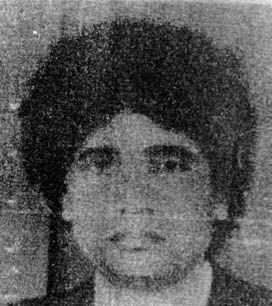
Although Tony had been talking to the police since September 1989, this historic fingering only happened on 15 February 1991, when Mr. Gauci was shown another spread of 12 faces. According to his statement, he at first felt all were too young to be the buyer, and selected none of them. The police refused to take no for an answer, and asked him to again "look at all the photographs carefully and to try and allow for any age difference." [Gauci 15/2/91] On the second pass he pointed to picture number 8 from the left. This was an image of al-Megrahi obtained by investigators from Czechoslovakia. For those unfamiliar, the undated big-hair image used for the slot in question is shown below.


Now, what Tony said pointing at this notably low-quality image and its obscuring noise, is less than amazing. His police statement following the session records it as:
“...similar to the man who bought the clothing. The hair is perhaps a bit long. The eyebrows are the same. The nose is the same, and his chin and shape of face are the same. The man in the photograph is in my opinion, in his thirty years. He would perhaps have to look about ten years older, and he would look like the man who bought the clothes. It's been a long time now and I can only say that this photograph resembles the man who bought the clothing, but it is younger.”
Back in 1989 he had given the buyer as a burly six-foot-plus Libyan, aged approximately 50 years. Our 5'8" villain al-Megrahi was but 36 at the time of purchase. And instinctively, this photo looks to me quite young, taken perhaps a decade before the 1988 purchase. He looks almost too young, with the apparence of baby fat on those long al Megrahi cheeks... and with the cheeks and nose actually seeming shorter... the lips and nose look different...

In fact, the image used is highly unusual, bearing such little resemblance to Megrahi one could be excused for wondering, as I have, if this really is him. The Lockerbie case is so special, I can't see ruling out such a simple thing as a misattributed photograph. However, there's a certain logic to presuming the image is genuine - it would be a massive risk that the picture could be proven to be of some other person, or even altered.

I remain convinced by an earlier experiment I did with photo comparison that I don't think I documented. Even with the apparent facial differences, this could well be Megrahi, taken a bit "chin-up," showing nostrils, more upper lip, shortening the face and nose as seen. Nothing in the overall proportions ruled out the same face. The hair obviously is unlike anything else we've seen him wearing, which when long is more like in the photo shown below.

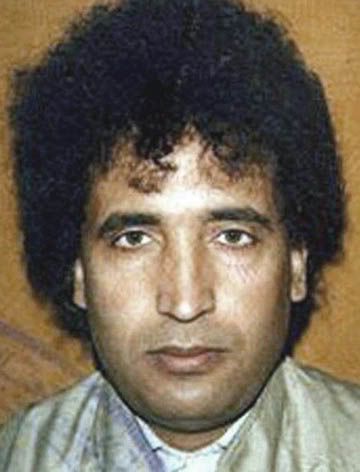
The image at left was taken for the false passport in the name "Abdusamad" issued by Libyan authorities in mid-1987, age 35. It was used on a few occasions, including a now-famous trip to Malta on 20-21 December 1988. As I've explained elsewhere, this is a legitimate clue - if not for Megrahi's guilt, then for why he was selected for framing.

The image itself is the most widely seen photo of the accused from the 1990s onward. It's not unlike the others taken since then as the man gained new fame as the accused - and then convicted - "Lockerbie bomber." This verifiable likeness is very unlike the photo Tony pointed to, and to which we now return.

The Hair
What Megrahi looked like before and after the Abdusamad photograph is unclear. Whether the raging afro seen in the Czech photo was chopped down before the above or grew in after it can't yet be established (but most clues point to some time before). However, one thing we know it does, among all images of al-Megrahi, is bring him close to matching the plumage style of Gauci's buyer. 

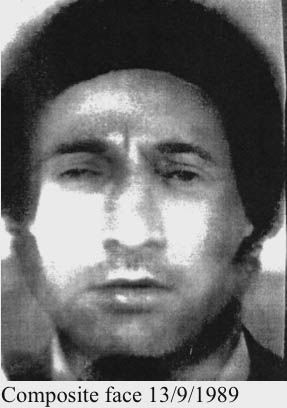
At left is the police artist's sketch based on Tony's description of the mystery shopper, 13 September 1989. The likeness is uncanny in its near-exclusion of Megrahi. It just doesn't look a lick like him, especially with this intense, angular, face, compared to Megrahi's soft features he later pointed to. And all this on a "large head" atop a 6-foot-plus frame to Meegrahi's 5'8" and Tony Gauci's 5'3".

One main feature to note is the dense afro-style haircut atop a clear expanse of forehead. The tightness of the curl is different by a long shot from any photo of Megrahi I've seen. His dangling ramen-wiggle expanses seem incapable of the tightly spherical sculpted look of the artist's sketch.


And here is the "Photofit" or "composite face" image compiled from Gauci's descriptions, given the same day as the above. They share the same basic hair, here a bit longer and fuzzier at the top. Otherwise, the two look drastically different from each other in the lips, chin, eyes, eyebrows, nose, and cheeks.

Tony did specify the sketch was a better likeness than the photo-thing, but agreed both resembled the buyer quite a bit. This almost seems to say "if you can find a photo of anyone with this kind of mid-sized 'fro that I think you guys want to prosecute, I will say it looks like the man." 

Prior to al-Megrahi, Tony had selected others as a match for the buyer, like Mohammed Abu Talb, famously in December 1989. Abu Talb didn't really fit by hair; his appeal was more from the word "bomber" across the corner of his face.  And Tony once pointed out  Mohamed Salam - a pretty good likeness of the sketch in both hair and face - on a less famous occasion. Like al-Megrahi, both of these men were at least a decade  too young. 

Perhaps Megrahi's undated fro was an earlier thing, from his 20s. But other than the Czech photo, we've only seen Megrahi with less hair and apparently more hair product. Buncrana found a photo of Megrahi at about age 19 - a student visa is from when he was studying in Wales, around 1971 (first revealed by the Sun back in August). We can here recognize al-Megrahi's longish features as a stylish young man. A little quiet-looking, but with a wild frontal swoop, almost a bouffant, coming halfway to his eyebrows. Quite unlike Tony's buyer, the Megrahi images show nary a clear forehead, especially in the questionable Czech photo.  And unlike that photo, this one actually looks like the guy it's supposed to be. 

Czech Photo Origin, Age, and Effects 
What was shown was not that Megrahi was or even actually resembled the buyer. All we learned on 15 February was that, among a selection of 12 pictures, Megrahi's could be made to be reported as the one most resembling the buyer, so long as you pick one that doesn't really look like him, while giving him something like the right hair.

This highly useful image was supplied to the investigation by intelligence from Czechoslovakia, says lead FBI investigator Richard Marquise. [see Sent Home to Die, Youtube posting 17:48] In his 2006 book he gave no explanation I could find about when the investigation got this picture, why it's of such poor quality, and what info came with it.  He acknowledge that "no one could positively date the photograph shown to Gauci." [SCOTBOM p. 127 - Google Books link] This may be of key importance below.

Marquise and his faux-witness Abdul Majid Giaka agree the photo Tony pointed to showed a young man, who was Meagrahi. "Giaka had looked at the Czech passport picture identified by Gauci. He said it was Megrahi when he was much younger." [p 142 ] Gauci's own feeling was of a man "in his thirty years," (30s) which Megrahi then was. But this could be chalked up to the lack of clarity and the fact that nearly all men Tony had been shown were in their 30s. DI Scicluna, Maltese police, gave his own account of the 15 February ID with slightly different details.
“.. Gauci started examining the photographs and the first thing he said was that they are all too young. It was explained to him to allow for age discrepancy as the man he saw could be 10-15 years older. [...] Gauci then looked through them and again stopped at Baset’s photo and indicating it he said ‘This is similar, but it is maybe 10-15 years younger.” [Grounds of Appeal doc]
Somewhere in his 30s, plus fifteen years is close enough to a match with the 50-year old man he described. But Marquise, Bell, and Scicluna and crew didn't know how old the photo was. All they had to do, and perhaps did,  was presume the picture itself was 10 years old, and add 10 years per what Gauci said, and you've got Megrahi's age, even though it's still 14 years below what Gauci first estimated.

Further, the quality of the Czech photo is worth wondering about. If the other 11 pictures he was shown that day were all normally clear and this one only looked strange, might that itself be leading? Might Gauci think it was included for some special reason? Might he think this is some super-elusive Mullah Omar character the cops can only get a crappy picture of? Might that make him feel it's more fruitful to point at then the others?

In fact, it seems the other images were altered to lessen the difference, but a professional who reviewed the effects in 2008 felt it was insufficient and the Czech photo still stands out as the gritty, mysterious one. [see Valentine report, page 40]

And There They Stopped
However exactly he was tricked into it, this was the final identification. Tony Gauci had been picking men out of photo lineups sporadically since September 1989, at different times having picked out at least three other men as similar to the buyer, but younger. But after 15 February the exercises abruptly stopped, and investigators were somehow sure they had their man. An identified buyer of the clothes, a Libyan agent comporting with the by-then identified timer, and there as Abdusamad on the day of the bombing. Never mind that he was about five inches too short, too slight of stature and light of skin, 14 years too young, and nowhere near the island of Malta on the day the clothes were purchased.

Marquise related how, at a mid-1991 conference, Senior Investigating Officer Stuart Henderson "discussed the photo spread leading to the Gauci identification of Megrahi. Although no one could positively date the photograph shown to Gauci, he was reluctant to show any more photos without fear of tainting what he had already provided." [127-8]

Something tells me it wasn't so much "tainting" as "spoiling the moment" Henderson was worried about.  As we've seen there was a special and delicate magic about how this supposed selection of al-Megrahi was materialized. It's also clear that the other photos available, with al-Megrahi's usual hair styles and better clarity, would show Tony how unlike the buyer this Libyan was. It could conceivably screw up the ID they had and wanted to keep.

So the big-hair Czech photo remained the only one of the chosen suspect that Tony saw until the better likenesses started appearing in the news a few months later as the "Lockerbie bomber." By then the whole world knew just what the guy looked like, removing all the cahallenge from arranging the later touted pointings-out in 1999 and 2000, just before Tony helped land a conviction and his $2 million prize.
---
Updates 12/26: In fact, Harry Bell noted in his police diary the day of this charade that this was the only photo the Scottish police had of "Abdelbaset" and they had to use it for fear they could never find another.
"meeting with Special Agent Reid. He tried to imply that we were rushing showing the photograph spread. ....they were the ones that wanted it done before Bollier left the USA.  Also if Baset was identified, Bollier would be the last person to be told as we know he is still in contact with the Libyans. Reid has been worried in case there is no identification made by the witness because [the photo]of Baset we have is too young. I explained that as we have no other and no indication that we will ever get one, then we can only proceed with what we have. If no identification is made and we later get a better photograph showing his true age and appearance in December '88, then the Lord Advocate may
accept an argument for showing this to the witness.

The differences in any photos can be noted while accepting that to some degree it will weaken the identification at any trial."

Then, among the eight points why Megrahi was the buyer, he wrote:
(7) The SIO [Stuart Henderson] advises that Bollier has now been shown the photofit and he states that if the hair was shorter then it would indeed look like Abdelbaset, also if it was 10 to 15 years older.
They got the same response from Bollier, but apparently in reference to the Photofit, not the Czech photo, if it was older (??). Bollier claims in comments below that he was never shown the Czech photo, and had still never seen it for 20 years of highly public study, until this blog post.

(8) The SIO also advises that the photograph we have of Abdelbaset is in fact 12 years old.
This confirms the suspicion. A twelve year old photo of Megrahi would be of a man aged 26, circa 1979. Gauci thought it was of a man in his 30s, and never actually retracted his belief the man was "around 50." This looks a hell of a lot like a shell-game or three-card-trick, designed to fit Megrahi in. [See: Grounds of Appeal doc, page 42/43]
---
Information continues in the excellent comments below.